Any home or business will profit by enjoying the warmth, comfort, and style that carpets bring. But as time moves on, a lot of homes see loose marks, wrinkles, or ripples form on their carpeted floor coverings. Such issues shorten the lifespan of flooring, cause safety dangers, and diminish off the flooring’s look. Whilst damaged carpets can be restored with specialist carpet stretching and repair services, regular service is essential to prevent these issues in the first place.
Homeowners can save time and money on maintenance by reducing the need for yearly carpet stretching by using the proper care practices. We go over useful carpet care suggestions in this guide to help you prevent stretching problems in the future and maintain the smooth, long-lasting appearance of your carpets.
Why Continual Carpet Care Avoids Expensive Carpet Stretching Repairs
The trick to avoiding future cost carpet stretching and repair services is routine carpet preservation. Heavy foot traffic, moisture exposure, and filth collection degrade carpet fibers and cause the backing to come loose over time. Wrinkles and ripples begin appearing when carpets lose their tension, representing a risk to safety for citizens as well as being unattractive. Homeowners can protect high-traffic areas, vacuum frequently, clean up spills immediately and maintain enough indoor humidity to retain the structure of the carpet while avoiding premature loosening. Proper care not only extends the useful lifespan of your flooring but also eliminates the need for looking for expert carpet stretching near me, thereby preserving time and money.
1. Regularly Vacuum Carpets
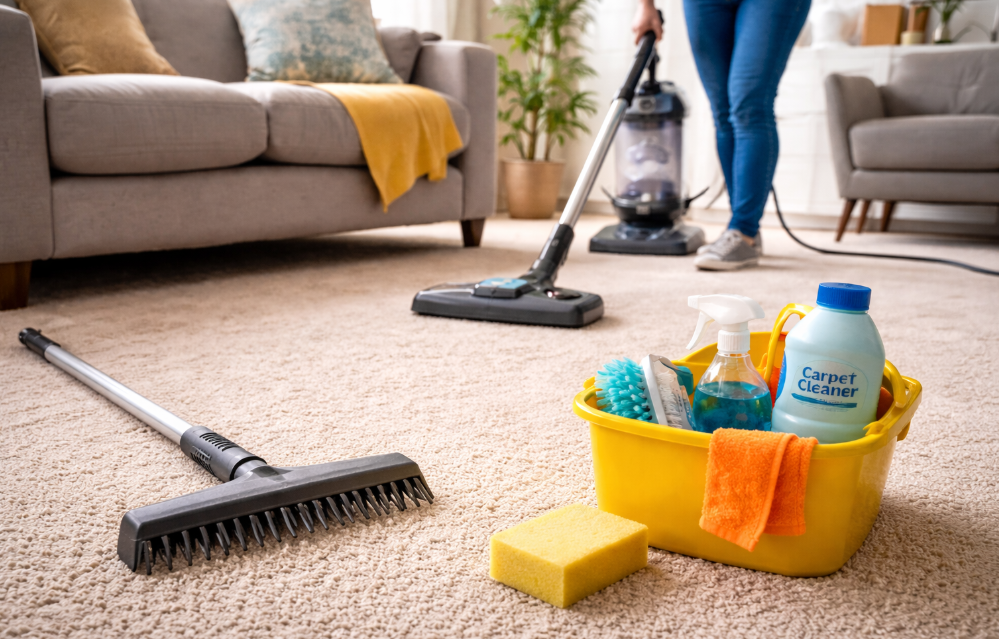
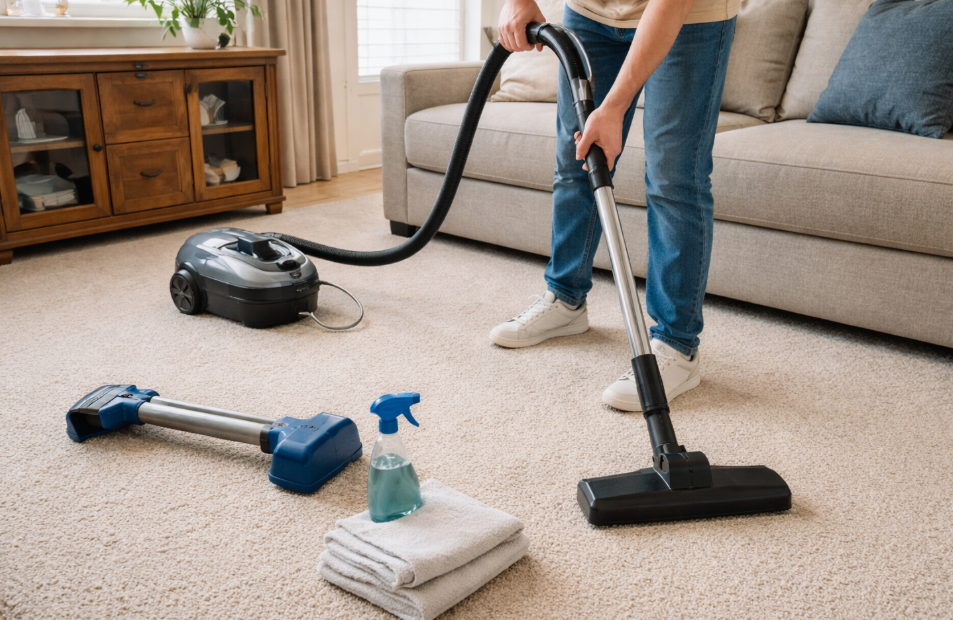
Regular vacuuming is one of the simplest yet most efficient ways to keep carpet in good condition. Small particles, dirt, and debris slowly permeate down into the carpet’s fibers. This build-up destroys the carpet foundation over time and causes rippling and loosening.
Maintenance Tip:
- At least at least three times a week, vacuum high-traffic areas.
- Once a week, vacuum low-traffic regions.
- Use a vacuum cleaner with adjustable height settings to prevent excessive pulling on fibers
Routine cleaning reduces stress on the carpet structure and helps minimize the need for carpet stretching near me in the future.
2. Take Quick Action on Spills and Moisture
Carpet loosening is frequently caused by moisture. Poorly dried water from drips, leaks, or deep cleaning may harm the cushioning and glue below the carpet, causing folds with time.
Maintenance Tip:
- Spills should be washed out quickly with fresh towels.
- Make sure that after cleaning, the carpets are totally dry.
- Rapidly fix plumbing leaks
- If the carpets start developing wet, use fans or dehumidifiers.
A professional carpet fixer’s numerous trips can be averted with prompt moisture management.
3. Periodically Rearrange Furniture
repeated use of heavy furniture can lead to pressure points which trigger the carpet fibers to grow unevenly. Visible cracks or loose patches frequently reveal up when furniture is later moved.
Maintenance Tip:
- Often move furniture over to evenly distribute weight.
- Take use of protective cushions or furniture coasters.
- In place of pushing furniture across the carpet, lift it.
These inexpensive methods decrease the chances of future carpet stretching and repair work while protecting the carpet’s structural tension.
4. Don't Drag Heavy Things
Stretching damage is largely caused by dragging large items of equipment, furniture, or appliances across carpeted flooring. Ripples or buckling may result from the pulling power releasing the carpet from the tack strips along the edges.
Maintenance Tip:
- When transporting large items, always lift them.
- Use sliders or moving pads to reduce friction
- Seek assistance when relocating heavy items
Preventing unnecessary tension ensures your carpets maintain proper alignment and stay secure for longer.
5. Make time to meet for expert carpet cleaning.
Regular vacuuming is helpful but deep cleaning by a professional removes embedded particles that slowly damages carpet fibers. In addition to avoiding wrinkles, professional cleaning improves the carpet backing’s elasticity.
Maintenance Tip:
- Every 12 to 18 months, a professional cleaning needs to be performed.
- Use low-moisture cleaning methods whenever available.
- Make sure the carpets are dry to the touch after cleaning.
An expert’s monthly examination retains the carpet’s fabric and reduces the requirement to long-term repairs.
6. Keep Indoor Humidity Levels Appropriate
Carpet materials may expand and contract as a result of extreme humidity swings, resulting in loose pieces. The carpet backing and adhesives are shielded when indoor humidity levels remain consistent.
Maintenance Tip:
- Keep the relative humidity in your home between 30% and 50%.
- Use humidifiers or air conditioners during humid seasons.
- Promote enough air circulation in carpeted areas.
One easy preventive measure that reduces the chance of requiring a carpet repair service is controlling humidity.
7. Check Carpets Frequently for Early Damage Indications
Minor carpet problems can be stopped before they become serious stretching difficulties by early identification. Correcting small ripples or slightly loose edges before they get worse is frequently simpler and less expensive.
Maintenance Tip:
- Examine carpets every several months.
- Keep an eye out for uneven surfaces, rising edges, or little waves.
- Contact professionals quickly if early signs appear
Timely attention often eliminates the need for extensive carpet stretching and repair services.
8. Safeguard Areas with High Traffic
Because they receive the most foot activity, hallways, living rooms, and entryways are more likely to extend with time. By keeping these places safe, carpet tension is maintained and wear is decreased.
Maintenance Tip:
- In areas with plenty of traffic, use runners or area rugs.
- To balance wear, occasionally rotate the rugs.
- Install entry mats to prevent dirt from being carried indoors.
- Carpets’ initial installation strength can be preserved by lowering daily stress on them
9. Ensure Proper Installation from the Beginning
Inadequate installation is the root cause of many carpet stretching issues. Wrinkles are more likely to grow over time in carpets that are not effectively tensioned or fixed during installation.
Maintenance Tip:
- Hire experienced installation professionals
- Ensure power stretching tools are used during installation
- Request post-installation inspection
Correct installation significantly lowers the need for future carpet stretching near me services.
10. Schedule Preventive Restretching When Needed
Carpets naturally relax after many years, even with good maintenance. Preventive stretching can prolong carpet life and preserve attractiveness by scheduling it before noticeable creases occur.
Maintenance Tip:
- Consider restretching every 5–7 years depending on usage
- Address minor wrinkles early to avoid larger repairs
- Seek advice from experts for routine checks.
- By preventing costly replacements, preventive maintenance keeps carpets safe and smooth.
Why Preventive Maintenance Matters
Listed below are some long-lasting advantages of proper carpet care:
- prolongs the life of carpets
- Reduces safety hazards caused by wrinkles
- Maintains interior appearance
- Prevents costly replacement expenses
- Minimizes the frequency of professional repairs
By following these care guidelines, you can keep your carpets in excellent order and avoid the need for yearly carpet stretching and repair services.
Maintain the Smoothness and Durability of Your Carpets
Costly carpet repairs can be avoided tomorrow with a few simple treatment options today. For many years, carpet tension and sturdiness can be retained with annual inspections, suitable handling, and routine cleaning.
Keep Your Carpets Smooth and Long-Lasting
Small maintenance steps today can prevent costly carpet repairs tomorrow. Regular cleaning, proper handling, and timely inspections help maintain carpet tension and durability for years.
Frequently Asked Questions
If only a few tiles are cracked, loose, or the grout is damaged, tile and grout repair services are usually enough. Replacement is recommended when damage is widespread or the subfloor is compromised.
Yes, hiring a professional tile repair company is typically much more affordable because only the damaged tiles or grout areas are repaired rather than replacing the entire floor.
When completed by an experienced tile repair company, properly repaired tiles and grout can last many years, especially when combined with regular maintenance and grout sealing.
Yes, professional repairs often include sealing, strengthening adhesives, and correcting minor installation issues, helping prevent further tile or grout deterioration.