
Why Does Carpet Move When You Walk on It?
Carpet should normally feel secure and stable underfoot. If it shifts, feels loose, or seems to move as you walk across the room, something may be wrong with the way the carpet is holding tension.This problem can appear gradually. You may first notice a small ripple near a doorway or furniture, then eventually see wrinkles or raised sections spreading across the room.
For homeowners searching for carpet stretching near me, understanding why carpet becomes loose is a useful first step. Movement does not always mean the carpet needs to be replaced. In some situations, professional stretching can restore the carpet’s tension and improve its appearance.
What Causes Carpets to Move Underfoot?
Several factors can cause carpet to lose its original tension.
Carpet Can Loosen Over Time
Carpet is exposed to regular foot traffic every day. Over time, repeated movement can cause the material to become loose, particularly in busy areas.Once the carpet loses tension, ripples and wrinkles may begin to appear.
Poor Installation
Carpet that was not stretched properly during the original installation may become loose sooner than expected.Insufficient tension can leave the carpet more likely to develop wrinkles, buckling, or movement.
Heavy Furniture
Large furniture can affect carpet in several ways. Moving heavy pieces across the room can pull or shift the carpet, while repeatedly rearranging furniture may contribute to loosened areas.
Humidity and Temperature Changes
Changes in indoor conditions can affect carpet materials. Seasonal changes in temperature and humidity may contribute to expansion and contraction, which can eventually affect how tightly the carpet sits.
Frequent Foot Traffic
Hallways, living rooms, stairs, and other high-traffic areas experience more movement than less-used spaces.Over time, this repeated activity can contribute to loose carpet and visible ripples.
Is Moving Carpet a Sign That It Needs Stretching?
It can be.If the carpet feels loose and you can see wrinkles, ripples, or raised areas, stretching may be worth considering.A professional carpet installer or flooring service can inspect the carpet and determine whether the problem is related to lost tension or another issue.
Signs that stretching may help include:
- Carpet moves when you walk across it
- Wrinkles are becoming more noticeable
- Ripples appear in several areas
- Carpet looks loose around furniture
- The surface no longer looks smooth
- Carpet is beginning to buckle
- Vacuuming has become more difficult
- The carpet has visible waves or raised sections
Not every carpet problem requires the same solution, so an inspection can help determine the appropriate approach.
What Is Carpet Stretching?
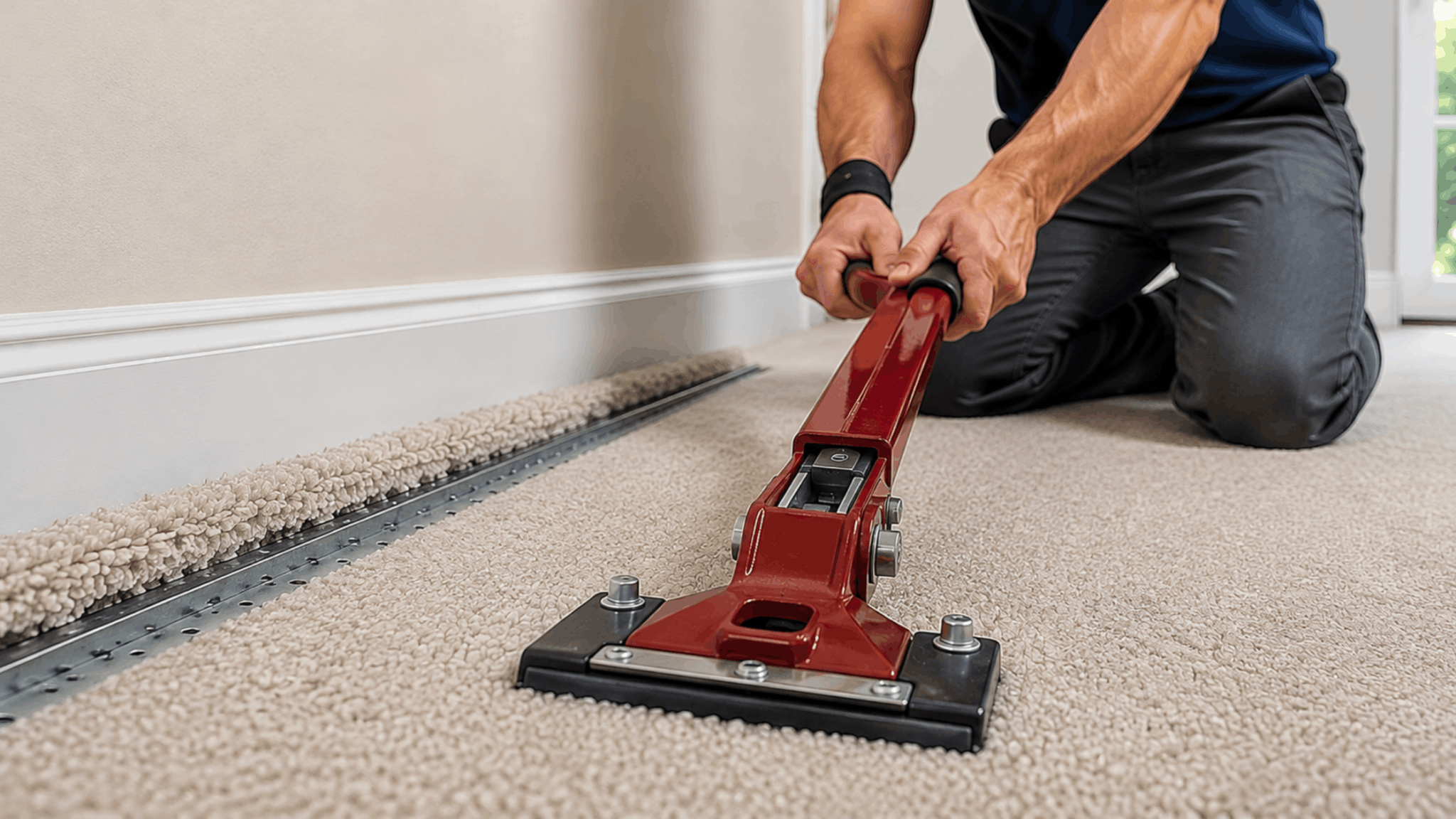
Carpet stretching is a repair process used to restore tension to loose or wrinkled carpet.During professional stretching, the carpet is carefully loosened from the edges and pulled back into proper tension. Specialized equipment is then used to stretch the carpet before it is secured again.The goal is to create a smoother, tighter surface without replacing the entire carpet.This can be especially useful when the carpet fibers are still in reasonably good condition but the carpet has become loose.
Why You Shouldn't Ignore Moving Carpet
A loose section of carpet may seem like a minor cosmetic issue, but it can become more difficult to manage if left untreated.
Wrinkles Can Become Larger
Small ripples can gradually become more noticeable as the carpet continues to move.
The Carpet Can Experience More Wear
Loose sections may experience additional friction and movement during everyday use.
Edges and Seams Can Be Affected
Continued movement may place additional stress on seams, edges, and the carpet backing.
Tripping Risks May Increase
Raised areas or significant wrinkles can create an uneven walking surface.Addressing the problem early may help prevent additional damage and keep the carpet looking better for longer.
Can Carpet Cleaning Cause Wrinkles?
Carpet cleaning itself does not necessarily cause permanent wrinkles, but certain conditions surrounding cleaning can contribute to the appearance of looseness.Moisture can temporarily affect carpet materials, and carpet that was already loose may become more noticeably rippled after cleaning.If wrinkles remain after the carpet has completely dried, the issue may be related to existing tension problems, installation, or the condition of the carpet.This is one reason it is helpful to determine the actual cause before deciding on a repair.
Does Furniture Cause Carpets to Move?
Furniture can contribute to carpet movement, particularly when heavy pieces are repeatedly dragged across the surface.Moving a sofa, table, bed, or other large item can pull the carpet and create loose areas.When rearranging furniture:
- Lift furniture when possible
- Avoid dragging heavy items
- Move furniture carefully
- Check the carpet afterward for new wrinkles
- Address loose sections before they worsen
Taking care during furniture moves can help reduce unnecessary stress on the carpet.
How a Professional Carpet Fixer Evaluates the Problem
A qualified carpet fixer will usually look beyond the visible wrinkle.The goal is to determine why the carpet is moving and whether stretching is an appropriate repair.
Areas commonly inspected include:
1.Carpet tension
The installer checks whether the carpet has lost its original tension.
2.Carpet backing
Damaged or deteriorated backing may affect whether stretching is practical.
3.Edges and seams
These areas are checked for separation or damage.
4.Carpet condition
The overall condition of the fibers and surface is considered.
5.Subfloor condition
Problems underneath the carpet may also contribute to movement or unevenness.
6.Extent of the wrinkles
A small affected area may require a different approach from a room with widespread rippling.
This evaluation helps determine whether stretching, repair, or replacement is the most reasonable option.
Can One Area Be Stretched, or Does the Whole Room Need It?
The answer depends on how the carpet has loosened.If the problem is isolated to one section, a localized repair may sometimes be possible.However, when wrinkles appear across multiple areas, the carpet may have lost tension throughout the room. In those situations, a more extensive stretching process may be necessary.A professional can assess the affected areas and recommend the appropriate scope of work.
What Happens During Professional Carpet Re-Stretching?
The exact process can vary depending on the carpet and room, but professional re-stretching generally involves several steps.
1. Inspect the Carpet
The condition of the carpet, backing, edges, and affected areas is evaluated.
2. Prepare the Room
Furniture and other items may need to be moved so the carpet can be accessed properly.
3. Release the Carpet
The carpet may be carefully released from the edges where necessary.
4. Stretch the Carpet
Professional equipment is used to pull the carpet back into proper tension.
5. Secure the Carpet
The carpet is reattached and trimmed as needed.
6. Check the Finished Surface
The installer checks the repaired area to make sure the carpet is properly secured and the wrinkles have been addressed. Professional equipment is important because improper stretching can damage the carpet rather than solve the problem.
Why Professional Stretching Is Better Than a DIY Fix
It may be tempting to try pulling or repositioning loose carpet yourself, but carpet stretching requires the right equipment and technique.Using inadequate tools can result in:
- Uneven tension
- Additional wrinkles
- Damaged carpet backing
- Loose edges
- Seam problems
- Permanent damage
A professional flooring service can evaluate the condition of the carpet and use appropriate equipment to restore tension more evenly.
A Simple Carpet Self-Check
Before contacting a professional, you can take a few minutes to look at the affected area.Ask yourself:
- Does the carpet move when I walk across it?
- Are the wrinkles becoming larger?
- Are there ripples in more than one location?
- Has the carpet recently been moved or cleaned?
- Does the carpet look loose near furniture?
- Are the fibers still in good condition?
- Are the edges and seams still secure?
- Has the problem been getting worse over time?
These observations can help you describe the problem more accurately when discussing it with a flooring professional.
When Should You Look for Carpet Stretching Near Me?
If your carpet is visibly wrinkled, rippled, buckled, or moving underfoot, it may be time to have it evaluated.Searching for carpet stretching near me can help you find local professionals who can inspect the carpet and determine whether re-stretching is appropriate.Instead of immediately assuming that the entire carpet needs to be replaced, consider having its condition evaluated first.A professional may be able to restore the existing carpet if the material is still in good shape.
Keep Loose Carpet From Becoming a Bigger Problem
Carpet that moves underfoot is more than a small cosmetic issue. It can indicate that the carpet has lost tension and may continue developing wrinkles, ripples, or other problems if left untreated.The good news is that replacement is not always the only option. If the carpet is still in good condition, professional carpet stretching may help restore a smoother and more secure surface.
For homeowners in St. Charles County searching for carpet stretching near me, having the carpet professionally evaluated can help you understand whether stretching, repair, or replacement is the right choice.
Frequently Asked Questions
Why is my carpet moving when I walk on it?
Carpet can move when it loses tension due to age, heavy foot traffic, poor installation, furniture movement, or changes in indoor conditions. Wrinkles and ripples often appear alongside the movement.
Can loose carpet be stretched?
Yes. Carpet stretching is commonly used to restore tension to loose, wrinkled, or rippled carpet when the carpet itself is still in suitable condition.
How do I know if my carpet needs stretching or replacement?
If the carpet fibers and backing are still in good condition and the primary issue is looseness or wrinkles, stretching may be worth considering. Severely worn or damaged carpet may be better suited for replacement.
Can carpet stretching remove wrinkles?
Professional stretching can often remove wrinkles and ripples caused by lost tension. However, the final result depends on the carpet’s condition and the underlying cause of the problem.
Is carpet stretching the same as carpet repair?
Not exactly. Stretching focuses primarily on restoring tension to loose or wrinkled carpet, while carpet repair can include other services such as patching damaged areas or repairing seams.
Can carpet become loose again after stretching?
Proper stretching can restore tension, but carpet may eventually loosen again due to age, heavy traffic, improper installation, or other conditions. Proper care and professional installation can help reduce the risk.
Should I replace the carpet because it has wrinkles?
Not necessarily. Wrinkles alone do not always mean the carpet needs to be replaced. If the carpet is otherwise in good condition, professional re-stretching may be a practical option.