When Hardwood Floors Begin to Show Wear
Hardwood floors can handle years of daily activity, but scratches, dull patches, and worn areas can gradually change their appearance. A few light marks near a doorway may be normal wear, while areas where the finish has deteriorated can leave the wood more vulnerable to damage.
For homeowners considering Hardwood Flooring in St. Charles, understanding the difference between surface scratches and finish failure can help prevent unnecessary repairs and protect the condition of existing floors. The right solution depends on how deep the damage goes, how much of the protective finish remains, and whether the wood underneath has also been affected.
Why Do Hardwood Floors Develop Scratches and Worn Finishes?
Hardwood floors experience regular contact with shoes, furniture, pets, dust, and everyday household activity. Over time, these factors can leave visible marks or wear down the protective coating. Some common causes include:
- Dirt and grit: Small particles tracked indoors can act like abrasives when repeatedly walked across the floor.
- Furniture movement: Chairs, tables, and other heavy items can leave scratches when moved without protective pads.
- Pet claws: Repeated running and movement can create fine scratches or deeper marks, depending on the wood and finish.
- Improper cleaning: Harsh cleaners, excessive water, and unsuitable floor-care products can affect the finish.
- Heavy foot traffic: Hallways, entrances, and frequently used living spaces often show wear sooner than less-used rooms.
Not every scratch means the hardwood needs refinishing. The important question is whether the mark affects only the finish or extends into the wood itself.
How to Tell the Difference Between Scratches and Finish Failure
Although scratches and finish failure can appear together, they are not the same problem. Identifying the difference helps determine which treatment is appropriate.
1. Light Surface Scratches
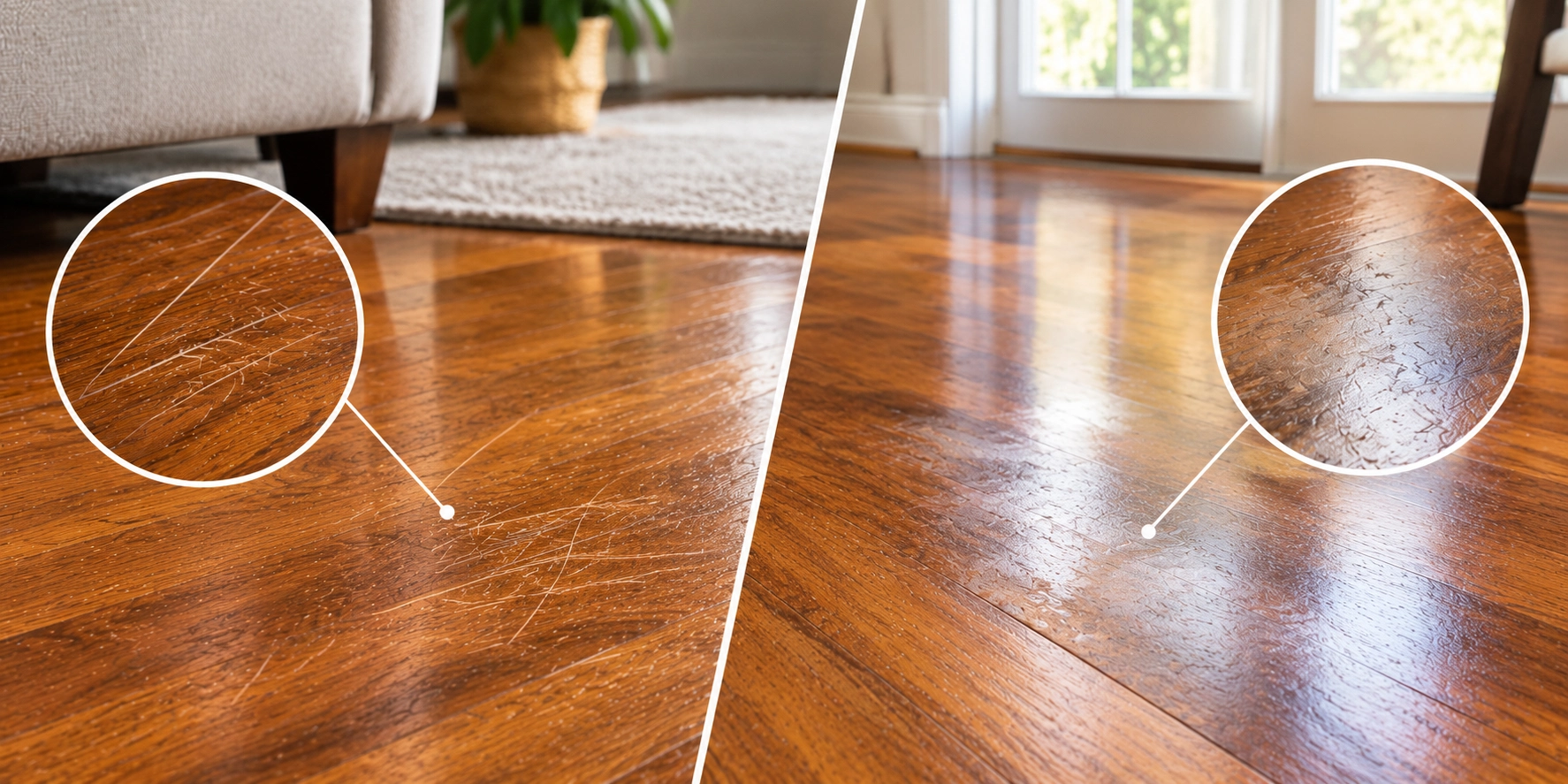
Fine scratches often appear as thin lines that become more noticeable when sunlight shines across the floor. They may be concentrated near entryways, furniture, or busy walkways. If the marks affect only the protective coating, the wood underneath may remain in good condition. Routine cleaning and suitable maintenance may be enough to improve the appearance, although some scratches require professional attention.
Avoid trying to remove every mark with aggressive scrubbing. This can create additional scratches or make the affected area look different from the surrounding floor.
2. Deep Scratches and Gouges
Deeper scratches can cut through the finish and expose the wood. You may notice rough edges, visible grooves, or a change in color along the damaged area. These marks often result from dragging heavy furniture, dropping sharp objects, or repeated contact with hard materials.
When the wood itself is damaged, simply applying another coat of finish may not hide the problem. Depending on the depth and location, the repair may involve a localized touch-up, sanding, refinishing, or replacing an affected board.
3. Dull or Cloudy Patches
Does one section of your hardwood floor look dull even after cleaning? This may indicate finish wear, product residue, or an incompatible cleaning product. If the dullness comes from residue, using the correct cleaning method may improve the appearance. However, if the protective coating has worn down, cleaning alone will not restore it.
Before applying polish or a restoration product, identify the existing finish and follow the flooring manufacturer’s care recommendations. Some products can leave buildup or interfere with future refinishing.
4. Peeling, Flaking, or Bare Wood
When the finish begins peeling, flaking, or wearing away completely, the problem goes beyond ordinary surface scratching. Bare wood may absorb spills more readily and become stained or discolored. Localized peeling can also indicate a problem with product compatibility, surface preparation, or the condition of the existing finish.
These signs deserve closer inspection. Applying another finish over a failing coating without addressing the underlying issue may lead to poor results.
Can Hardwood Floor Scratches Be Repaired Without Replacing the Floor?
In many cases, yes. The repair method depends on the severity of the damage and the condition of the surrounding boards.
When a Minor Repair May Be Enough
Small scratches, isolated scuffs, and limited areas of wear may respond to appropriate touch-up methods. The goal is to improve the damaged area without creating a noticeable difference in color or sheen.However, touch-up products are not suitable for every finish or every type of scratch. Test any approved product in an inconspicuous area first, or ask a flooring professional to assess the surface.
When a Maintenance Coat May Help
If the finish is generally intact but has lost some of its appearance, a maintenance coat may be an option. This typically involves cleaning and preparing the existing finish before applying a compatible new coat.Recoating is not a universal fix. The existing finish must be suitable for the process, and contamination, wax buildup, or adhesion problems may need to be addressed first.
When Sanding and Refinishing May Be Necessary
Widespread finish wear, deeper scratches, and areas where bare wood is exposed may require sanding and refinishing. This process removes the damaged surface layer and applies a new finish.The feasibility depends on the type of hardwood flooring, the thickness of the remaining wood, and its overall condition. Some engineered hardwood floors have a limited wear layer, so they cannot be sanded as extensively as solid hardwood.
What Happens When Hardwood Floor Damage Is Left Untreated?
A few scratches may seem like a minor cosmetic issue, but damage to the protective finish can become more noticeable over time. The risk depends on the depth of the damage, the type of finish, and how the floor is used.
When the finish remains intact, it helps protect the wood from everyday wear and minor spills. Once that protective layer becomes worn or breaks down, the exposed area may become more susceptible to staining, discoloration, and additional surface damage.
Here are a few problems homeowners should watch for:
- Stains that become harder to remove: Spills may penetrate exposed wood more easily, particularly when they are left unattended.
- Uneven floor appearance: Worn walkways can look dull compared with areas that receive less foot traffic.
- More visible scratches: Existing marks may become increasingly noticeable as the surrounding finish wears away.
- Localized wood damage: Repeated moisture exposure can contribute to swelling, discoloration, or other damage beyond the surface coating.
Not every scratch requires immediate professional repair. However, peeling finish, exposed wood, deep gouges, or recurring discoloration deserve attention before the affected area deteriorates further.
How Household Conditions Affect Hardwood Floor Wear
The condition of hardwood flooring depends on more than the age of the boards. Everyday household conditions can influence how quickly scratches appear and how well the protective finish holds up.
Seasonal Humidity Changes
Wood naturally expands and contracts as moisture conditions change. During periods of lower indoor humidity, small gaps may appear between boards. Higher humidity can cause wood to expand, while excessive moisture may contribute to more serious problems.
These changes are not the same as finish failure. If you notice new gaps, raised boards, or unusual movement along with surface wear, the floor may need a broader assessment rather than a simple finish repair.
Furniture and Everyday Traffic
Dining areas, hallways, and living rooms often experience more movement than bedrooms or spare rooms. Chairs may scrape across the floor, while dirt and grit carried inside can gradually abrade the finish.
Protective pads, entryway mats, and regular dust removal can reduce this type of wear. If scratches continue appearing in the same location, consider whether a furniture leg, rolling chair, or frequently used pathway is contributing to the problem.
Cleaning Products and Maintenance Habits
Using the wrong cleaning product can leave a cloudy film, create buildup, or affect the appearance of the finish. Excessive water can also damage hardwood, especially when moisture reaches gaps or exposed wood.
Follow the flooring manufacturer’s maintenance instructions and avoid applying waxes, polishes, or restoration products unless they are appropriate for the existing finish. If the floor remains dull after proper cleaning, determine whether the issue is residue or actual finish deterioration before choosing a repair method.
How Professionals Assess Scratched and Worn Hardwood Floors
A reliable repair starts with identifying the actual cause of the problem. Two floors may look similar at first glance but require different treatments depending on the condition of the finish and the wood beneath it.
During an assessment, a flooring professional may consider:
- Depth of the damage: Whether the marks affect only the finish or extend into the wood.
- Extent of wear: Whether damage is limited to a small area or spread across several rooms.
- Existing finish condition: Whether the coating is intact, worn thin, peeling, or contaminated by cleaning products.
- Type of hardwood flooring: Whether the floor is solid hardwood or engineered hardwood with a limited surface wear layer.
- Signs of moisture or movement: Whether discoloration, gaps, swelling, or raised boards suggest an underlying issue.
The findings help determine whether localized repair, recoating, sanding and refinishing, or individual board replacement is appropriate.
For example, a few shallow scratches in a room with an otherwise sound finish may not justify refinishing the entire floor. Widespread wear or exposed wood may require more extensive work. Addressing the cause first helps prevent the same problem from returning after the repair.
Repair or Refinish? How to Choose the Right Approach
Choosing between a minor repair and a full refinishing project depends on the condition of the floor, not simply how old it looks.
- Localized repair may be suitable when damage is limited to a small section and the surrounding finish is in good condition. The challenge is matching the existing color and sheen so the repair does not stand out.
- Recoating may be appropriate when the finish has lost some of its appearance but remains suitable for another compatible coating. Proper preparation is essential for good adhesion.
- Sanding and refinishing may be considered when scratches and finish wear are widespread. This process can restore the surface appearance, provided the flooring has enough usable material remaining.
- Board replacement may be necessary when individual planks have severe damage, deep gouges, or deterioration that cannot be addressed effectively through surface treatments.
No single method works for every floor. A professional assessment can help homeowners understand the available options and avoid paying for work that is unnecessary or choosing a quick fix that does not address the actual damage.
Why DIY Fixes Can Make Hardwood Floor Damage More Noticeable
Trying to correct scratches at home can seem straightforward, but the wrong method may leave a more visible repair than the original damage. Common mistakes include:
- Using abrasive pads: Scrubbing too aggressively can add scratches to the surrounding finish.
- Applying furniture polish: Some products leave residue that affects the appearance or future coating adhesion.
- Using the wrong stain marker: A color that does not match the wood can create an obvious dark or light spot.
- Sanding only one small patch: Localized sanding can leave a visible difference in sheen or texture.
- Adding finish without preparation: A new coating may not bond properly to a dirty, waxed, or incompatible surface.
Before attempting a repair, identify the type of finish and the extent of the damage. If the floor has widespread scratches, peeling, or exposed wood, professional assessment is usually the safer starting point.
How to Prevent Further Scratches and Finish Wear
Once the floor has been cleaned or repaired, a few simple habits can help reduce future damage.
- Place felt pads beneath furniture legs and replace them when they become worn or dirty.
- Use entryway mats to reduce the amount of grit tracked indoors.
- Sweep or dust-mop regularly to remove abrasive particles.
- Wipe up spills promptly rather than allowing moisture to sit on the wood.
- Use a cleaner approved for your particular hardwood finish.
- Avoid steam mops, excessive water, and harsh cleaning chemicals.
- Lift furniture when moving it instead of dragging it across the floor.
- Keep pet nails trimmed to help minimize surface marks.
These measures will not prevent every scratch, but they can reduce unnecessary wear and help the protective finish last longer.
Choosing the Right Solution for Hardwood Flooring in St. Charles
When evaluating Hardwood Flooring in St. Charles, homeowners should look beyond the appearance of a scratch and consider the condition of the entire affected area.A floor with a few superficial marks may need only limited attention. A floor with widespread dullness, peeling finish, deep gouges, or exposed wood may require a more involved repair.
A qualified flooring professional can assess the depth of the damage, check the condition of the existing finish, and explain the available options. This helps avoid unnecessary work and makes it easier to decide whether repair, recoating, refinishing, or board replacement is appropriate.
Keep Your Hardwood Floors Looking Their Best
Scratches and finish failure can make hardwood floors look older than they are, but they do not automatically mean the entire floor needs replacement. Light surface marks, deep scratches, dull patches, and peeling coatings each require a different approach. By identifying the cause of the damage and choosing an appropriate repair method, homeowners can improve the appearance of their floors while protecting the wood underneath. When the damage is widespread or difficult to assess, professional guidance can help determine the next step.
Frequently Asked Questions
Can surface scratches on hardwood floors be repaired?
Yes. Minor scratches may respond to suitable touch-up methods or maintenance, while deeper scratches may require sanding, refinishing, or localized board repair.
How do I know if my hardwood floor finish is failing?
Common signs include peeling, flaking, widespread dullness, worn-through areas, and exposed wood. Residue or incompatible cleaning products can sometimes cause similar appearances, so the surface should be assessed before choosing a treatment.
Does a scratched hardwood floor always need refinishing?
No. Small, isolated scratches may need only a limited repair. Refinishing is generally considered when damage is deeper or more widespread, or when the finish has worn away.
Can I apply a new finish over my existing hardwood floor?
Sometimes. The existing finish must be compatible with the new coating, and the floor must be properly cleaned and prepared. Wax, residue, or a failing finish can prevent good adhesion.
When should I contact a flooring professional in St. Charles?
Consider a professional assessment if scratches expose bare wood, the finish is peeling, damage covers large areas, or DIY repairs have left uneven patches. An inspection can help identify the appropriate repair option.