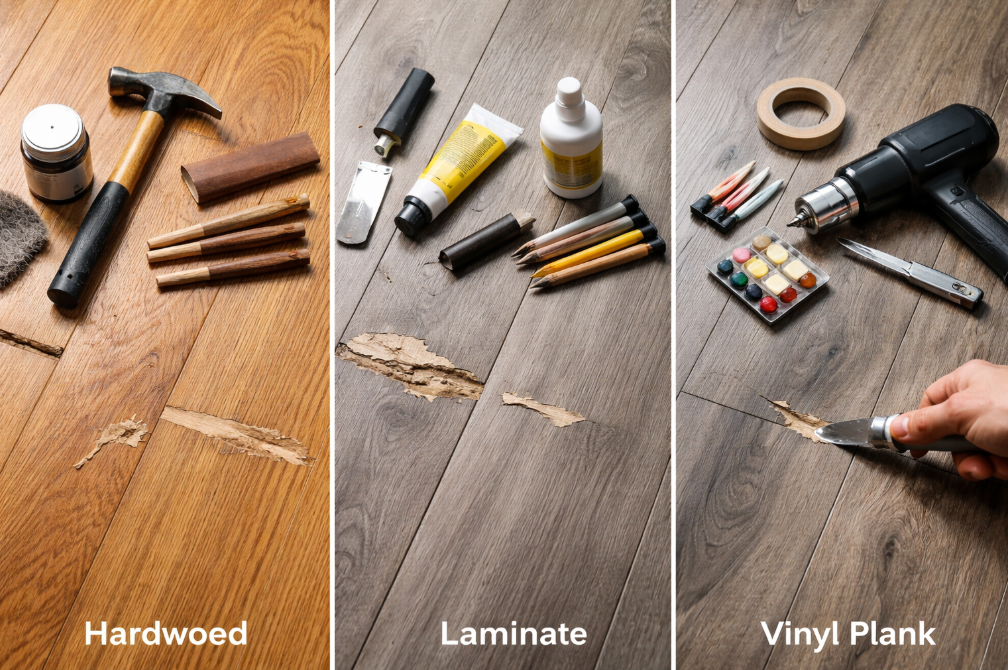
Flooring has a big impact on your home’s beauty and usability. Whether your flooring is vinyl planks, laminate, or hardwood, each has benefits that are its own that have to be restored differently when destroyed. Homeowners have to deal with wear, buckling, dents, scratches, and water damage. However, repaired laminate boards or repairing vinyl floors are not the same as fixing hardwood.
Homeowners can select the best course of action and steer clear of expensive errors through being mindful of the variances between hardwood flooring service, vinyl plank repair, and laminate flooring repair. This instructional video explains how to repair different types of flooring, what causes damage, and when expert assistance is required.
Knowing the Fundamentals of Every Type of Flooring
It’s critical to comprehend the construction of each flooring material before talking about repair variances.
1. Flooring made of hardwood
Solid or engineered wood can be employed to make hardwood flooring. They are classic, long-lasting, and sometimes refinished. As a natural substance, hardwood reacts to change in temperature and moisture.
2. Flooring made of laminate
The fiberboard core of laminate flooring is protected with a protective coating and a layer that simulates photographic wood. It is more vulnerable to condensation, but it is economical and resistant to scratches.
3. Flooring using Vinyl Planks
A synthetic material titled vinyl plank flooring is made to resemble wood. For its exceptional malleability, resilience, and water resistance, it is commonly employed in basements and kitchens. But even vinyl needs to be correctly repaired when it becomes damaged.
Although every material has a unique structure, there are additionally wide variations in repair techniques.
Hardwood Flooring Repair: What to Expect
Hardwood floors are strong but can experience:
- Surface scratches
- Deep gouges
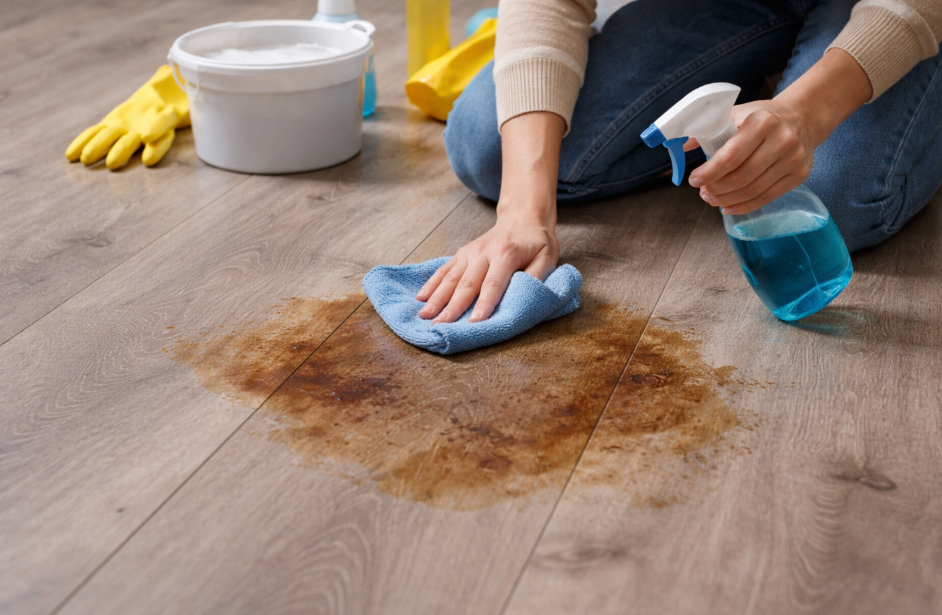
- Water stains
- Warping or cupping
- Gaps between planks
Repairing Minor Hardwood Damage
Wood fillers, touch-up kits, and refinishing can often be successful treatments of minor scratches. To restore the original looks, professional hardwood flooring healthcare workers may sand and refinish the area that was damaged.
Repairing Water Damage or Warping
Water damage is more complicated. Because hardwood absorbs moisture, boards may swell or cup.. In these cases:
- Damaged boards may need replacement
- The subfloor must be inspected
- Moisture sources must be corrected
The fact that hardwood may frequently be refinished rather than completely replaced is one of its main advantages. Professional repair is therefore an affordable long-term option.
What Makes Laminate Flooring Repair Unique?
Laminate flooring cannot be restored, though being harder than hardwood. After the top layer is destroyed, the possibilities for repairs are narrowed.
Common laminate flooring issues include:
- Peeling surface layer
- Chipped edges
- Water-damaged boards
- Buckling due to moisture
- Minor Repairs
Fillers or laminate repair paste can be used to fix minor chips. Color matching, however, might be difficult.
Minor Repairs
Small chips may be repaired with laminate repair paste or fillers. However, color matching can be challenging.
Board Replacement
Repairing laminate flooring often requires replacing the damaged boards. Professionals might regularly remove and replace damaged boards without any damage to the entire floor because laminate is applied using a click-lock technology.
Laminate cannot withstand high levels of wetness like hardwood can. It might be necessary to rebuild larger parts if water damage develops.
Repairing Vinyl Planks: Options for Contemporary Flooring
Although vinyl plank flooring is extremely flexible and water-resistant, damage can still occur.. Common issues include:
- Scratches from heavy furniture
- Loose or lifting planks
- Adhesive failure
- Cuts or tears
- Subfloor irregularities
Healing Vinyl Flooring Stained on the Surface
Polishing or surface correction tools may restore small marks and restore appearance.
Vinyl Plank Repair for Loose Boards
If planks begin lifting or shifting, professionals assess whether the issue is adhesive failure, subfloor unevenness, or installation problems. Removing the weakened plank and properly installing it are usual steps in targeted vinyl plank repair.
Vinyl is more breathable than laminate or hardwood floors because it is flexible. Inadequate installation, however, can still require subsequent repairs.
Key Differences in Repair Methods
Understanding how each flooring type responds to damage highlights why professional evaluation matters.
| Flooring Type | Can It Be Refinished? | Water Resistance | Typical Repair Method |
|---|---|---|---|
| Hardwood | Yes | Low | Sanding, refinishing, board replacement |
| Laminate Flooring | No | Moderate | Plank replacement |
| Vinyl Plank | No (surface only) | High | Individual plank replacement |
Hardwood offers refinishing flexibility. Laminate requires board replacement when damaged. Vinyl plank repair is often simpler due to its water-resistant properties and modular design.
Cost Considerations: Repair vs Replacement
Cost varies depending on:
- Severity of damage
- Size of affected area
- Type of flooring
- Labor requirements
Generally:
- Because wood floors can be restored repeatedly, it may be costly initially but offers more value over time.
- Restoring laminate flooring is affordable in tiny spaces but costly if water damage spreads.
- For little damage, vinyl floor repair can be the most cheap decision.
Expert assessment guarantees homeowners avoid needless complete replacements.
Typical Reasons for Damage to Flooring
Many flooring repair needs have similar causes, regardless of the kind of flooring:
- Moisture exposure
- Heavy furniture movement
- Improper installation
- Lack of expansion gaps
- High foot traffic
- Pet scratches
Long-term repair expenses for vinyl plank, laminate, and hardwood flooring installations are decreased by preventive maintenance.
When to Make a Professional Call
For minor surface scrapes, do-it-yourself solutions might work, but larger issues need specialist knowledge.. You should contact flooring specialists when:
- Boards are lifting or buckling
- Water damage is visible
- Multiple planks are damaged
- Subfloor issues are suspected
- Repairs keep recurring
Professional technicians understand the structural differences between materials and apply the correct repair techniques.
Preventing Future Flooring Repairs
To extend the life of your floors:
- Use protective pads under furniture
- Clean up spills swiftly.
- Keep the degree of humidity in your home at the proper degree.
- Don’t drag anything heavy.
- Plan regular checks.
Preventive care lessens the need for major hardwood flooring servicing, laminate replacement, and frequent vinyl plank repair.
Which Flooring Type Is Easiest to Repair?
- Hardwood: Most flexible due to refinishing ability
- Laminate flooring: Easy plank replacement but limited restoration options
- Vinyl plank: Simple localized repairs and moisture resistance
The “best” option depends on your home’s environment, budget, and long-term maintenance goals.
Concluding remarks
Vinyl plank, laminate, and hardwood flooring all need different repair procedures. Hardwood flooring can be rehabilitated in an assortment of forms, while laminate flooring demands board replacement. For isolated damage, vinyl floor repair is often the most common and cost-effective solution.
Selecting specialist repair services ensures precise evaluation, durable results and conservation of your flooring investment. Whether you want targeted plank replacement or quick touch-ups, professional restoration drastically enhances attractiveness and durability.
Restore Your Floors with Professional Expertise
Don’t let scratches, water damage, or lifting planks reduce the beauty of your home. Expert floor repair services can restore strength, safety, and style to your flooring.
Frequently Asked Questions
If only a few tiles are cracked, loose, or the grout is damaged, tile and grout repair services are usually enough. Replacement is recommended when damage is widespread or the subfloor is compromised.
Yes, hiring a professional tile repair company is typically much more affordable because only the damaged tiles or grout areas are repaired rather than replacing the entire floor.
When completed by an experienced tile repair company, properly repaired tiles and grout can last many years, especially when combined with regular maintenance and grout sealing.
Yes, professional repairs often include sealing, strengthening adhesives, and correcting minor installation issues, helping prevent further tile or grout deterioration.