
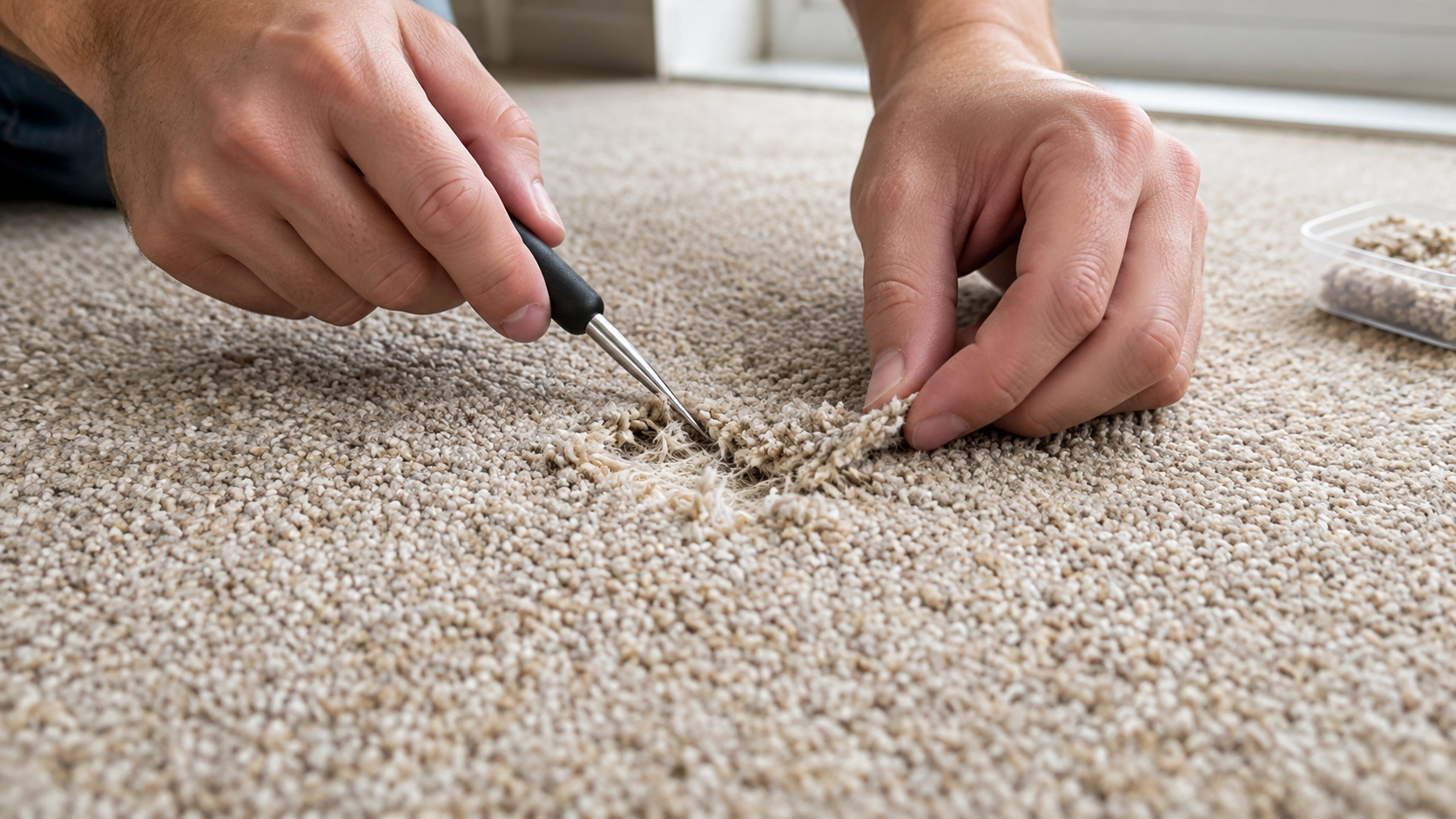
A Small Carpet Hole Can Become a Bigger Problem
A small hole in carpet may not seem urgent when it first appears. It might be caused by furniture movement, a pet, a dropped object, a burn, or everyday wear.The problem is that damaged carpet fibers and backing can become more vulnerable to additional wear. What starts as a small opening can gradually become a larger tear, frayed edge, or noticeable damaged area.
For homeowners dealing with carpet holes in Lake St. Louis, understanding what caused the damage and how extensive it is can help determine whether a localized repair is enough or whether the surrounding carpet needs more attention. The earlier the condition is evaluated, the easier it may be to prevent a small damaged area from becoming a larger carpet problem.
What Causes Small Holes in Carpet?
Carpet holes can develop for several different reasons, and identifying the cause can help determine the appropriate repair. Common causes include:
- Pet scratching or chewing
- Furniture movement
- Cigarette or heat burns
- Sharp objects
- Accidental cuts
- Heavy or repeated friction
- Damage around carpet seams
- Long-term wear in high-traffic areas
Not every hole has the same repair requirements. A small, clean opening in otherwise healthy carpet may be easier to address than a hole surrounded by loose, worn, or damaged fibers.
Why Small Carpet Holes Can Get Worse
Carpet is made from connected fibers and backing materials. Once an area is damaged, the surrounding material may no longer have the same level of stability. A small opening can gradually develop:
- Frayed edges
- Loose fibers
- Larger tears
- Pulled sections
- Visible separation from surrounding carpet
- Additional damage from foot traffic
Walking over the damaged area repeatedly can place additional stress on the surrounding fibers. That is why waiting until a small hole becomes highly noticeable may make the eventual repair more complicated.
What Should You Do When You First Notice a Hole?
The first step is to avoid making the damaged area worse. Try not to:
- Pull loose fibers
- Cut away surrounding carpet unnecessarily
- Drag furniture across the damaged section
- Pick at frayed edges
- Apply adhesive without knowing whether it is appropriate for the carpet
Instead, look at the size, shape, and location of the damage. If the hole is small and localized, a professional can determine whether carpet hole repair or another repair method is appropriate.
Does the Size of the Hole Matter?
Yes, but size is not the only factor. A small hole in a high-traffic walkway can potentially experience more stress than a slightly larger hole in an area that receives very little activity. When assessing the damage, consider:
Size
A small opening may be suitable for a localized patch, depending on the carpet.
Location
Damage in a hallway, doorway, or staircase may receive repeated foot traffic.
Maintenance Requirements
A flooring product should fit your preferred cleaning and maintenance routine.
Carpet Condition
Older or heavily worn carpet surrounding the hole may be more difficult to match or repair invisibly.
Type of Damage
A burn, clean cut, pulled section, and pet-damaged area may require different approaches.
Available Matching Material
The availability of matching carpet can influence the repair options.
These factors matter when determining whether a carpet patch repair is likely to produce a suitable result.
When Is Carpet Patch Repair an Option?
A localized patch can be useful when the damaged area is limited and suitable replacement material is available. During a patch repair, the damaged section may be removed and replaced with a piece of matching or closely matching carpet.
The goal is to create a repair that blends into the surrounding area rather than leaving a clearly visible damaged spot. The result can depend on several factors, including:
- Carpet color
- Pattern
- Texture
- Age of the existing carpet
- Direction of the fibers
- Location of the repair
- Quality of the matching material
A professional assessment can help determine whether patching makes sense for the particular carpet.
Where Can Replacement Carpet Come From?
One important consideration is where the patch material will come from.
If you have leftover carpet from the original installation, that material may provide a useful source for a repair. Other possibilities may include taking material from a less visible area, depending on the situation.
Matching becomes more difficult when the original carpet is discontinued, significantly faded, or heavily worn.This is one reason keeping leftover carpet after an installation can be helpful for future localized repairs.
What If the Carpet Is Already Worn Around the Hole?
A hole does not always occur in isolation. Sometimes the surrounding carpet is already showing signs of wear, matting, discoloration, or thinning. In this situation, repairing only the hole may improve the damaged area without completely addressing the condition of the surrounding carpet.
Before deciding on a repair, consider whether the carpet around the hole is still in reasonably good condition. If the surrounding area is heavily worn, a professional may recommend looking at the broader condition of the carpet before deciding how to proceed.
Can a Carpet Hole Be Fixed Without Replacing the Whole Carpet?
In many cases, localized damage does not automatically mean the entire carpet needs to be replaced. A repair may be possible when:
- The damage is limited
- The surrounding carpet is in good condition
- Suitable replacement material is available
- The backing remains stable
- The damaged section can be isolated
This is one reason it can be worthwhile to have small damage evaluated before assuming full carpet replacement is necessary. For homeowners searching for carpet repair near me, the goal should be finding out whether the existing carpet can reasonably be restored before committing to a larger project.
When Might Replacement Be More Practical?
Repair is not always the best answer. Full or partial replacement may be worth considering when:
- Damage affects a large area
- Multiple holes are present
- The carpet is already severely worn
- Matching material is unavailable
- The backing is extensively damaged
- The carpet has reached the end of its useful life
- Repairs would be too noticeable across a heavily worn surface
A professional can compare the condition of the damaged section with the surrounding carpet and help determine whether repair remains practical.
Why Matching Carpet Matters
One of the biggest challenges with a carpet patch is making the repaired area blend naturally. Even when the replacement piece appears to be the same color, differences may become visible because of:
- Sun exposure
- Cleaning
- Foot traffic
- Aging
- Fading
- Compression
- Changes in carpet texture
A new piece can sometimes look slightly different from an older surrounding area. The more closely the replacement material matches the existing carpet, the more natural the finished repair can appear.
What About Carpet Holes Caused by Pets?
Pets can create several types of carpet damage.A dog or cat may scratch, chew, pull, or repeatedly disturb one area of carpet.If the damage is limited to a small section, carpet hole repair may be possible.
However, it is also important to address the reason the area continues to receive damage. Otherwise, a newly repaired section could experience the same problem again.If the carpet has multiple pet-damaged areas, looking at the overall condition may provide a better solution than repairing each small hole separately.
Burn Holes Need a Different Approach
Heat or burn damage can leave a clearly defined damaged section. The fibers may appear:
- Discolored
- Melted
- Hardened
- Blackened
- Compressed
- Missing entirely
Because the surrounding fibers may also have been affected by heat, simply cleaning the area will not restore the damaged material. Depending on the extent of the burn, a localized patch may be an option.
Why High-Traffic Areas Need Extra Attention
A small hole in a quiet corner may remain relatively stable for longer than damage in a busy walkway. High-traffic locations include:
- Hallways
- Entryways
- Living rooms
- Stair areas
- Doorways
- Frequently used paths between rooms
Repeated foot traffic can put additional pressure on loose fibers and damaged edges. If a hole is located in one of these areas, addressing it earlier may help prevent further deterioration.
Don't Forget the Carpet Backing
The visible fibers are only part of the carpet.The backing helps hold the carpet together and supports the surface material.When a hole develops, the backing may also be damaged.This matters because a repair that only considers the visible fibers may not address the full condition of the damaged area.
A professional evaluation can help determine whether the damage is limited to the carpet surface or extends into the backing.
How a Professional Carpet Repair Assessment Helps
A professional does more than simply look at the size of a hole.The assessment can consider:
- Cause of the damage
- Size and shape
- Condition of surrounding carpet
- Backing condition
- Carpet age
- Traffic level
- Availability of matching material
- Whether the damage is isolated or widespread
This information helps determine whether a patch, another repair approach, or replacement is the more practical option.If you are unsure what to do with a damaged section, you can discuss your carpet repair needs with a local flooring professional before attempting a larger repair yourself.
What Can Homeowners Do to Prevent Carpet Holes?
Preventing every accident is impossible, but several habits can reduce the likelihood of additional damage.
Move Furniture Carefully
Lift furniture when possible instead of dragging it across the carpet.
Keep Pet Activity in Check
If a pet repeatedly scratches or pulls at one area, address the behavior before repairing the carpet.
Deal With Small Damage Early
Loose fibers and small tears should not be ignored if they are located in high-traffic areas.
Keep a Carpet Remnant
If you have leftover carpet from installation, store it in a dry and protected location. It may become useful for future patch repairs.
Watch Problem Areas
Entryways, hallways, and areas around furniture can experience more wear than other sections.
Small Repair, Bigger Decision
A carpet hole may be small, but the decision about how to handle it depends on more than its size.The cause, location, surrounding carpet condition, backing, age, and availability of matching material can all influence the appropriate solution.For homeowners dealing with Carpet Holes in Lake St. Louis, addressing localized damage before it spreads may give you more repair options and help preserve carpet that is otherwise still in good condition.
Instead of immediately replacing an entire room, have the damaged area evaluated. A professional may determine that a targeted carpet patch repair or another localized solution is enough.
Don't Wait for a Small Hole to Become a Large Repair
Small carpet damage is easy to overlook, especially when it is located beneath furniture or in a less noticeable part of the room.But holes can become larger when loose fibers continue to experience foot traffic, furniture movement, pets, or everyday activity.The good news is that a small damaged section does not automatically mean the entire carpet needs to be replaced.
For homeowners in Lake St. Louis, understanding the condition of the hole and the surrounding carpet is the first step toward choosing the right solution. A professional assessment can help determine whether carpet hole repair, carpet patch repair, or replacement makes the most sense.
Frequently Asked Questions
Can small carpet holes be repaired?
Yes, depending on the size, cause, location, carpet condition, and availability of matching material. A localized patch may be an option for some types of damage.
How do carpet holes get worse?
Loose fibers around a hole can continue to fray when exposed to foot traffic, furniture movement, pets, and everyday use. This can gradually increase the damaged area.
Is carpet patch repair noticeable?
The visibility of a patch depends on factors such as carpet color, pattern, texture, age, fading, and the quality of the matching material.
Can pet-damaged carpet be patched?
Localized pet damage may sometimes be repaired with a patch. However, the underlying reason for repeated scratching or chewing should also be addressed.
Can burn holes in carpet be repaired?
Some localized burn holes can be repaired using a matching piece of carpet. The extent of the heat damage and condition of the surrounding fibers will affect the repair approach.
Should I repair or replace carpet with a hole?
Consider the size and extent of the damage, the condition of the surrounding carpet, the availability of matching material, and the overall age of the carpet.
Where can replacement carpet for a patch come from?
Leftover carpet from the original installation can be useful. In some situations, material may also be taken from a less visible area.
When should I search for carpet repair near me?
If a hole is growing, fraying, affecting a high-traffic area, or you are unsure whether it can be repaired, a local professional assessment can help determine the next step.