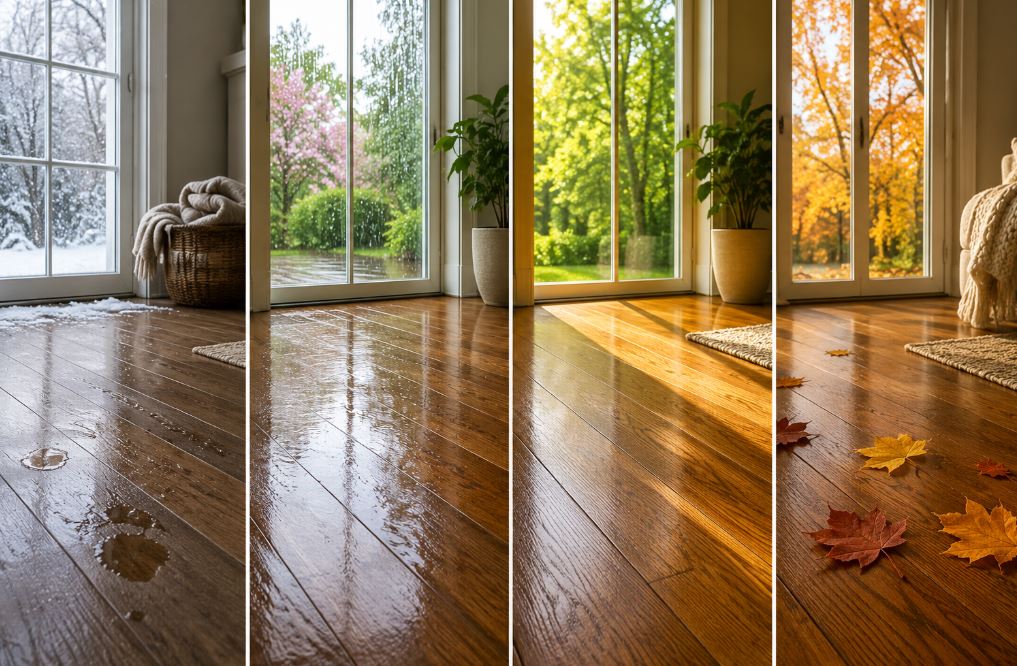
Any home adds ambiance, beauty, and long-term value through hardwood flooring. However, Missouri homeowners frequently observe that when the seasons shift, their floors appear slightly different. The boards seem ideal one month, but in the next month they could begin to show tiny fractures, swelling, or squeaking noises.
Such arises as the result of hardwood floors in O’Fallon constant ability to adapt to seasonal variations in humidity and temperature. The state, look, and lifespan of your flooring can be impacted by seasonal weather, from dry winter air to humid summers.
Homeowners can maintain their investment and avert future costly maintenance costs through being knowledgeable of how weather damages hardwood flooring.
Why Hardwood Floors React to Seasonal Changes
Wood is an organic material that expands and shrinks in response to changes in atmospheric moisture levels. Hardwood swells and absorbs moisture during wet seasons. It shrinks and releases moisture during dry seasons.
Although this natural movement is entirely normal, improper management of excessive seasonal fluctuations might result in noticeable flooring issues.
Common weather-related hardwood floor issues include:
- Gaps between planks
- Floor cupping
- Crowning
- Warping
- Buckling
- Squeaking sounds
- Finish damage
Professional Hardwood Flooring O’Fallon specialists often help homeowners repair and prevent these seasonal flooring concerns.
Summer Humidity and Hardwood Floor Expansion
High levels of humidity over Missouri’s summers can swiftly degrade indoor flooring. Hardwood boards expand when you have excessive moisture in the air.
When growth develops out of control, homeowners could observe:
Cupping
Cupping occurs when the edges of hardwood planks rise slightly higher than the center. As an outcome, the flooring surface seems bending.
Swelling
As a result of moisture absorption, some carpeting could appear tighter or uneven during humid months.
Buckling
Boards may completely lift away from the floor coverings due to severe moisture exposure.
The challenges become particularly widespread in homes with inadequate ventilation or high indoor humidity.
Signs Your Hardwood Floors Are Affected by Summer Moisture
Look for these warning signs during humid weather:
- Raised plank edges
- Uneven flooring texture
- Musty indoor smell
- Floors feeling slightly soft
- Visible warping near windows or doors
If these issues continue growing, contacting a hardwood floor service in O’Fallon early can help prevent long-term damage.
Winter Dryness and Hardwood Floor Shrinking
For hardwood floors, winter causes the opposite issue. The combination of indoor heating systems and cold external temperatures lowers the amount of moisture in the house.
Hardwood boards slightly shrink when the air gets dry. This can lead to:
Gaps Between Boards
Small spaces may appear between planks during colder months. These gaps often close naturally once humidity returns.
Increased Squeaking
Dry boards sometimes loosen slightly, creating squeaky sounds when walked on.
Minor Cracking
Extremely dry conditions may stress wood fibers and affect flooring finishes.
Most seasonal shrinking is temporary, but extreme dryness can accelerate floor aging over time.
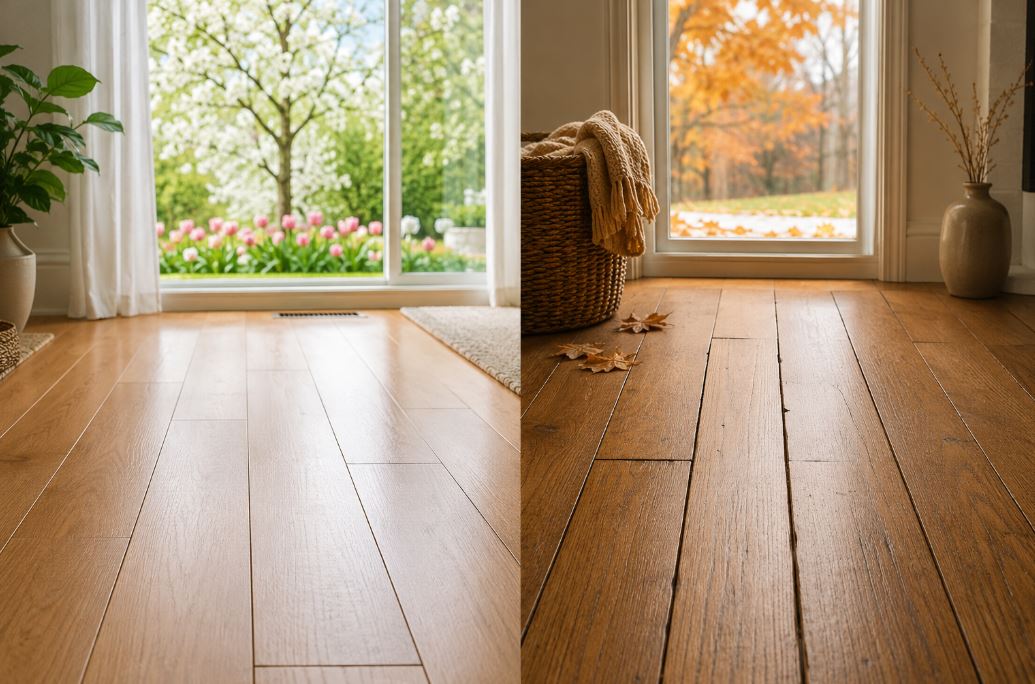
How Spring and Fall Affect Hardwood Flooring
Transitional seasons can also create flooring stress because humidity levels fluctuate constantly.
Rapid weather swings may cause:
- Repeated expansion and contraction
- Finish wear
- Loose boards
- Increased floor movement
In O’Fallon homes, these repeated seasonal cycles gradually impact flooring performance over the years.
That is why routine maintenance is essential for protecting Hardwood Floors in O’Fallon.
Areas Most Vulnerable to Seasonal Damage
Certain portions of the house have access to more moisture than others.
Entryways
Moisture exposure at entrances can be increased by dirt, snow, and rainwater that is tracked inside.
Kitchens
Cooking steam and appliance moisture may affect nearby hardwood.
Basements
All year round, basements frequently enforce high humidity levels.
Sunrooms
Flooring materials can be dried out more quickly by direct sunlight and temperature changes.
These high-risk regions could need more upkeep and security.
How to Protect Hardwood Floors During Seasonal Changes
Weather-related flooring issues can be considerably decreased with preventive treatment.. Homeowners do not need to avoid hardwood flooring — they simply need proper maintenance strategies.
Maintain Indoor Humidity Levels
Stable humidity is one of the most important ways to protect hardwood flooring.
Experts generally recommend maintaining indoor humidity between 35% and 55%.
Helpful ways to control moisture include:
- Using humidifiers during winter
- Running dehumidifiers during humid summers
- Improving home ventilation
- Using HVAC systems consistently
- Monitoring humidity with indoor sensors
Balanced indoor air helps reduce excessive wood movement.
Clean Spills Immediately
Moisture is one of hardwood flooring’s biggest enemies. Even small spills should be cleaned quickly.
Avoid allowing:
- Wet shoes
- Pet accidents
- Appliance leaks
- Water from plants
- Standing moisture
Excess water can seep into wood seams and cause swelling or staining.
Use Proper Hardwood Floor Cleaning Methods
Many homeowners employ a lot of water during cleaning, which accidentally damages flooring.
Some of the best practices are:
- Using microfiber mops
- Avoiding soaking wet mops
- Choosing hardwood-safe cleaners
- Cleaning up spills promptly
- Keep clear of harsh substances.
Both the wood that was harvested and the protective finish may be protected with regular maintenance.
Protect Floors From Temperature Extremes
Direct heat and sunlight can dry hardwood unevenly.
Simple preventive measures include:
- Using blinds or curtains
- Avoid clear of direct heat vents on floors
- Holding interior temperatures constant
- Rug rearranging per the season
Reducing sudden environmental changes helps protect flooring stability.
Why Professional Hardwood Floor Maintenance Matters
Over time, seasonal wear can significantly alter the visual appeal and usability of flooring.. Expert maintenance assists in spotting minor issues before they develop into significant fixes.
A reputable O’Fallon hardwood floor service can assist with:
- Floor inspections
- Moisture testing
- Refinishing
- Board replacement
- Scratch repair
- Suggestions for seasonal maintenance
Additionally, protective coatings that shield hardwood from wear and moisture are restored by professional refinishing.
When Should You Call a Hardwood Flooring Professional?
Certain indicators necessitate a professional evaluation, even though some seasonal change is normal.
Contact a Hardwood Flooring O’Fallon expert if you notice:
- Large floor gaps
- Severe cupping
- Buckling boards
- Persistent squeaking
- Water stains
- Soft spots
- Loose planks
- Finish peeling
Fast resolution of these problems usually avoids later, higher-cost repairs.
Importance of Keeping Care of Floors Made of Hardwood
For homeowners, well-maintained hardwood flooring offers advantages over the long term.
Extended Floor Life
Proper humidity control and maintenance help floors last for decades.
Better Indoor Appearance
The entire appearance of a property is enhanced by smooth, healthy flooring.
Higher Property Value
For customers, premium hardwood flooring continued to be a key selling factor.
Reduced Repair Costs
Preventive care helps avoid major structural flooring damage.
Enhanced Comfort Indoors
A more secure and cozy living space is produced by stable flooring.
Final Thoughts
Though seasonal changes in the weather are a common occurrence in Missouri, they have a major impact on O’Fallon hardwood floors. While dry winters might result in floor gaps and shrinking, humid summers might cause expansion and cupping.
However, scheduled upkeep, experienced flooring care, and appropriate humidity control measures can help homeowners maintain their investment. The swift identification of minor warning indicators can help minimize more significant flooring issues down the road.
Frequently Asked Questions About Vinyl Plank Flooring in O’Fallon
Repair is usually sufficient if the damage is minor in nature, such as a few scratches, gaps, or a loose plank. Yet replacement is a better long-term strategy if you’re witnessing general issues like water damage, warping, or excessive broken planks.
Yes, for small problems. Small scratches are often fixed with a repair kit or floor filler for vinyl. However, it’s safer (and frequently affordable in the long run) to contract with a professional for anything involving water damage, lifting boards, or subfloor trouble.
The damage actually influences the cost. While replacing a few planks is more expensive, straightforward changes are more inexpensive. In O’Fallon, however, repairs are nearly always simpler and cheaper than new vinyl laminate flooring.
Planks rising or separating is one of the most frequent problems that homeowners observe. The good news is that it can frequently be fixed without replacing the entire floor. This is typically caused by moisture, temperature changes, or installation problems.
Not all the time. Experts can frequently fix vinyl tile or replace a few planks if the damage has been restricted to a small region. Still, repair might be required to stop growth of mold or more damage if water has seeped beneath a significant area.