
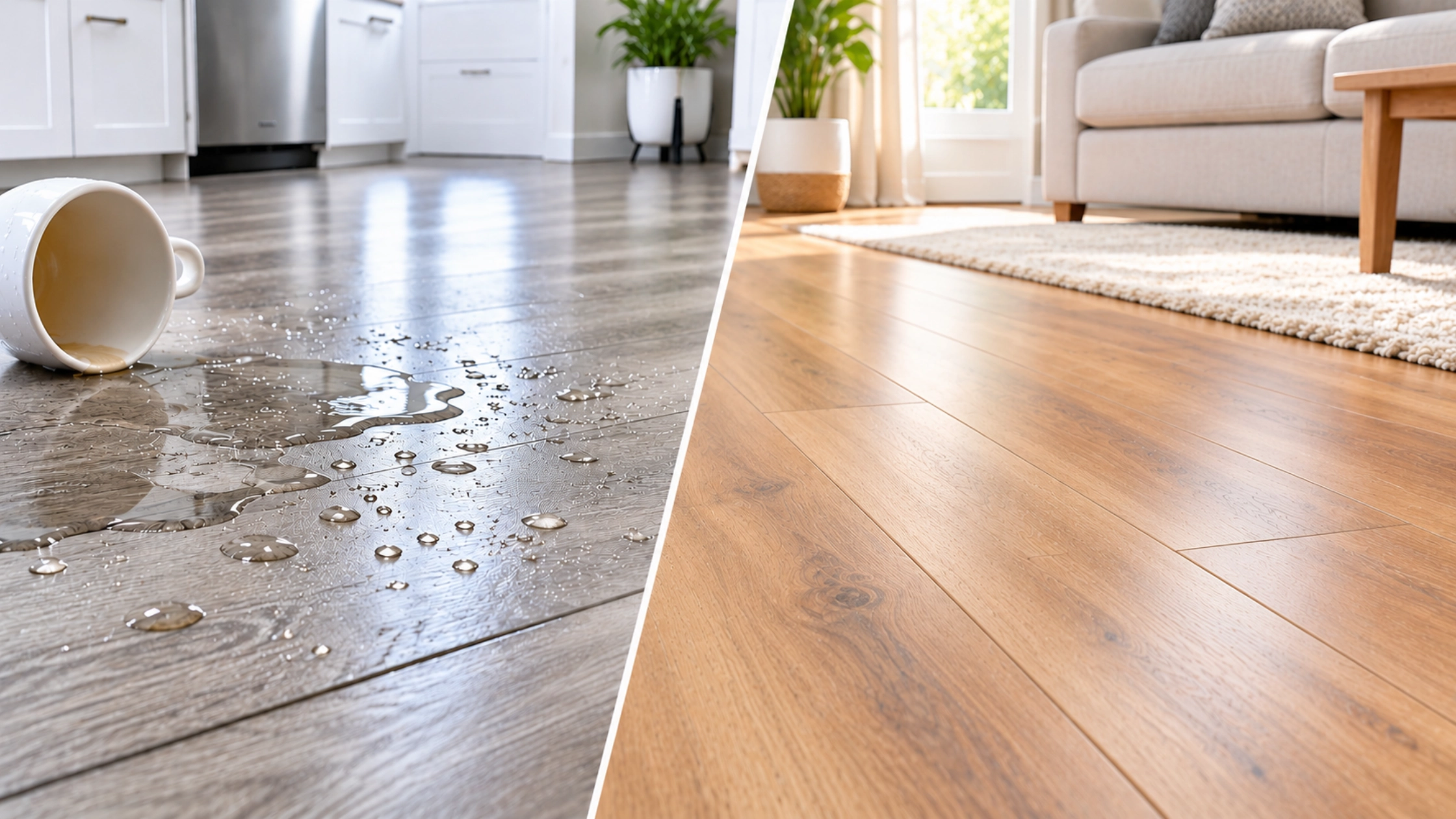
Not Every Laminate Floor Has the Same Moisture Protection
Laminate flooring can give a home the look of natural hardwood while providing a practical surface for everyday activity. But when moisture becomes a concern, not every laminate product offers the same level of protection.
Waterproof and standard laminate can look very similar, yet their construction, moisture protection, installation requirements, and suitability for different rooms may vary. For homeowners considering laminate flooring in O’Fallon, understanding these differences can help narrow down which option better fits the space and how it will be used.
The goal is not simply to choose the product with the strongest-sounding label. Instead, consider the room’s moisture exposure, traffic level, maintenance needs, and installation conditions before deciding which type of laminate flooring makes the most sense for your home.
What Is Standard Laminate?
Standard laminate is a layered flooring product designed to replicate the appearance of materials such as natural hardwood. Its construction can vary by manufacturer, but laminate generally includes a decorative surface, protective wear layer, core, and backing.Standard laminate can be suitable for many areas where moisture exposure is relatively limited, including:
- Bedrooms
- Living rooms
- Dining areas
- Home offices
- Hallways
- Other dry interior spaces
However, homeowners should always check the specifications of the individual product. Not all laminate flooring has the same level of moisture resistance. This is one reason it helps to consider the room before choosing a particular flooring product.
What Makes Waterproof Laminate Different?
Waterproof laminate is designed to provide greater protection against moisture than conventional laminate products.The exact construction and level of protection can differ between manufacturers. Some products use features designed to reduce moisture penetration through the surface or between planks.
However, the word waterproof should not be interpreted as meaning that the floor can withstand unlimited standing water or serious flooding.Product specifications, installation instructions, and warranty requirements still matter.For homeowners comparing their options, understanding these details is more useful than choosing based only on the product name.
Waterproof Laminate vs. Standard Laminate: What Actually Changes?
The biggest consideration in Waterproof Laminate vs. Standard Laminate is moisture protection, but that is not the only difference worth considering. Look at the flooring in terms of:
- Moisture exposure
- Room usage
- Foot traffic
- Cleaning habits
- Installation requirements
- Subfloor condition
- Maintenance
- Product warranty
- Future repair needs
For example, a bedroom with little moisture exposure may have different flooring requirements from an entryway where wet shoes regularly come inside.
That is why the right laminate flooring choice should be based on the conditions of the room rather than a general assumption that one product is always better.
Where Could Waterproof Laminate Make More Sense?
Rooms with a greater possibility of everyday moisture may benefit from considering a product with enhanced moisture protection.Examples may include:
- Kitchens
- Entryways
- Busy family areas
- Spaces near exterior doors
- Areas where spills are more likely
- Homes with pets or children
This does not mean waterproof laminate is automatically necessary in every one of these areas.Instead, homeowners should consider how much moisture the floor is realistically exposed to and compare that with the manufacturer’s product specifications.
If you are planning a laminate project in O’Fallon, you can also explore local laminate flooring options to see what types of flooring may fit your space and project requirements.
When Can Standard Laminate Be a Practical Choice?
Standard laminate can still make sense for many rooms. If the space is relatively dry and does not experience frequent spills or moisture exposure, additional moisture protection may be less important than other factors. You may instead want to focus on:
- Appearance
- Surface durability
- Plank design
- Traffic level
- Cleaning requirements
- Overall project needs
Bedrooms, offices, and other relatively dry areas may not require the same moisture considerations as kitchens or entryways. The important point is to match the flooring to the environment rather than automatically choosing the most moisture-resistant option.
Don't Forget the Existing Floor
One of the most important parts of a laminate project has nothing to do with the laminate itself. The condition of the existing floor can affect the finished result. Before installation, look for:
- Uneven areas
- Soft spots
- Moisture concerns
- Damaged sections
- Loose flooring
- Subfloor irregularities
- Previous water damage
Installing new flooring over an unresolved problem does not necessarily eliminate the underlying issue. If your current floor needs attention first, you can learn more about flooring repair solutions before moving ahead with a new installation.
This is especially important when moisture has already affected the existing flooring.
Moisture Can Come From More Than Spills
When homeowners think about waterproof flooring, they often think about spilled drinks or water near a sink.But moisture can enter a flooring system in other ways. Potential sources include:
- Appliance leaks
- Plumbing problems
- Wet footwear
- Water near exterior doors
- Cleaning with excessive moisture
- Moisture coming from below the flooring
- Previous water damage
Identifying the source is important. If a leak or moisture problem remains unresolved, installing a more moisture-resistant flooring product may not solve the underlying problem.
How Does Installation Affect the Choice?
The comparison between Waterproof Laminate vs. Standard Laminate should also include installation.Different flooring products can have different installation requirements. Expansion space, transitions, underlayment, subfloor preparation, and manufacturer specifications all need to be considered.
A product can perform differently when installed over an unsuitable or poorly prepared surface.For homeowners planning a new project, professional laminate flooring installation can help ensure the flooring is installed according to the requirements of the selected product.
What About High-Traffic Areas?
Traffic level is another factor that should not be overlooked.A hallway, entryway, or family room may experience considerably more activity than a guest bedroom.
Think about:
- Daily foot traffic
- Furniture movement
- Pets
- Children
- Dirt and debris
- Frequency of cleaning
When comparing laminate products, look at the overall construction and wear characteristics rather than focusing only on moisture protection. A floor needs to suit the complete environment in which it will be used.
How Should You Compare Maintenance Requirements?
Both standard and waterproof laminate require appropriate care.Waterproof construction does not mean that the floor can be cleaned with unlimited amounts of water.Follow the manufacturer’s recommendations for:
- Cleaning products
- Mop types
- Moisture levels
- Spill cleanup
- Routine maintenance
- Protective measures
Promptly cleaning spills is still a good practice regardless of the type of laminate installed. Furniture pads and careful movement of heavy items can also help reduce unnecessary surface damage.
What If Your Existing Laminate Has Water Damage?
If your current laminate has been exposed to water, do not assume that the entire floor automatically needs replacement.The appropriate response depends on the extent and type of damage. Look for signs such as:
- Swollen edges
- Raised planks
- Separation between boards
- Discoloration
- Buckling
- Movement underfoot
- Damaged areas around a leak
The source of the moisture should be identified first. After that, the affected flooring can be evaluated to determine whether localized repair or replacement is more appropriate. If you are dealing with damaged laminate or another flooring problem, you can review available repair options for damaged flooring before deciding on a larger replacement project.
Can Waterproof Laminate Still Be Damaged?
Yes. Waterproof laminate provides additional moisture protection, but it is not indestructible.Serious leaks, flooding, prolonged exposure, improper installation, or moisture underneath the flooring can still cause problems.
The term waterproof should therefore be considered one factor in the decision rather than a guarantee that the flooring cannot be damaged by water.Checking the manufacturer’s warranty and installation requirements can give you a clearer understanding of what the product is designed to handle.
What About Vinyl Laminate Flooring?
Some homeowners also compare laminate products with other flooring choices, including vinyl laminate flooring. Although these materials can have similar wood-look appearances, their construction and performance characteristics are different.
The right choice depends on factors such as:
- Moisture exposure
- Traffic
- Room function
- Maintenance
- Appearance
- Installation requirements
- Repair considerations
If you are still comparing materials for your O’Fallon home, you can learn more about vinyl laminate flooring options before settling on a particular product. This gives you another option to consider rather than limiting the decision to standard and waterproof laminate alone.
Does Waterproof Laminate Always Cost More?
Pricing can vary significantly depending on the product, brand, construction, thickness, finish, installation requirements, and project size. Waterproof construction may affect the price of a particular product, but homeowners should compare the complete flooring project rather than looking only at the material price.
Consider:
- Material
- Installation
- Subfloor preparation
- Removal of existing flooring
- Transitions
- Additional materials
- Future maintenance
A product with a higher initial price may offer features that make sense for a particular room, while a more basic product may be perfectly suitable elsewhere.
When Should You Consider Repair Instead of Replacement?
If you already have laminate flooring installed, replacement is not necessarily the first step when a problem appears. A localized issue may sometimes be addressed without replacing the entire floor. Signs that deserve attention include:
- One or several damaged planks
- Small areas of separation
- Localized water damage
- Scratches or surface damage
- Lifting or movement
- Problems around transitions
The extent of the problem and the availability of matching material will influence the repair possibilities.
For existing flooring concerns, professional flooring repair services can help determine whether the affected area can be addressed without unnecessarily replacing an otherwise usable floor.
A Simple Way to Make the Decision
If you’re still unsure which type of laminate to choose, use the room itself as your starting point.
For relatively dry rooms:
Standard laminate may provide the features you need without requiring additional moisture protection.
For areas with greater moisture exposure:
Waterproof laminate may be worth considering, depending on the specific product and installation conditions.
For existing damaged floors:
Evaluate the source and extent of the damage before choosing replacement flooring.
For larger remodeling projects:
Consider how the new flooring will connect with the rest of your home.
This approach keeps the decision practical instead of treating one flooring type as the universal answer.
See How Flooring Options Work in Real Spaces
Product samples can help you compare colors and textures, but seeing completed flooring projects can give you a better sense of how different materials look once installed. You can see examples of completed flooring projects to get ideas for colors, plank styles, layouts, and finished spaces.
This can be especially helpful when deciding how a new floor might work with your existing walls, furniture, doors, and room layout.
Before You Start Your Laminate Project
Before purchasing flooring, take a few minutes to evaluate the project as a whole.
Check:
- The condition of the existing floor
- The room’s moisture exposure
- Expected traffic
- Flooring specifications
- Installation requirements
- Maintenance needs
- Transition areas
- Future repair possibilities
If you are unsure about any of these areas, getting professional input before purchasing materials can help prevent avoidable problems later. You can discuss your flooring project with a local professional to review the space and determine what type of flooring solution may be appropriate.
Making the Right Laminate Flooring Choice for Your O’Fallon Home
The comparison between Waterproof Laminate vs. Standard Laminate is not simply about deciding which product is better.Both options can make sense in different situations.Waterproof laminate may be worth considering when moisture exposure is an important concern. Standard laminate can be a practical choice for areas where moisture is limited and other flooring characteristics are more important.
For O’Fallon homeowners, the best approach is to look at the room, existing floor, household activity, moisture exposure, installation requirements, and long-term maintenance before making a decision.A thoughtful comparison can help you choose flooring that fits the way your home is actually used rather than selecting a product based only on its name or appearance.
Frequently Asked Questions
What is the difference between waterproof laminate and standard laminate?
The primary difference is the level of moisture protection provided by the flooring construction. Waterproof laminate is designed to provide greater protection against moisture, while standard laminate may have more limited moisture resistance depending on the product.
Is waterproof laminate completely protected from water damage?
No. Waterproof laminate can provide enhanced moisture protection, but serious leaks, flooding, prolonged exposure, or moisture coming from underneath the floor can still cause damage.
Is waterproof laminate better for kitchens?
It can be worth considering for kitchens because these areas may experience spills and moisture. However, homeowners should review the specific product’s specifications and installation requirements.
Is standard laminate still a good flooring option?
Yes. Standard laminate can be suitable for many relatively dry rooms when the product is appropriate for the space and properly installed.
Does the existing floor need to be checked before laminate installation?
Yes. Uneven surfaces, moisture problems, damaged sections, and subfloor issues can affect the performance of new laminate flooring.
Can damaged laminate flooring be repaired?
Depending on the type and extent of damage, localized repair may be possible. The availability of matching material and condition of the surrounding floor can also affect the repair options.
How should laminate flooring be maintained?
Follow the manufacturer’s cleaning and maintenance instructions, clean spills promptly, avoid excessive moisture, and protect the surface from unnecessary scratches and furniture damage.
Should I choose waterproof laminate for every room?
Not necessarily. The appropriate flooring depends on the room’s moisture exposure, traffic, household activity, installation conditions, and other project requirements.