What Your Carpet's Wrinkles Could Mean
Have you noticed waves across your living room carpet, a raised bump near a doorway, or ripples that seem to be spreading down the hallway? These changes can make a room look untidy and may create a tripping hazard.
Before assuming your carpet needs to be replaced, take a closer look at the pattern of the wrinkles. Their location, shape, and size can offer useful clues about why the carpet has become loose. For homeowners in Cottleville, MO, carpet stretching may be a practical way to restore a smoother surface when the carpet is still in suitable condition. However, not every wrinkle has the same cause, and some problems may require additional repairs.
Understanding what to look for can help you make a more informed decision about caring for your carpet.
What Can Different Carpet Wrinkle Patterns Tell You?
Carpet wrinkles can appear in several forms. While the pattern may provide a clue, it cannot confirm the exact cause on its own. The carpet’s backing, padding, seams, and attachment points also need to be considered.
1. Long Waves Across the Middle of the Room
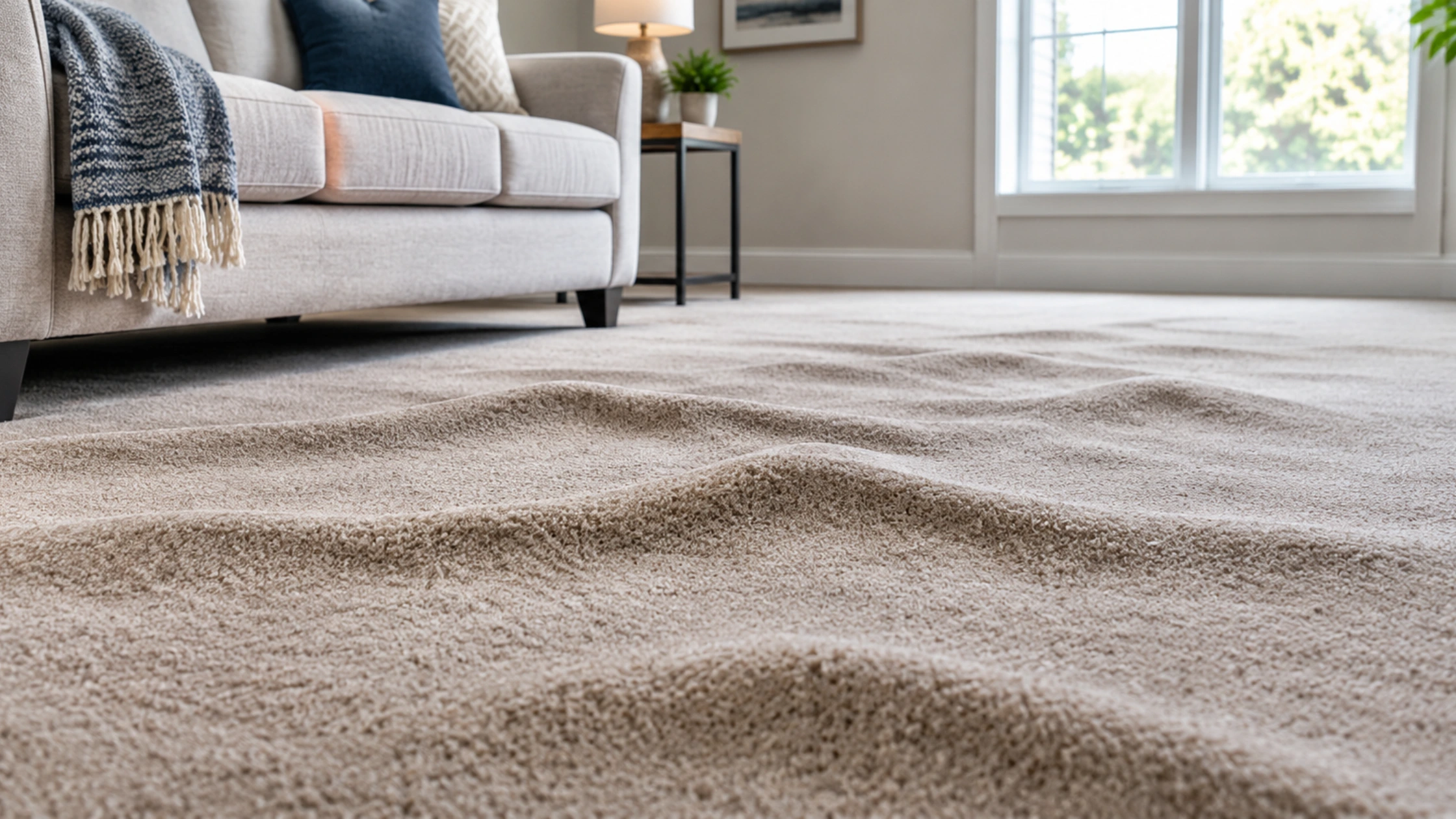
Broad waves or ripples running across an open area are often associated with carpet that has lost tension. This can happen when carpet was not stretched adequately during installation or gradually became loose through everyday use. Moving heavy furniture may also contribute to the problem in some situations.
If the carpet is otherwise in good condition, professional stretching may help remove the waves and restore a flatter surface.
💡 What to check:
Look for several connected ripples that become more noticeable when viewed from across the room. Avoid repeatedly pulling or pushing the carpet yourself, as this will not correct the underlying tension problem.
2. A Raised Bump in One Specific Area
A single bump or isolated bulge may indicate a localized problem rather than widespread looseness. Possible causes include furniture movement, a carpet section being pulled out of position, or an issue with the carpet or padding underneath. The exact cause depends on the location and condition of the affected area.
A professional inspection can help determine whether localized stretching is appropriate or whether another repair is necessary.
💡 What to check:
Notice whether the bump appears near furniture, a doorway, or an area where something heavy was recently moved. If the carpet feels unusually soft or uneven underneath, mention that during an inspection.
3. Wrinkles Near Doorways and Room Transitions
Carpet around doorways and transitions between rooms can experience frequent foot traffic and movement. If the carpet begins to ripple in these areas, it may have lost tension or developed an issue near its edge or transition strip. A damaged seam or attachment problem may also contribute.
Stretching may correct wrinkles caused by looseness, but it will not automatically fix a broken transition strip or damaged seam.
💡 What to check:
Look for raised edges, separated seams, or carpet that appears to be pulling away from the transition. These details can help identify whether the repair needs to address more than tension alone.
4. Ripples Along the Edges of a Room
Wrinkles near baseboards or around the perimeter may indicate that the carpet is no longer sitting securely in its original position. Carpet is typically secured around the room’s perimeter. If an edge becomes loose or the carpet loses tension, the surface may begin to bunch up nearby.
However, visible wrinkles along the wall do not always mean the edge itself is the source of the problem. The looseness may extend farther into the room.
💡 What to check:
Look for carpet lifting near the baseboard, loose edges, or ripples that extend inward from the wall. A flooring professional can assess whether the carpet needs to be re-stretched and secured.
5. Several Small Ripples Across a High-Traffic Area
Hallways, family rooms, and frequently used paths can experience repeated pressure from foot traffic. Over time, the carpet may develop loose sections or small ripples. Furniture movement and installation issues can also play a role.
If the carpet is still structurally sound, stretching may help. If the fibers are heavily worn or the backing has deteriorated, additional repair or replacement may be worth considering.
💡 What to check:
Observe whether the ripples are limited to one path or appear in several areas. Also look for flattened fibers, damaged seams, or other signs of wear that could affect the repair.
Why Do Carpet Wrinkles Develop in the First Place?
The shape of a wrinkle is only part of the picture. Understanding what caused the carpet to become loose is important when deciding how to address it.
Improper Installation or Insufficient Stretching
Carpet needs appropriate tension during installation to help it remain smooth and secure. If it was not stretched correctly, wrinkles may appear sooner than expected.
Everyday Foot Traffic
Regular use can contribute to movement and wear, particularly in busy parts of the home. Foot traffic alone does not explain every wrinkle, but it may contribute to a problem that is already developing.
Moving Heavy Furniture
Dragging a sofa, bed, or cabinet across carpet can pull the material and affect its position. Lifting furniture when possible can help reduce unnecessary pulling.
Problems With Carpet Backing or Padding
Carpet backing and padding affect how the surface sits and performs. If either is damaged or deteriorating, stretching alone may not provide a lasting solution.
Moisture or Other Underlying Issues
Moisture-related problems can affect carpet and its supporting materials. If wrinkles appear alongside dampness, musty odors, discoloration, or other signs of water damage, the underlying issue should be investigated before treating the wrinkles as a simple tension problem.
When Can Carpet Stretching Fix the Problem?
Professional carpet stretching is designed to restore tension to carpet that has become loose or developed wrinkles. It may be suitable when:
- The carpet fibers remain in reasonably good condition.
- The backing is still strong enough to be stretched.
- The primary problem is looseness or rippling.
- The carpet has not suffered extensive structural damage.
- The edges and attachment points can be secured properly.
During the repair, a flooring professional assesses the carpet, identifies the affected areas, and uses specialized equipment to restore suitable tension. The carpet is then secured again, and the repaired surface is checked for remaining wrinkles or other concerns. The amount of work required depends on the room, carpet condition, and extent of the problem.
When Is Stretching Not Enough?
Although stretching can address many wrinkles caused by lost tension, it cannot resolve every carpet problem. Replacement or additional repair may be necessary if the carpet has:
- Deteriorated or damaged backing
- Extensive tears or holes
- Severely worn fibers across large areas
- Damaged seams that need separate attention
- Persistent moisture damage
- Permanent staining or other substantial damage
For example, a long wrinkle across an otherwise healthy carpet may be a good candidate for stretching. A similar wrinkle in carpet with crumbling backing or widespread wear may require a different solution.
The goal is to identify the actual problem before investing in a repair that may not last.
Should You Repair or Replace Wrinkled Carpet in Cottleville?
The presence of wrinkles alone does not mean you need new carpet. If the carpet still looks healthy and the main concern is that it no longer lies flat, professional stretching may be worth considering. It can help restore the appearance of the existing carpet without the disruption of a full replacement.
On the other hand, if the carpet is badly worn, structurally damaged, or affected by moisture, replacement may provide better long-term value. Before making a decision, consider these three factors:
- Overall condition: Are the fibers and backing still in reasonable shape?
- Extent of the problem: Are the wrinkles limited to one section or spread throughout the room?
- Underlying damage: Are there loose edges, damaged seams, worn padding, or signs of moisture?
A professional assessment can help you compare the options based on the carpet’s actual condition.
How to Help Prevent Carpet Wrinkles From Returning
Once carpet has been stretched, a few practical habits can help protect its condition.
Move Furniture Carefully
Lift heavy furniture when practical instead of dragging it across the carpet. Use appropriate furniture-moving equipment when needed.
Address New Ripples Early
If you notice a wrinkle developing, avoid repeatedly walking over or pressing it down in an attempt to flatten it. Have the area assessed before the problem becomes more extensive.
Use Appropriate Cleaning Methods
Follow the cleaning recommendations for your carpet and avoid excessive moisture. If ripples remain after cleaning, have the carpet checked rather than assuming the problem will resolve itself.
Keep an Eye on High-Traffic Areas
Check hallways, doorways, and frequently used rooms for early signs of looseness, damaged seams, or lifting edges.
Investigate Moisture Concerns
If carpet becomes damp or develops a musty odor, identify and address the moisture source. Simply stretching the carpet will not solve an underlying water problem.
Get the Right Solution for Wrinkled Carpet
A wrinkle can tell you where to start looking, but it does not always reveal the full cause of the problem. Long waves, isolated bumps, ripples near doorways, and loose edges may each require a different assessment.
For homeowners considering carpet stretching in Cottleville, MO, the best next step is to evaluate the carpet’s tension, backing, seams, and overall condition before deciding whether to stretch, repair, or replace it.
Frequently Asked Questions
Can the shape of a carpet wrinkle identify the exact problem?
Not by itself. The wrinkle’s location and shape can offer clues, but a professional needs to assess the carpet, backing, padding, seams, and attachment points to determine the likely cause.
Can carpet stretching remove long ripples across a room?
It often can when the ripples are caused by lost tension and the carpet remains in suitable condition. The outcome depends on the carpet’s backing and the reason the wrinkles developed.
Why does carpet wrinkle near a doorway?
Carpet near a doorway may develop wrinkles because of lost tension, movement, a loose edge, a damaged seam, or an issue with the transition strip. The area should be inspected to determine the appropriate repair.
Should I replace carpet that has developed wrinkles?
Not necessarily. If the carpet is otherwise in good condition, stretching may be a practical alternative. Extensive wear, damaged backing, or moisture damage may make replacement more appropriate.
Can I stretch the wrinkled carpet myself?
Correctly stretching carpet requires specialized equipment and suitable technique. Attempting it without the right tools may result in uneven tension or damage to the carpet, so professional assessment is recommended.
Does carpet stretching fix damaged seams?
Stretching may help address looseness around a seam, but a damaged or separated seam may need a separate repair. The appropriate solution depends on the type and extent of the damage.