Is Vinyl Laminate Flooring Really Waterproof?
When choosing flooring for a home, water resistance is often high on the list of priorities. Kitchens, bathrooms, laundry rooms, entryways, and other busy areas can all be exposed to spills, moisture, and everyday messes.This is why vinyl laminate flooring is often considered by homeowners looking for a flooring option that combines durability with an attractive appearance.
However, the terms waterproof, water-resistant, vinyl, and laminate can sometimes create confusion. Not every flooring product handles moisture in the same way, and the construction of the material can make a significant difference.For homeowners considering new flooring in St. Charles, understanding how the product responds to water can help you make a more informed decision and avoid choosing flooring based only on its appearance.
Vinyl and Laminate Flooring Are Not the Same
Before discussing waterproofing, it helps to clear up one common point of confusion.Vinyl flooring and laminate flooring are two different types of flooring.They can both be designed to resemble hardwood, stone, or other materials, but their construction is different.
Vinyl Flooring
Vinyl flooring is made primarily from synthetic materials and is available in several formats, including luxury vinyl plank and luxury vinyl tile.Because of its composition, many vinyl products offer strong resistance to moisture and water.
Laminate Flooring
Laminate flooring typically has a decorative surface layer over a fiberboard-based core. Traditional laminate can be more vulnerable to moisture exposure, particularly when water reaches the edges, seams, or underlying core.Modern laminate products can offer improved moisture resistance, but homeowners should still check the specifications of the exact product.
This distinction matters because a flooring product marketed informally as “vinyl laminate” may actually be referring to vinyl flooring designed with a laminate-like appearance, rather than a single category of flooring.
What Does Waterproof Actually Mean?
The word waterproof can sound straightforward, but flooring manufacturers may use different terminology to describe moisture performance.
Water-Resistant
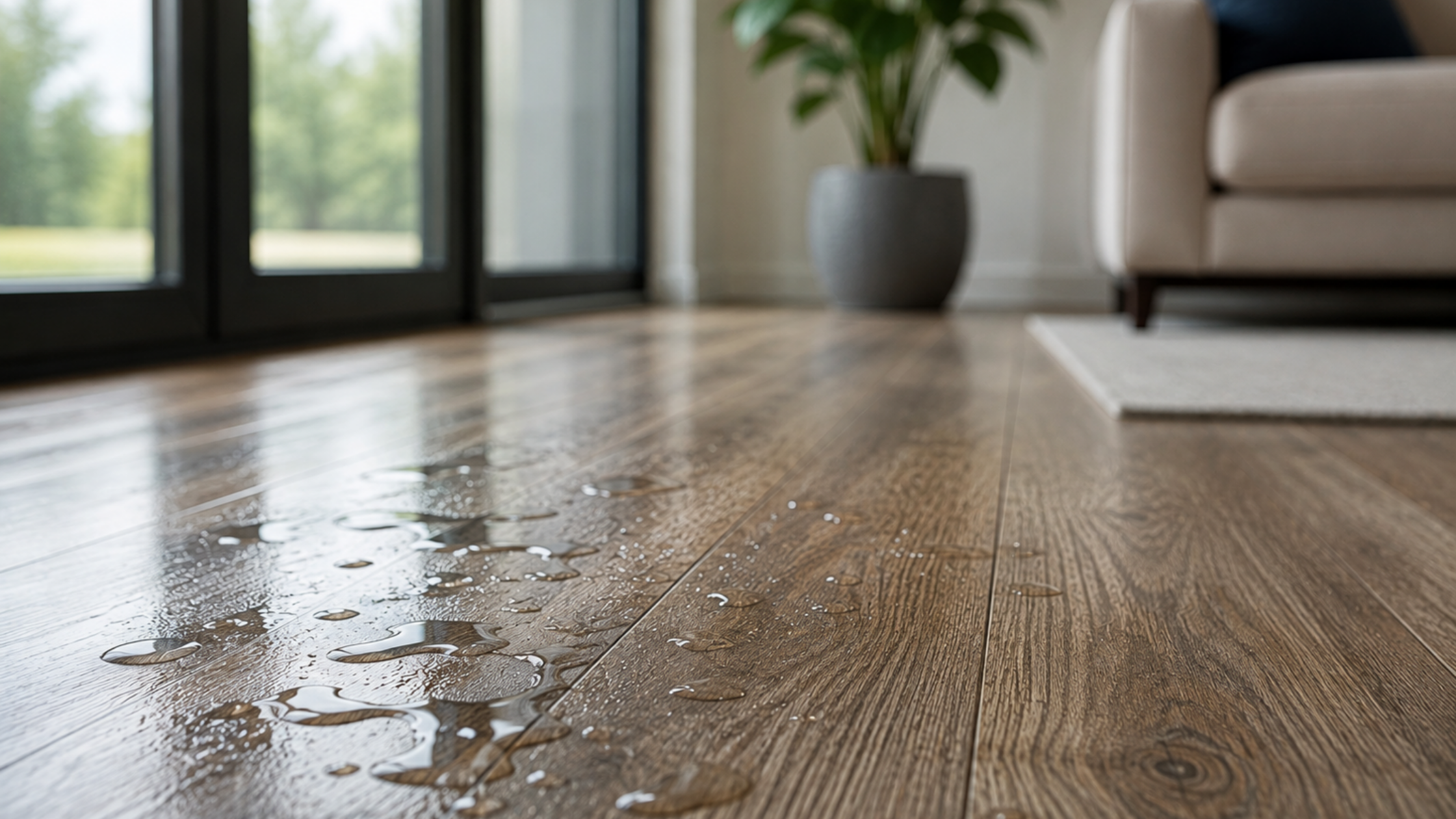
Water-resistant flooring can handle some exposure to moisture but may not be designed for prolonged water contact.A spill that is cleaned quickly may not cause a problem, while standing water that remains for an extended period could eventually create damage.
Waterproof
A waterproof flooring product is specifically designed to provide a higher level of protection against water under the conditions specified by the manufacturer.However, this does not mean that every part of the flooring system is automatically protected from every type of moisture problem.The seams, edges, subfloor, transitions, and installation details still matter.
Is Vinyl Flooring Waterproof?
Many vinyl flooring products are designed to be highly water-resistant or waterproof.This makes vinyl an appealing choice for areas where occasional spills and moisture are part of everyday life.However, the exact performance depends on the product.Before purchasing, check the manufacturer’s specifications for terms such as:
- Waterproof
- Water-resistant
- Moisture-resistant
- Suitable for wet areas
- Approved for bathrooms or kitchens
It is also important to understand the warranty conditions. A product may be waterproof under normal household conditions while still having limitations regarding flooding, standing water, improper installation, or moisture coming from underneath.
What About Laminate Flooring?
Laminate flooring has traditionally been more sensitive to moisture than vinyl.The core of many laminate products contains wood-based materials. If water reaches the core through damaged seams, edges, or prolonged exposure, the material can swell or change shape.Some newer laminate products have improved moisture protection and may be designed for specific areas where traditional laminate would not be recommended.However, homeowners should never assume that all laminate flooring is waterproof.
Before choosing a laminate product, check:
- Manufacturer moisture rating
- Warranty coverage
- Recommended rooms
- Installation requirements
- Seam protection
- Cleaning instructions
- Moisture limitations
Choosing the right product for the room is just as important as choosing a flooring style you like.
Why Moisture Resistance Matters in St. Charles Homes
Every home experiences some level of moisture exposure.Daily activities such as cooking, bathing, cleaning, bringing wet shoes indoors, or dealing with accidental spills can put flooring to the test.In areas such as kitchens and entryways, flooring may regularly encounter water or damp conditions.
For St. Charles homeowners, considering how a flooring material handles these situations can be especially useful when planning a new flooring project.The goal is not simply to choose a material advertised as waterproof. The entire flooring system should be appropriate for the room and installed according to the product requirements.
Where Does Waterproof Vinyl Flooring Make Sense?
Water-resistant or waterproof vinyl flooring can be particularly useful in areas where spills and moisture are more likely.
Kitchens
Cooking areas often experience food spills, water splashes, and frequent cleaning. A moisture-resistant flooring surface can make everyday maintenance easier.
Bathrooms
Bathrooms regularly experience humidity and water exposure. Flooring designed for these conditions can provide an additional layer of protection.
Laundry Rooms
Washing machines, utility sinks, and cleaning activities can increase the chance of accidental water exposure.
Entryways
Wet shoes, rain, snow, and muddy conditions can bring moisture into the home.
Family Areas
Homes with children or pets may experience frequent spills and messes. Easy-to-clean flooring can make everyday maintenance more manageable.
Can Water Still Damage Waterproof Flooring?
Yes, depending on where the water comes from and how long it remains.Waterproof flooring is designed to provide protection, but it does not make the entire room immune to moisture-related damage.Problems can still occur when:
- Water remains trapped underneath the flooring
- The subfloor has moisture problems
- Seams are improperly installed
- Flooring is installed incorrectly
- Water enters around edges or transitions
- A plumbing leak goes unnoticed
- Flooding exceeds the product’s specifications
This is why proper installation and moisture management remain important even when using waterproof flooring.
The Surface Underneath Still Matters
One mistake homeowners sometimes make is focusing entirely on the flooring material while overlooking the surface underneath it.A flooring product can have excellent moisture resistance, but an existing subfloor may still have water damage, uneven areas, or other problems.Before installation, the surface should be checked for:
- Moisture damage
- Soft areas
- Uneven sections
- Cracks or deterioration
- Previous water leaks
- Mold or mildew concerns
- Old flooring residue
Addressing these issues before installation can help create a more stable foundation for the new floor.
How Installation Affects Moisture Protection
The flooring material itself is only one part of the equation.Installation details can also affect how well the finished floor handles moisture.
Proper Seaming
Depending on the flooring system, seams need to connect correctly to help prevent water from reaching vulnerable areas.
Correct Edge Treatment
Edges around walls, cabinets, and other fixed objects should be handled according to the flooring manufacturer’s requirements.
Proper Transitions
Doorways and transitions between different flooring materials should be planned carefully.
Appropriate Subfloor Preparation
The surface underneath should meet the requirements of the flooring product before installation begins.Even a high-quality flooring product can perform poorly if it is installed over an unsuitable surface.
Waterproof Does Not Mean Maintenance-Free
Even if you choose a waterproof flooring product, regular care is still important.Quickly cleaning spills is always a good habit. Dirt and grit should also be removed regularly because they can contribute to surface wear over time.
Simple maintenance habits include:
- Wipe up spills promptly
- Use the recommended cleaning products
- Avoid excessive water during cleaning
- Remove dirt and grit regularly
- Use suitable mats near exterior doors
- Follow the manufacturer’s care instructions
- Avoid harsh cleaning chemicals unless approved
Following the correct maintenance routine can help preserve both the appearance and performance of the flooring.
What Should You Look for When Choosing Vinyl Flooring?
If moisture resistance is one of your main concerns, don’t make your decision based only on the flooring’s appearance.Consider several factors before purchasing.
Water Protection
Check whether the specific product is described as waterproof or water-resistant.
Wear Layer
The wear layer helps protect the surface from everyday traffic, scratches, and general wear.
Plank Construction
Look at how the flooring is constructed and whether it is designed for the room where you plan to install it.
Installation Method
Understand whether the product uses a click-lock, glue-down, or another installation method.
Warranty
Review what the manufacturer’s warranty covers and whether there are specific moisture-related conditions.
Maintenance Requirements
Choose a flooring product that fits your cleaning habits and everyday lifestyle.
Is Waterproof Vinyl a Good Choice for Busy Homes?
For many homeowners, waterproof vinyl flooring can be a practical choice because it combines moisture protection with durability and easy maintenance.It can also provide the appearance of hardwood or other materials without requiring the same level of moisture concern associated with some traditional flooring options.However, there is no single flooring material that is perfect for every room or household.The right choice depends on factors such as:
- Room use
- Foot traffic
- Moisture exposure
- Pets
- Children
- Cleaning habits
- Design preferences
- Installation conditions
- Budget
Looking at these factors together can help you choose flooring that fits the way your home is actually used.
Signs Your Existing Vinyl or Laminate Flooring Has Moisture Damage
If you already have vinyl or laminate flooring, certain changes may indicate that moisture has affected the flooring or the surface underneath.Watch for:
- Swollen edges
- Raised seams
- Curling
- Gaps between planks
- Discoloration
- Soft spots
- Unusual movement
- Musty odors
- Flooring that feels different from surrounding areas
Not every flooring problem is caused by water, so an inspection may be needed to determine the actual cause.Addressing a problem early can sometimes prevent more extensive flooring damage.
Should You Choose Vinyl or Laminate?
There is no universal answer because both materials have different characteristics.
Vinyl May Be a Better Fit If You Prioritize:
- Moisture resistance
- Easy cleaning
- Busy areas
- Pet-friendly surfaces
- Frequent spills
- Low-maintenance flooring
Laminate May Be a Better Fit If You Prioritize:
- A wood-like appearance
- Different design options
- A particular texture or finish
- A specific product’s performance features
- A traditional laminate flooring look
The best option depends on the room, the conditions, and the specific product rather than the flooring name alone.
When Professional Flooring Installation Makes Sense
Choosing the right flooring is only part of the project. Proper installation can have a major effect on how the floor looks and performs.A professional flooring installer can evaluate the existing surface, identify potential problems, and help determine whether the selected flooring is appropriate for the space.Professional flooring services may also help with:
- Removing existing flooring
- Preparing the subfloor
- Checking for moisture-related concerns
- Measuring the installation area
- Planning plank placement
- Installing transitions
- Completing detailed cuts
- Following manufacturer installation requirements
Professional preparation can help reduce avoidable problems and give the new flooring a stronger foundation.
Choose Flooring Based on How Your Home Is Used
Water resistance is an important consideration, but it should not be the only factor when selecting new flooring.The room’s purpose, daily traffic, cleaning routine, moisture exposure, appearance, durability, and installation requirements all play a role in finding the right option.
If you’re comparing vinyl laminate flooring with other flooring choices, taking the time to understand the differences can help you avoid selecting a product that does not fit the conditions of your home.A flooring professional can also help you evaluate the existing surface and determine which flooring options make sense for your space.
Frequently Asked Questions
Is vinyl laminate flooring waterproof?
The term “vinyl laminate flooring” is sometimes used to describe vinyl flooring with a laminate-style appearance, but vinyl and laminate are technically different flooring types. Many vinyl products are waterproof, while laminate products vary in their moisture resistance. Always check the specifications of the exact product.
Is laminate flooring waterproof?
Not all laminate flooring is waterproof. Some modern products offer enhanced moisture protection, but homeowners should check the manufacturer’s specifications before installing laminate in areas exposed to water.
Is waterproof vinyl flooring good for kitchens?
Many waterproof vinyl products are suitable for kitchens because they are designed to handle everyday spills and moisture. However, installation and maintenance requirements still need to be followed.
Can waterproof flooring prevent subfloor damage?
No. Waterproof flooring can help protect the flooring surface from certain types of water exposure, but moisture can still affect the subfloor if water enters underneath the flooring or comes from below.
Does waterproof flooring require special maintenance?
Waterproof flooring still needs regular cleaning and care. Spills should be cleaned promptly, and homeowners should follow the manufacturer’s recommended cleaning methods.
Which is more water-resistant, vinyl or laminate?
Many vinyl flooring products offer stronger moisture resistance than traditional laminate because of their material construction. However, performance varies by product, so the manufacturer’s specifications should always be checked.