A Little Preparation Can Make Flooring Work Easier
Having flooring repaired or updated can change the appearance and comfort of your home. However, before the actual work begins, there are a few things worth taking care of.
Furniture may need to be moved, personal belongings should be protected, and the rooms where work will take place need to be accessible. Even a relatively small flooring repair can become difficult if the work area is not ready. If you’re scheduling a flooring contractor in O’Fallon, preparing your home beforehand can help reduce unnecessary delays and make it easier for the flooring professional to complete the work.
The preparation required will depend on the type of flooring and the size of the project. Here are some practical steps to consider before the appointment.
1. Clear the Work Area Before the Appointment
Start by removing items from the room or section where the flooring work will take place. A clear work area gives the contractor enough space to inspect the floor, access damaged sections, and move equipment safely. Depending on the room, you may need to remove:
- Small tables and chairs
- Floor lamps
- Rugs and mats
- Storage baskets
- Decorative items
- Shoes and other personal belongings
- Items placed directly on the floor
If the project involves only one section of flooring, you may not need to empty the entire room. However, make sure the affected area and surrounding workspace are accessible. It is also helpful to move fragile decorations away from nearby surfaces where tools or materials may be handled.
2. Make a Plan for Heavy Furniture
Large furniture pieces often require more attention than smaller household items.Beds, sofas, dining tables, cabinets, and entertainment units can make flooring work difficult if they remain in the affected area.Before the appointment, ask whether furniture moving is included in the service. Do not assume the contractor will move every item. If you need to move furniture yourself:
- Remove items stored inside cabinets and drawers.
- Empty shelves where possible.
- Disconnect electronic equipment safely.
- Protect delicate furniture during movement.
- Avoid dragging heavy pieces across carpet or hard flooring.
Some furniture may need to remain in place depending on the type of work. Discussing this beforehand helps avoid confusion on the day of the appointment.
3. Protect Fragile and Valuable Belongings
Flooring work can involve tools, equipment, materials, and movement around the room. Although care should be taken during the process, it is sensible to move fragile and valuable belongings before work begins. Pay particular attention to:
- Glass decorations
- Tabletop ornaments
- Electronics
- Floor-standing mirrors
- Delicate lamps
- Artwork placed near the work area
- Small valuables
If nearby furniture cannot be moved, consider protecting the items on top of it and clearing the surrounding space. Taking a few minutes to organize these belongings can help prevent accidental damage and make the room easier to work in.
4. Keep Children and Pets Away From the Work Area
A flooring project can involve tools, adhesives, removed flooring materials, and equipment that should not be disturbed. Children and pets should be kept away from the active work area for their safety. Before the contractor arrives, consider:
- Choosing a separate room for children to use.
- Keeping pets in a secure area.
- Moving pet beds, food bowls, and toys.
- Keeping doors or temporary barriers in place where appropriate.
- Explaining which areas will be unavailable during the work.
If the flooring work affects a frequently used hallway or living area, plan an alternative route through the home. This can make the project easier to manage while reducing interruptions.
5. Identify the Areas That Need Attention
Before the appointment, take a few minutes to look at the flooring and identify the problems you have noticed. You may already know that one section has wrinkles, but there could be other areas worth discussing during the inspection. For example:
- Carpet that has become loose near a wall
- Hardwood boards with visible damage
- Laminate planks that have separated
- Vinyl flooring with lifting edges
- Cracked tiles
- Deteriorating grout
- Uneven areas beneath the flooring
Make a note of where these problems appear. If possible, take a few photographs before moving furniture. They can help you remember the original condition of the floor and explain concerns that may be difficult to see once the room has been rearranged.
6. Share Any Previous Flooring Problems
Not every flooring issue begins recently. A damaged section may have been repaired before, a carpet may have been stretched previously, or moisture may have affected the floor at some point.Sharing this information can help the contractor understand the history of the flooring. Consider mentioning:
- Previous repairs or replacements
- Earlier water or moisture exposure
- Recurring gaps or loose sections
- Problems that return after cleaning
- Changes noticed after furniture was moved
- Any known subfloor concerns
You do not need to know the exact technical cause of the problem. Simply explaining what happened and when you noticed it can be helpful.
7. Make Sure the Contractor Can Access the Necessary Areas
Some flooring projects require access beyond the room where the visible problem appears. For example, a flooring professional may need to inspect connecting areas, doorways, transitions, or sections near the edges of the room. Before the appointment:
- Clear the entrance and walkway.
- Move vehicles if access to the home requires it.
- Keep hallways reasonably clear.
- Unlock necessary doors or gates.
- Make arrangements for access to the affected rooms.
- Inform the contractor about any access restrictions.
If the work involves several rooms, confirm which areas will need to be accessible. A little planning can prevent unnecessary interruptions once the work begins.
8. Consider Dust and Temporary Disruption
Some flooring work creates more disturbance than others.A small carpet repair may involve less preparation than removing old tile or repairing damaged hardwood. Cutting, sanding, removal, and surface preparation can create dust or noise depending on the work involved. Ask what to expect before the appointment. You may want to:
- Move nearby electronics and sensitive equipment.
- Cover belongings that cannot be relocated.
- Close doors to rooms that do not need to be accessed.
- Plan activities away from the work area.
- Arrange an alternative space if a frequently used room will be unavailable.
The contractor can explain what protective measures are appropriate for the specific project.
9. Ask Whether the Flooring Needs Special Preparation
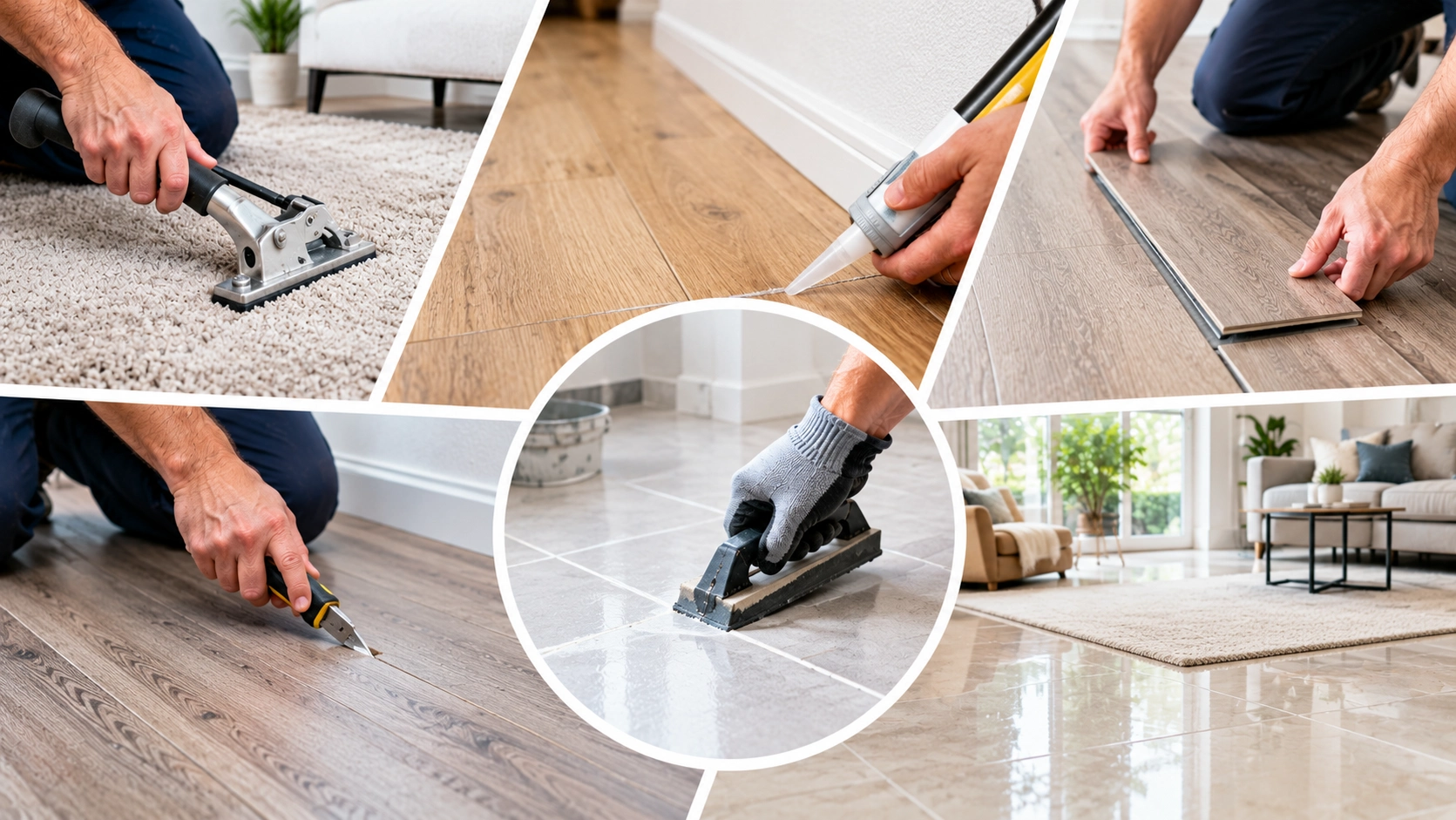
Different flooring materials require different preparation methods. The steps needed before carpet stretching may be very different from those required for hardwood, laminate, vinyl plank, or tile repair. For example:
Carpet: Small furniture and personal belongings may need to be removed so the carpet can be accessed and stretched properly.
Hardwood: The affected area may need to be cleared to allow inspection, board repair, or refinishing work where applicable.
Laminate: Furniture and other items may need to be moved to provide access to separated or damaged planks.
Vinyl plank: The work area should be clear enough to inspect loose edges, damaged sections, or flooring connections.
Tile and grout: Removing rugs, furniture, and decorative objects helps provide access to damaged tiles or grout lines.
If you are unsure what preparation is necessary, ask the contractor for instructions before the scheduled date.
10. Keep Important Flooring Information Available
If you have details about the existing flooring, keep them nearby. This information can be especially helpful when a repair requires matching the original material. Useful details may include:
- Flooring manufacturer
- Product name or number
- Color and finish
- Installation date, if known
- Leftover flooring materials
- Previous repair information
- Warranty documents, if applicable
For carpet repairs, leftover carpet from the original installation may help with matching a damaged section. For laminate and vinyl repairs, keeping spare planks can also be useful. You do not need all these details for every project, but having them available can make certain repairs easier to evaluate.
Preparation Checklist Before the Flooring Appointment
Use this simple checklist to make sure the main tasks are covered.
Work Area
- Remove small furniture and loose belongings.
- Clear rugs and floor decorations.
- Make the affected flooring accessible.
- Move fragile items away from the work area.
Furniture and Belongings
- Confirm who is responsible for moving heavy furniture.
- Empty cabinets and drawers where necessary.
- Protect delicate belongings.
- Secure electronics and cables.
Household Safety
- Arrange a safe area for children.
- Keep pets away from the work area.
- Plan an alternative route if needed.
- Keep access paths clear.
Project Information
- Identify all visible flooring problems.
- Take photographs if useful.
- Share details of previous repairs.
- Keep product information or spare materials available.
Before the Appointment
- Confirm the scheduled time.
- Ask about preparation requirements.
- Confirm access arrangements.
- Discuss any special concerns.
You may not need every step for a small repair, but reviewing the list can help you avoid overlooking something important.
Does Every Flooring Project Require the Same Preparation?
No. The amount of preparation depends on the type of work and the condition of the existing floor. A localized carpet repair may only require clearing a small section. A larger laminate or hardwood project may involve moving furniture from an entire room and preparing the underlying surface.
The condition of the floor can also affect the process. If damaged material needs to be removed or the subfloor requires attention, additional preparation may be necessary. This is why it is useful to discuss the project with the contractor before the scheduled date instead of assuming that every flooring appointment follows the same process.
What to Do After the Flooring Work Is Complete
Preparation is important, but there are also a few things to consider once the work is finished. Before using the room again:
- Ask whether the flooring needs time to settle or cure.
- Follow any cleaning instructions provided.
- Wait before moving heavy furniture back if advised.
- Use suitable furniture protection where appropriate.
- Check the completed work and ask about anything that needs clarification.
Certain flooring materials, adhesives, finishes, and repair methods may have specific care requirements. Following the contractor’s recommendations can help protect the completed work.
Get Your Home Ready for a Smoother Flooring Project
Preparing your home before a flooring appointment does not have to be complicated. Clearing the work area, organizing furniture, protecting belongings, and sharing information about existing flooring problems can help make the process more manageable.
If you’re planning to hire a flooring contractor in O’Fallon, take time to discuss the preparation requirements before the scheduled visit. The right steps will depend on whether your home needs carpet stretching, hardwood repair, laminate or vinyl plank repair, or tile and grout work.
A little preparation can help the contractor access the affected areas, understand the problem, and carry out the necessary work more efficiently.
Prepare the space, understand the work, and make your next flooring appointment easier to manage.
Frequently Asked Questions
Should I move all my furniture before a flooring contractor arrives?
Not necessarily. The amount of furniture that needs to be moved depends on the work area and the type of service. Ask the contractor whether furniture moving is included or whether you should clear the room beforehand.
Do I need to empty my room for a carpet repair?
For a small localized repair, only the affected area and surrounding workspace may need to be cleared. Larger carpet stretching projects may require more furniture to be moved.
Should I clean the floor before the contractor arrives?
Basic cleaning and removing loose items can help make the floor easier to inspect. However, avoid applying unfamiliar cleaning products or treatments to damaged areas before the assessment.
Do flooring contractors move heavy furniture?
This depends on the company and the project. Confirm furniture-moving arrangements before the appointment rather than assuming this service is included.
How should I prepare pets for flooring work?
Keep pets in a secure area away from tools, materials, and active work. If the project involves several rooms, plan where pets can stay comfortably during the appointment.
What information should I provide before flooring work begins?
Explain the type of problem, when it started, any previous repairs, and whether the floor has experienced moisture exposure. Photographs and original product details may also be useful.
Can I stay at home while flooring work is being completed?
For many repair projects, homeowners can remain at home. However, noise, dust, access restrictions, and the size of the project may affect your routine. Ask what to expect before work begins.