Why Are Your Hardwood Floorboards Changing Shape?
Hardwood floors can develop noticeable changes over time, especially when moisture levels become unbalanced. You might notice board edges rising, the center of a plank appearing higher, or parts of the floor looking uneven even though the surface was previously smooth.These changes are often described as cupping or crowning. Although the two problems can look similar at first, they have different appearances and may develop under different moisture conditions.
Recognizing the difference between hardwood floor cupping vs. crowning can help you understand what may be happening beneath the surface and when professional attention is appropriate. If your floor shows signs of damage or unevenness, exploring hardwood flooring services can help you understand the available repair options.
For homeowners in O’Fallon, Missouri, seasonal humidity, plumbing leaks, spills, and moisture from beneath the floor can all be worth considering when hardwood boards begin to change shape. Identifying the source is an important first step before deciding whether the floor needs repair, refinishing, or further evaluation.
What Is Hardwood Floor Cupping?
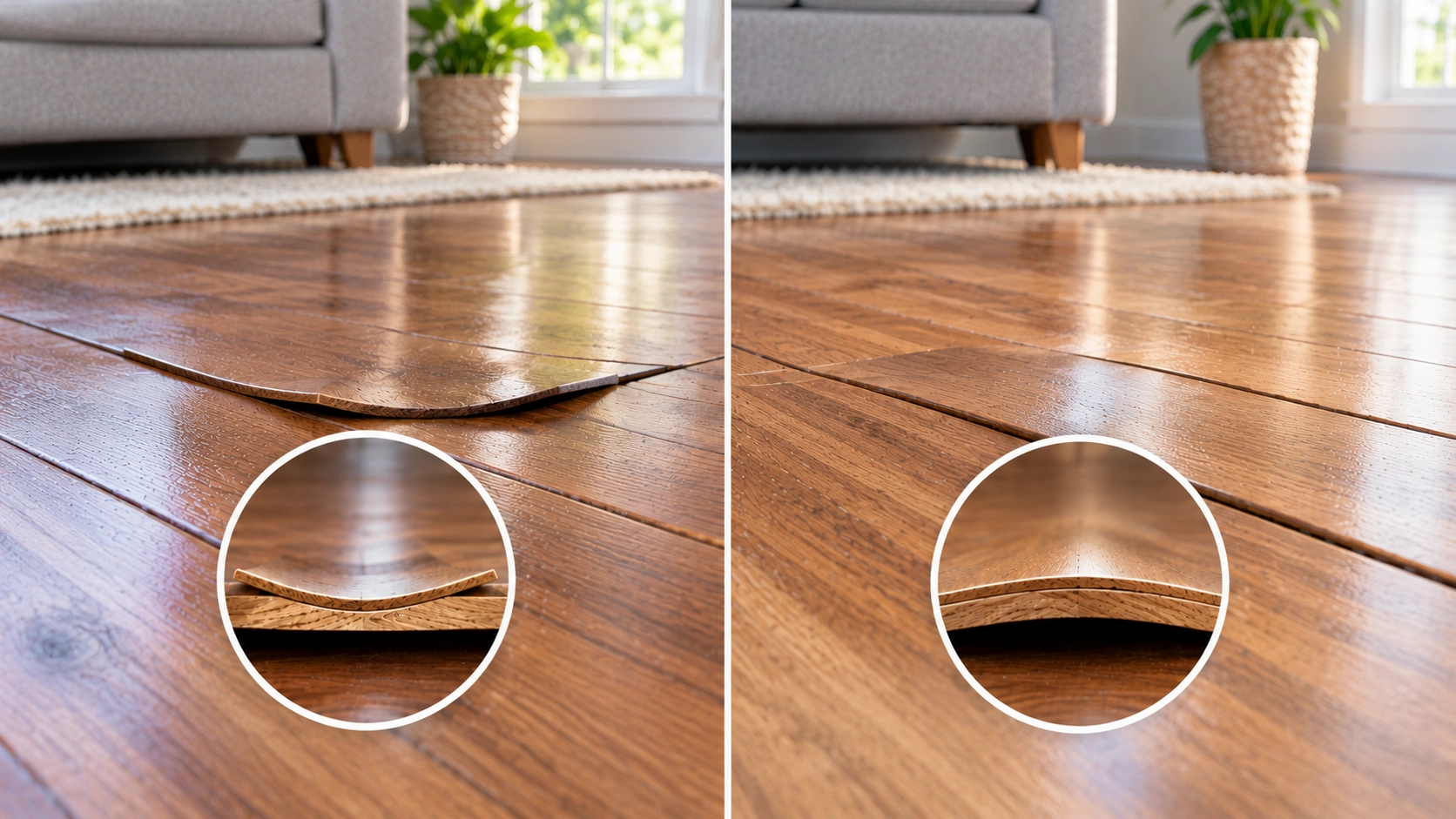
Cupping occurs when the edges of a hardwood board rise higher than its center. Viewed from the side, the board may look slightly curved, with a shallow dip running along its middle. This shape can develop when the underside or edges of a board absorb more moisture than other parts of the wood, causing uneven expansion across the plank.
Common Signs of Cupped Hardwood Floors
Look for these possible indicators:
- The edges of individual boards appear raised.
- The center of each affected board looks lower.
- The floor feels uneven when you walk across it.
- Light reflects differently along the edges of the planks.
- Several boards show a similar curved profile.
Cupping may affect a small area or extend across a larger section of flooring. Its appearance alone, however, cannot confirm the exact source of the moisture.
What Can Cause Cupping?
Potential causes include water spills that were not dried promptly, plumbing leaks, moisture entering from below, excessive indoor humidity, or moisture trapped beneath the flooring. The correct response depends on identifying the cause. Simply sanding the raised edges may not solve the underlying problem if the wood is still gaining or losing moisture.
What Is Hardwood Floor Crowning?
Crowning is the opposite shape. The center of a hardwood board rises higher than its edges, making the plank appear rounded across its width. It can sometimes develop after a cupped floor has been sanded before the wood has fully dried and stabilized. Crowning may also occur because of other uneven moisture conditions.
Signs of Crowning
You may notice:
- The middle of each affected plank appears higher than the edges.
- The floor surface looks rounded rather than dipped.
- Light highlights the center of the boards.
- The uneven appearance continues across multiple planks.
- The surface feels different when walking over the affected area.
Crowning does not always mean the floor was previously cupped. The appearance is a clue, not a definitive diagnosis, so the floor’s history and moisture conditions should also be assessed.
Hardwood Floor Cupping vs. Crowning: What's the Difference?
| Feature | Cupping | Crowning |
|---|---|---|
| Board shape | Edges rise above the center | Center rises above the edges |
| Surface appearance | Slightly hollow across each board | Slightly rounded across each board |
| Possible contributing factors | Moisture imbalance or excess moisture | Moisture imbalance or sanding before proper drying |
| Recommended first step | Investigate moisture and assess the floor | Investigate moisture history and assess board condition |
The key difference is the direction of the curve. With cupping, the edges are higher. With crowning, the center is higher. Neither condition should automatically be treated by sanding. The floor may need time to reach a stable moisture condition before the appropriate repair can be determined.
Why Moisture Causes Hardwood Floor Damage
Wood naturally responds to changes in moisture. It absorbs moisture from its surroundings and releases it as conditions change. Because the different parts of a board may not gain or lose moisture evenly, the plank can change shape. Several situations can contribute to moisture-related flooring problems.
Plumbing Leaks and Water Spills
A leaking pipe, appliance, or fixture can introduce moisture to the flooring. Large spills may also affect boards if water seeps between the joints or reaches the underside.
High Indoor Humidity
Indoor humidity can influence hardwood moisture levels. If humidity remains high for extended periods, boards may absorb moisture and expand.
Moisture Beneath the Floor
Moisture can sometimes enter from the subfloor or the area below the flooring. This can be particularly important when the visible damage does not appear to match a spill or leak on the surface.
Inadequate Drying After Water Exposure
Even after the visible water has been removed, moisture may remain in the wood or beneath the floor. The surface can look dry before the entire flooring system has stabilized.
Other Signs That Your Hardwood Floor May Have Moisture Damage
Cupping and crowning are not the only possible warning signs. Depending on the severity and source of the problem, you may also notice:
- Gaps appearing between boards
- Discoloration or darkened areas
- Buckling or lifting
- Loose or separating boards
- Persistent damp or musty odors
- Changes in the floor’s texture or finish
These symptoms can have different causes, so they should not all be assumed to indicate the same moisture problem.If you notice several changes at once, an inspection can help determine whether the issue is limited to the finish or involves the wood, subfloor, or another part of the flooring system.
Should You Sand Cupped or Crowned Hardwood Floors?
Sanding may be part of some hardwood floor restoration projects, but it should not be the first response to unexplained board distortion.If the wood has not reached a stable moisture condition, sanding can produce an uneven result. For example, a cupped floor may flatten as it dries, potentially leaving the previously sanded edges lower than the center.
Before sanding, the source of the moisture should be identified and addressed. The flooring may then need time to dry and stabilize, with moisture readings and the extent of damage helping determine the next step.Sanding also cannot correct every problem. Boards that are severely warped, split, or permanently damaged may require a different repair approach.
How Professionals Assess Hardwood Floor Moisture Damage
A proper assessment looks beyond the visible shape of the boards.
1. Inspect the Affected Area
The professional examines the floor for cupping, crowning, gaps, discoloration, loose boards, and other signs of damage.
2. Investigate Possible Moisture Sources
The inspection may consider plumbing, nearby appliances, indoor humidity, the subfloor, and other potential sources of moisture.
3. Check Moisture Conditions
Appropriate moisture measurements can help determine whether the flooring and underlying materials are within a suitable range for the particular installation.
4. Evaluate the Wood and Subfloor
The condition of the boards, finish, and subfloor helps establish whether the flooring may recover or whether repairs are likely to be needed.
5. Recommend the Appropriate Next Step
Depending on the findings, the solution may involve correcting a moisture source, allowing the floor to stabilize, replacing damaged boards, or considering refinishing once conditions are suitable.
Homeowners considering hardwood floor repair in O’Fallon should look for an assessment that considers both the visible damage and its possible cause, rather than recommending sanding or replacement based on appearance alone.
Can Cupped or Crowned Hardwood Floors Be Repaired?
In some cases, yes. The outcome depends on how much the boards have changed shape, whether the moisture source has been resolved, and whether the wood has sustained permanent damage.Some boards may flatten as their moisture levels return to a stable range. Other floors may retain visible distortion or develop gaps, finish damage, or loose sections. Possible solutions include:
- Correcting the source of moisture
- Allowing the flooring to dry and stabilize
- Replacing severely damaged boards
- Repairing affected sections
- Refinishing the floor when appropriate
There is no single repair method that works for every floor. The right approach depends on the condition of the entire flooring system. For related issues such as loose, damaged, or uneven boards, explore these hardwood and other flooring repair services to understand the types of flooring problems that may need professional attention.
How to Help Prevent Hardwood Floor Moisture Problems
Although not every moisture issue can be prevented, regular care can help reduce some risks.
Clean Up Spills Promptly
Remove standing water quickly and follow the flooring manufacturer’s cleaning recommendations. Avoid leaving wet mats or damp items on the floor.
Watch for Plumbing Leaks
Check areas around sinks, appliances, and plumbing fixtures for signs of leaks. Address suspected leaks before moisture spreads to nearby flooring.
Maintain Consistent Indoor Conditions
Avoid major, prolonged swings in indoor humidity where possible. Follow the flooring manufacturer’s guidance for suitable temperature and humidity conditions.
Pay Attention to Changes in the Floor
New gaps, raised edges, rounded boards, or discoloration may warrant further investigation, particularly if they appear suddenly or continue to spread.
Use Appropriate Cleaning Methods
Avoid excessive water when cleaning hardwood floors. A damp cleaning method recommended for the specific floor is generally preferable to leaving standing moisture on the surface.
When Should You Call a Flooring Professional?
Consider arranging an inspection if you notice persistent cupping, crowning, buckling, unexplained gaps, or signs of water exposure. Professional advice is particularly useful when:
- Several boards have changed shape.
- The floor remains uneven after a leak or spill.
- The source of moisture is unclear.
- The boards appear to be lifting or separating.
- You are considering sanding a visibly distorted floor.
- Discoloration or unusual odors accompany the damage.
Addressing the cause is essential. Refinishing or replacing boards without resolving an ongoing moisture issue may lead to further problems. If you’re unsure how extensive the damage is, you can request a flooring evaluation to help determine what should be inspected before repair work begins.
Recognize the Signs Before Choosing a Repair
Cupping and crowning can both make hardwood floors look uneven, but the direction of the curve helps distinguish them. Cupping raises the edges of a board, while crowning raises its center. The next step is to understand why the change occurred. Moisture conditions, leaks, humidity, and previous repair work can all affect the flooring, so sanding or replacing boards without investigating the cause may not provide a lasting solution.
If your hardwood floor is showing signs of distortion, start by identifying possible moisture sources and assessing the condition of the boards. A professional evaluation can help determine whether drying, repair, or refinishing is appropriate for your floor.
Frequently Asked Questions
What is the main difference between hardwood floor cupping and crowning?
Cupping occurs when the edges of a board rise above its center. Crowning occurs when the center rises above the edges.
Does cupping always mean there is a leak?
No. Cupping can be associated with several moisture conditions, including humidity changes and moisture beneath the floor. An inspection can help identify the likely source.
Can hardwood floors return to normal after cupping?
Some boards may flatten as moisture conditions stabilize, but recovery depends on the severity and duration of the problem and whether the wood has been permanently damaged.
Can crowning happen after sanding?
Yes. Sanding a cupped floor before it has fully dried and stabilized can contribute to crowning if the wood later changes shape.
Should I sand a cupped hardwood floor?
Not before the moisture source and current conditions have been assessed. Sanding too early can create a more uneven surface if the boards continue to change shape.
Can damaged hardwood boards be replaced individually?
Sometimes. Localized board replacement may be possible when damage is limited, although the feasibility depends on the floor’s construction, condition, and matching materials.
How can I reduce the risk of moisture damage to hardwood floors?
Clean spills promptly, address leaks quickly, avoid excessive water during cleaning, and maintain indoor conditions in line with the flooring manufacturer’s recommendations.