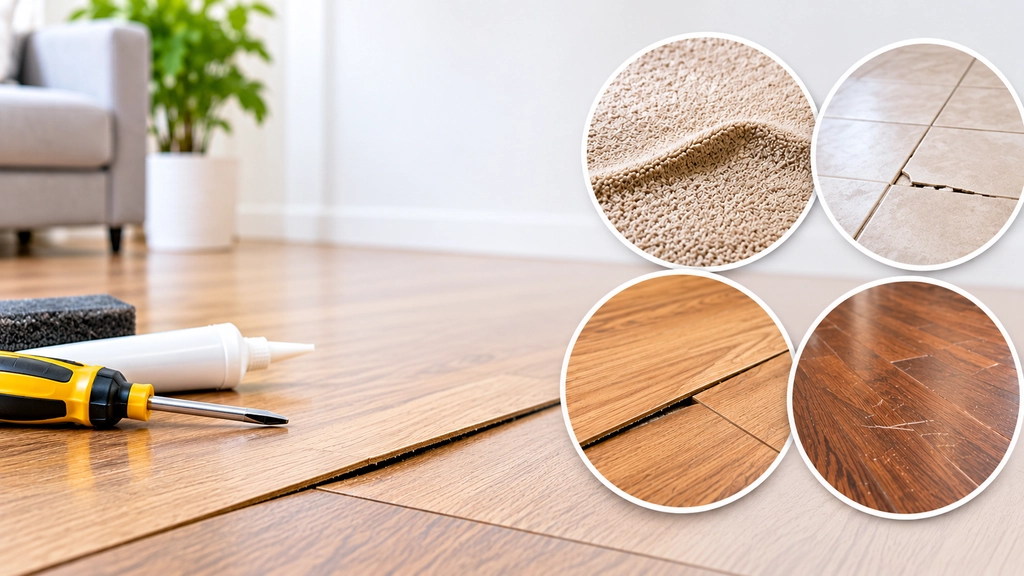
When the Same Flooring Problem Keeps Coming Back
You notice a loose carpet section, a cracked grout line, or a gap between laminate planks. You try to fix it yourself, and initially, everything looks fine. But a few weeks later, the same problem returns.
Situations like this are frustrating because the repair may appear successful at first. However, the visible damage is not always the actual source of the problem. Many recurring flooring problems happen because a DIY repair addresses what you can see without correcting what is happening underneath or around the affected area.
Understanding why flooring damage keeps returning can help you avoid repeated repairs, unnecessary material expenses, and further deterioration.
1. Fixing the Visible Damage Instead of the Actual Cause
One of the most common reasons DIY flooring repairs fail is that attention is focused on the damaged area rather than the reason it became damaged.
For example, applying new grout may temporarily improve the appearance of a cracked joint. However, if movement beneath the tile is causing repeated cracking, the new grout may fail again.
The same issue can happen with other flooring materials.
- Carpet: Pulling a loose section back into position may not correct an underlying tension or installation problem.
- Laminate: Pushing separated planks together may not solve an expansion-space or subfloor issue.
- Tile: Replacing a cracked tile may not address movement or inadequate support beneath it.
- Hardwood: Covering a scratch may not help if the protective finish has worn away across a larger area.
A lasting repair starts with understanding what caused the damage.
2. Using the Wrong Repair Materials
Not every flooring material can be repaired with the same products. Adhesives, fillers, grout, sealants, cleaning solutions, and replacement materials are designed for particular applications. Choosing an unsuitable product can affect how well a repair holds and how it looks after completion. Some common mistakes include:
- Using household glue on flooring materials that require a specific adhesive
- Applying an unsuitable filler to damaged grout
- Using the wrong type of grout for the joint or installation
- Applying a coating that does not bond with the existing floor finish
- Choosing a replacement plank that is incompatible with the existing flooring system
Even when a product appears to work initially, it may not provide the strength, flexibility, or compatibility required for the repair. Before starting a repair, check the flooring manufacturer’s recommendations and the instructions for the repair product.
3. Ignoring Problems Beneath the Flooring
A floor is more than the visible material on top.Carpet, tile, laminate, hardwood, and vinyl all depend on an appropriate supporting surface. If the subfloor or underlying installation system has a problem, repairing the visible flooring alone may not provide a lasting result. Underlying issues can include:
- Uneven subfloor areas
- Moisture beneath the flooring
- Movement in the supporting surface
- Deteriorated underlayment
- Damaged carpet padding
- Poor bonding or inadequate support
For example, a cracked tile may be replaced successfully, but if the substrate continues moving, another tile could crack in the same area. Similarly, laminate planks may continue separating if the floor beneath them is uneven. When the same damage appears repeatedly in one location, it is worth checking what is happening underneath.
4. Not Preparing the Surface Properly
Surface preparation is an important part of many flooring repairs.A repair product may not bond correctly when applied over dirt, dust, moisture, loose material, old adhesive, or damaged surfaces. Some DIY repairs skip preparation because it seems like an unnecessary extra step. However, poor preparation can affect the final result. Depending on the repair, preparation may involve:
- Removing loose or damaged material
- Cleaning the affected area
- Allowing the surface to dry
- Removing unsuitable adhesive or residue
- Checking whether the surface is stable
- Preparing the area according to product instructions
Simply covering the damaged section without preparing it properly can lead to another repair failure.
5. Applying a Temporary Fix to a Larger Problem
Some flooring problems are limited to one small area. Others are signs of a more extensive issue.A temporary repair may improve the appearance without correcting the underlying damage. Consider these examples:
- A carpet ripple is pushed flat.
The carpet may look smoother temporarily, but if it has lost tension across a larger section, the ripple may return. - A loose tile is glued back into place.
The tile may appear secure at first, but an unsuitable adhesive or damaged substrate can cause it to loosen again. - A laminate gap is manually closed.
The visible separation may disappear, but restricted expansion space or an uneven subfloor may continue affecting the floor. - A cracked grout line is filled.
The crack may be hidden, but recurring movement can cause the joint to fail again.
The problem is not necessarily that DIY repairs are always ineffective. It is that a small repair cannot correct every underlying flooring issue.
6. Moisture Is Not Being Addressed
Moisture can create problems across several types of flooring. Water from spills, plumbing leaks, appliances, wet cleaning, or moisture coming from below the floor can affect the materials and their supporting layers.If the moisture source remains, a repair may only provide a temporary improvement.Depending on the flooring type, moisture-related problems can include:
- Swelling or separation in laminate planks
- Loose tiles or deteriorating grout
- Changes in hardwood appearance
- Carpet odors
- Damaged carpet padding
- Soft or unstable areas beneath the flooring
If you suspect a leak or trapped moisture, identify and address the source before attempting cosmetic repairs.
Covering a moisture-related problem without resolving it can allow further damage to develop.
7. Replacing One Damaged Section Without Checking Nearby Areas
Replacing an individual tile, plank, or carpet section can be a practical solution when damage is genuinely localized.However, the surrounding floor should also be checked.Nearby sections may have similar wear, weakened connections, moisture exposure, or installation problems that are not immediately visible.For example, one loose laminate plank may be the first noticeable sign of a wider installation issue. A single cracked tile may be part of a larger area affected by movement. Before replacing an individual section, consider:
- Is the surrounding flooring stable?
- Are nearby sections showing similar damage?
- Is the underlying surface in good condition?
- Can the replacement material match the existing floor?
- Has the original cause of damage been addressed?
This helps prevent repeated repairs in neighboring areas.
8. Not Following the Flooring Manufacturer's Instructions
Flooring products can have specific installation, cleaning, maintenance, and repair requirements. A method that works for one product may not be suitable for another.
For example, laminate flooring has different requirements from solid hardwood. Carpet adhesives and repair materials may vary, while tile installation systems depend on the tile, substrate, and intended application. Ignoring product instructions can lead to problems such as:
- Poor adhesive bonding
- Incorrect expansion spacing
- Incompatible cleaning products
- Unsuitable grout application
- Finish adhesion problems
- Damage during installation or repair
If you have the original product information, review the manufacturer’s instructions before choosing a repair method.
How Recurring Flooring Problems Affect Different Floor Types
Not all flooring problems return for the same reasons. Understanding the material involved can help you recognize when a repair needs a closer look.
Carpet Problems That Keep Coming Back
Carpets can develop wrinkles, loose areas, damaged seams, and localized holes. If a carpet ripple returns after being manually repositioned, the underlying issue may involve lost tension or installation conditions. Other recurring carpet concerns include:
- Loose carpet near doorways
- Separating seams
- Repeatedly damaged edges
- Wrinkles in high-traffic areas
- Odors associated with moisture or padding
Professional carpet stretching or localized repair may be appropriate depending on the carpet’s condition.
Tile and Grout Problems That Return
Tile floors may develop cracked grout, loose tiles, uneven edges, or repeated damage in the same area.If grout keeps cracking after replacement, movement beneath the tile or an unsuitable supporting surface may be involved.Similarly, replacing a loose tile without addressing the cause of the problem may not provide a lasting solution. Depending on the condition of the floor, repair may involve replacing damaged tiles, correcting the supporting surface, or addressing the affected grout joints.
Laminate Flooring Problems That Return
Laminate flooring can develop gaps, lifting, swelling, and damaged plank connections. Repeated separation may be related to expansion space, moisture exposure, installation conditions, or an uneven subfloor.Before attempting to push planks back together, determine why they separated in the first place.If only a few boards are damaged, localized repair may be possible. More extensive damage may require additional work.
Hardwood Floor Problems That Keep Appearing
Hardwood floors can experience scratches, worn finishes, gaps, and damaged boards.Applying a surface product to a worn finish may improve its appearance temporarily, but widespread finish deterioration may require a different treatment.Likewise, filling a gap without understanding why it developed may not provide a lasting result if seasonal movement or another underlying condition is involved.
The appropriate repair depends on the wood, finish, extent of damage, and condition of the surrounding floor.
When Should You Stop Attempting DIY Flooring Repairs?
Some minor flooring issues can be handled with suitable products and careful preparation. However, repeated repair attempts can become counterproductive when the underlying cause is unclear. Consider professional help when:
- The same problem returns after several attempts
- Multiple areas are becoming damaged
- Tiles move or sound hollow alongside other warning signs
- Carpet wrinkles continue to develop
- Laminate planks repeatedly separate
- Hardwood finishes peel or wear through
- Moisture or water damage is suspected
- The floor feels unstable or uneven
- Previous repairs have made the affected area look worse
A flooring specialist can examine the damaged section and surrounding material to help identify what needs attention.
What Happens During a Professional Flooring Assessment?
A professional assessment looks beyond the visible damage. The exact checks depend on the flooring type and the problem, but the evaluation may include the following:
Identifying the Flooring Material
The repair approach depends on whether the floor is carpet, hardwood, laminate, vinyl, or tile.
Examining the Damaged Area
The specialist checks the location, size, and severity of the problem.
Checking the Surrounding Floor
Nearby sections may show signs of movement, wear, separation, or other related damage.
Considering the Underlying Surface
Where appropriate, the supporting surface, padding, or subfloor may need to be evaluated.
Reviewing Previous Repairs
Knowing what products or methods were previously used can help explain why the damage returned.
Recommending Suitable Options
Depending on the findings, the next step may involve a localized repair, stretching, replacement of damaged sections, restoration, or more extensive work.
This process helps ensure the recommended repair addresses the actual problem rather than simply covering the visible symptom.
How to Avoid Repeating the Same Flooring Repair
You can reduce the likelihood of recurring flooring problems by taking a few practical precautions.
- Find the cause before repairing.
Do not assume that the visible damage tells the entire story. - Use suitable materials.
Choose products that are compatible with the flooring and follow their instructions. - Prepare the area properly.
Clean, dry, and stabilize the surface as required before applying repair materials. - Address moisture promptly.
Investigate leaks and avoid leaving water trapped beneath flooring. - Check surrounding sections.
A damaged spot may be part of a wider problem. - Keep product information.
Save the manufacturer, product name, installation instructions, and any leftover material details. - Avoid repeated temporary fixes.
If the same issue keeps returning, get the underlying condition evaluated.
These steps can help you make better repair decisions and avoid spending money on methods that only provide short-term results.
Is Repair Still Worthwhile When the Problem Keeps Returning?
Repeated damage does not automatically mean the entire floor needs replacement. Sometimes the issue can be corrected by changing the repair method or addressing an underlying condition. Repair may still be worthwhile when:
- Damage is limited to certain areas
- The surrounding flooring remains in good condition
- The underlying surface can be corrected
- Matching replacement material is available
- The repair can provide a practical long-term improvement
Replacement may be more appropriate when the flooring has widespread deterioration, extensive moisture damage, or structural problems that cannot be reasonably corrected. The decision should be based on the overall condition of the floor rather than the number of times a repair has been attempted.
Choosing the Right Flooring Repair Solution
When the same issue returns, repeating the original DIY method may not be the best next step.A better approach is to understand why the first repair did not last. The cause may involve the flooring material, installation, moisture, surface preparation, or the supporting structure.
For homeowners dealing with recurring flooring problems, a professional assessment can help identify the source of the damage and determine whether a targeted repair or replacement makes more sense.
Address the Cause, Not Just the Damage
A flooring repair should do more than make a damaged area look better for a short time. When the same problem keeps returning, it is important to understand what is causing it.
Recurring flooring problems can involve several different issues, from carpet tension and tile movement to laminate separation and worn hardwood finishes. The right solution depends on the material, the extent of the damage, and the condition of the floor beneath it.
Instead of repeating a temporary fix, consider having the affected area evaluated so the underlying issue can be identified.
Whether your floor needs a localized repair, restoration, or replacement, choosing the right approach can help prevent unnecessary work and protect the rest of your flooring.
Frequently Asked Questions
Why do flooring problems keep coming back after DIY repairs?
They often return because the repair addresses visible damage without correcting the underlying cause. Moisture, movement, poor surface preparation, unsuitable materials, and subfloor problems can all contribute.
Are DIY flooring repairs always a bad idea?
No. Some minor cosmetic issues can be handled at home when the correct materials and methods are used. Problems involving movement, moisture, structural support, or repeated damage may require professional evaluation.
Why does grout keep cracking after I repair it?
Recurring grout cracks may be related to movement beneath the tile, an unstable substrate, or other installation conditions. Replacing the grout alone may not solve the underlying problem.
Why do carpet wrinkles return after being flattened?
The carpet may have lost tension across a larger area, or the original installation conditions may not have been corrected. Professional stretching may be worth considering if the carpet remains suitable for repair.
Can laminate flooring gaps be repaired permanently?
The result depends on the cause. If expansion space, moisture, subfloor conditions, or plank connections are responsible, those issues need to be addressed before a lasting repair can be expected.
Should I repair or replace flooring that keeps getting damaged?
It depends on the extent of the damage and the condition of the surrounding floor. Localized problems may be repairable, while widespread deterioration may make replacement more practical.
When should I call a flooring specialist?
Consider professional help when the same problem returns, damage spreads, tiles or planks move, moisture is suspected, or previous repairs have not lasted.