
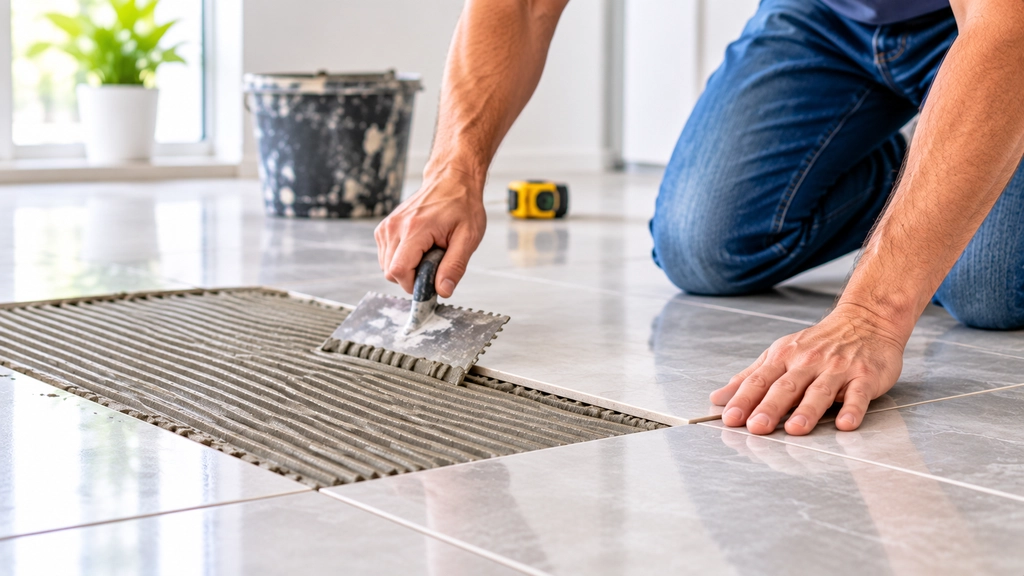
A Good-Looking Tile Floor Should Be More Than Just Attractive
A newly installed tile floor can make a room look clean, updated, and well-finished. But appearance alone does not always tell you whether the installation was done correctly.
Tile placement, spacing, surface preparation, grout application, and the condition of the underlying floor all contribute to the finished result. Even small installation mistakes can become noticeable over time, sometimes leading to loose tiles, uneven edges, cracked grout, or other problems.
Understanding tile installation quality can help you recognize the signs of a properly installed floor and identify issues that may need attention.Whether you’re planning a new flooring project or checking an existing installation, knowing what to look for can help you make a more informed decision.
1. Check Whether the Tile Surface Is Even
One of the first things to examine is the overall surface. A properly installed tile floor should feel reasonably consistent when you walk across it. Individual tiles should not have noticeable height differences that create uncomfortable edges or unexpected changes underfoot. Walk slowly across the room and pay attention to:
- Raised tile edges
- Sudden changes in floor height
- Areas that feel uneven
- Tiles that appear higher or lower than neighboring pieces
- Sections that create a noticeable difference when walking
Small variations can occur depending on tile characteristics and installation conditions. However, pronounced unevenness may indicate an installation or subfloor preparation issue. An uneven surface can also make cleaning more difficult and create places where dirt collects along tile edges.
2. Look at the Spacing Between Tiles
Tile spacing plays an important role in both appearance and performance. During installation, spacers are commonly used to maintain consistent joints between individual tiles. The appropriate joint width depends on the tile dimensions, edge characteristics, and manufacturer’s recommendations.Look across the floor to see whether the grout lines appear reasonably consistent. Signs of inconsistent spacing may include:
- Some joints noticeably wider than others
- Tiles that appear crowded together
- Grout lines that change direction unexpectedly
- Irregular gaps around individual tiles
- Sections where the layout looks misaligned
Uneven spacing does not automatically mean the entire floor needs to be replaced. However, it may affect the finished appearance and could indicate that the installation needs closer evaluation.
3. Examine the Alignment of the Tile Layout
A well-planned tile layout should look balanced throughout the room. Tiles should follow the intended pattern without unnecessary shifts or awkward alignment changes. Grout lines should generally continue in a consistent direction, unless the chosen design intentionally uses a different pattern. Pay attention to:
- Whether the rows look straight
- Whether grout lines align as expected
- Whether the pattern remains consistent
- Whether cuts around walls and corners look planned
- Whether the layout appears balanced across the room
Tile alignment is especially noticeable in larger spaces, hallways, and rooms with long uninterrupted floor areas. A layout that looks uneven may be the result of inaccurate measurements, poor planning, or installation mistakes.
4. Check the Grout Lines and Joints
Grout does more than fill the spaces between tiles. It helps complete the appearance of the floor and forms part of the finished tile assembly. Inspect the grout lines for consistent filling and signs of damage. Potential warning signs include:
- Missing sections of grout
- Visible holes or gaps
- Crumbling grout
- Deep cracks
- Uneven grout application
- Grout that appears to be separating from tile edges
Some grout discoloration may simply be related to dirt or regular use. However, cracked or deteriorating grout may deserve closer attention, particularly if the same problem keeps returning.
It is also important to remember that grout alone does not make a tiled floor waterproof. Appropriate waterproofing and moisture protection depend on the installation system and the location of the floor.
5. Notice Whether Any Tiles Move or Sound Hollow
A tile floor should feel stable under normal use. If an individual tile moves when stepped on or produces a noticeably hollow sound compared with surrounding tiles, it may indicate a problem with the bond beneath it. Possible contributing factors include:
- Inadequate mortar coverage
- Poor surface preparation
- An unsuitable installation surface
- Deterioration beneath the tile
- Moisture-related problems
A hollow sound does not always confirm that a tile is loose or improperly installed. Tile size, substrate conditions, and the installation system can influence how a tile sounds.
However, if a hollow-sounding tile also moves, cracks, or has damaged grout around it, a professional assessment is worthwhile.
6. Inspect the Cuts Around Walls, Corners, and Doorways
Tile installation involves more than placing full tiles across an open floor. Tiles often need to be cut around:
- Door frames
- Cabinets
- Wall edges
- Floor vents
- Plumbing fixtures
- Corners and narrow spaces
These areas can reveal how carefully the installation was planned and completed.Look for cuts that appear unnecessarily uneven, large exposed gaps, chipped edges, or poorly finished transitions. Not every edge will have a full tile, and some cuts are unavoidable. The important thing is whether the cuts are appropriate for the layout and finished neatly.
Transitions between tile and another flooring material should also be considered. They should be suitable for the change in floor height and the intended use of the space.
7. Look for Cracks in the Tiles
Cracked tiles can develop for several reasons, and the cause is not always poor installation. Possible contributing factors include:
- Movement in the subfloor
- Inadequate support beneath the tile
- Impact from heavy objects
- Structural movement
- Installation over an unsuitable surface
- Problems with the tile itself
A crack that appears soon after installation may justify reviewing the installation conditions. Cracks that develop later may be related to movement, impact, or other changes beneath the floor.Pay attention to whether the damage is limited to one tile or appears across several areas.
Multiple cracks in a similar pattern may suggest an underlying issue that should be investigated before individual tiles are replaced.
8. Check the Floor Preparation and Overall Stability
What sits beneath the tile is just as important as what you see on the surface. Tile needs a suitable, stable substrate. If the underlying floor moves, flexes, or has significant uneven areas, the tile installation may experience stress.
Problems with floor preparation can contribute to:
- Cracked tiles
- Loose sections
- Cracked grout
- Uneven surfaces
- Repeated repair issues
The required preparation depends on the existing floor, tile type, installation method, and manufacturer’s instructions. If you are considering new tile flooring in O’Fallon, checking the existing surface before installation can help identify preparation work that may be needed.
A suitable foundation helps support the finished tile floor and reduces the risk of problems caused by an unstable surface.
9. Pay Attention to Changes After Installation
Some installation problems are not immediately obvious.A floor may initially look acceptable, but changes can become noticeable after regular use. Watch for:
- Tiles becoming loose
- Grout cracking repeatedly
- New height differences
- Cracks appearing in several locations
- Tiles separating near edges
- Movement when walking across certain sections
The timing and location of these changes can provide useful clues.For example, recurring cracks in the same area may indicate movement beneath the tile rather than an isolated grout problem. If a problem continues to return after repairs, it is worth investigating the underlying cause instead of repeatedly treating only the visible damage.
What Can Affect Tile Installation Quality?
Several factors influence how a tile floor looks and performs after installation.
Accurate Measurements and Layout Planning
The room should be measured and the tile layout planned before installation begins. This helps avoid awkward cuts, uneven borders, and unnecessary layout adjustments.
Suitable Surface Preparation
The installation surface needs to meet the requirements of the selected tile and installation system. Uneven or unstable areas may require correction first.
Appropriate Installation Materials
Mortar, grout, underlayment, and other materials should be suitable for the tile and the conditions of the room.
Proper Tile Placement
Tiles should be positioned carefully, with attention to alignment, spacing, and surface consistency.
Correct Grout Application
Grout should be applied and finished according to the product instructions and the intended joint size.
Following Manufacturer Recommendations
Tile products and installation materials can have specific requirements. Following those instructions helps ensure the flooring system is installed appropriately.
These details all contribute to tile installation quality and the long-term performance of the finished floor.
Can Poor Tile Installation Be Corrected?
In many cases, yes. The appropriate solution depends on the type and extent of the problem. For example:
- Uneven or raised tiles may need to be removed and reset.
- Loose tiles may require removal and proper reinstallation.
- Damaged grout may need to be removed and replaced.
- Cracked tiles may require localized replacement.
- Uneven underlying areas may need correction before tile repairs.
- Poorly finished edges may require suitable trim or transition adjustments.
The important step is identifying why the problem developed. Replacing one cracked tile may improve the appearance, but it will not provide a lasting solution if movement beneath the floor is responsible for the damage.
When Should You Consider Professional Tile Floor Repair?
Some minor cosmetic concerns may not require immediate work. However, certain signs deserve professional attention. Consider having the floor evaluated if you notice:
- Multiple loose tiles
- Significant height differences
- Repeatedly cracking grout
- Cracked tiles in several areas
- Tiles that move when stepped on
- Gaps around edges or transitions
- Problems that return after previous repairs
A flooring specialist can examine the affected area, check the surrounding tiles, and help determine whether the issue is related to the installation, substrate, moisture, or another factor.
For homeowners in O’Fallon, a professional evaluation can also help clarify whether localized tile repair is practical or whether more extensive work may be necessary.
A Simple Tile Floor Inspection Checklist
If you want to check your existing tile floor, start with these areas:
- The surface feels reasonable even when walking across it.
- Tile spacing looks consistent.
- Grout lines follow the intended layout.
- Tiles do not visibly move under normal foot traffic.
- There are no unexplained hollow-sounding areas accompanied by other warning signs.
- Grout is not repeatedly cracking or crumbling.
- Tile edges and corners are finished neatly.
- Transitions between flooring materials are properly finished.
- There are no new or spreading cracks.
- The floor does not show signs of moisture-related damage.
This checklist is a useful starting point, but it cannot replace a professional inspection when structural or installation problems are suspected.
Know What to Look for in a Well-Installed Tile Floor
A tile floor should do more than look attractive on installation day. Its layout, spacing, surface consistency, grout joints, and underlying support all contribute to how it performs over time.
Understanding tile installation quality helps you recognize the difference between a neatly finished floor and one that may have installation problems. If you notice uneven edges, loose tiles, recurring grout cracks, or other warning signs, it is worth finding out what is causing them.
For homeowners planning tile flooring in O’Fallon or dealing with concerns about an existing floor, a professional flooring assessment can help identify the next practical step.
Frequently Asked Questions
What are the signs of good tile installation?
A properly installed tile floor generally has consistent spacing, an intentional layout, a stable surface, neatly finished edges, and grout joints that are appropriately filled.
Should tile floors feel completely flat?
The surface should be reasonably even, without pronounced height differences that create uncomfortable or unsafe edges. Some variation may occur depending on tile characteristics and installation conditions.
Why do some tiles sound hollow?
A hollow sound can be associated with differences in the material beneath a tile or its bond to the substrate. It does not automatically mean the tile is loose, but movement, cracking, or other symptoms should be checked.
Can uneven tile installation be fixed?
Depending on the cause, individual tiles may be removed and reset, or the underlying surface may need correction. The right approach depends on how extensive the unevenness is.
Why does grout crack after tile installation?
Cracked grout can result from movement, an unstable substrate, installation issues, or other conditions. Repeated cracking should be investigated rather than treated as a purely cosmetic problem.
Can I check tile installation quality myself?
You can look for visible signs such as uneven edges, inconsistent spacing, cracked grout, loose tiles, and poorly finished transitions. A professional assessment is recommended when the problem may involve the substrate or installation system.
Does good tile installation prevent all cracks?
No. Even a properly installed floor can experience damage from heavy impact, structural movement, or other conditions. Correct installation helps reduce avoidable problems but cannot prevent every type of damage.
When should I call a tile flooring specialist?
Consider professional help when tiles move, multiple cracks appear, grout repeatedly fails, or uneven areas become noticeable. An assessment can help identify the cause and suitable repair options.