
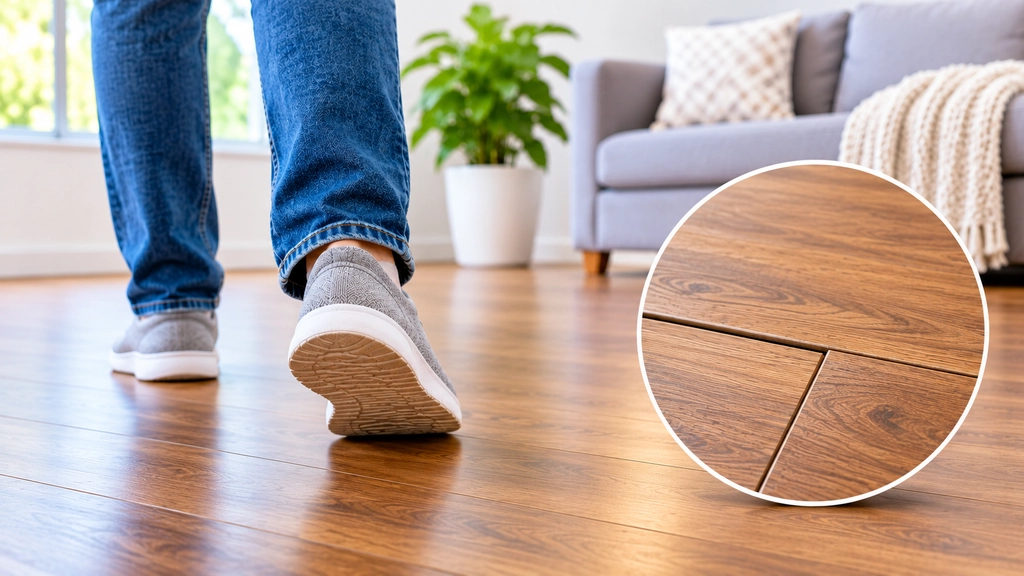
Hearing Clicking Sounds Every Time You Walk Across Your Laminate Floor?
Laminate flooring is designed to provide a durable, attractive surface for everyday household use. However, if you start hearing clicking, popping, or snapping sounds whenever someone walks across the room, it can become difficult to ignore.
A little noise does not always mean the floor is seriously damaged. Sometimes, it happens because the planks are moving slightly against one another or the surface underneath them is not providing consistent support.However, persistent laminate flooring clicking noise may point to an installation issue, an uneven subfloor, insufficient expansion space, or damaged plank connections.
For homeowners in O’Fallon, understanding where the sound comes from and what causes it can help determine whether the floor needs a minor adjustment or professional attention.
What Causes Laminate Flooring to Make Clicking Noises?
Laminate flooring is commonly installed as a floating floor. This means the planks are connected to one another rather than being permanently attached to the subfloor in the same way as some other flooring materials. Because the floor needs room to move naturally, several conditions can cause clicking sounds as people walk across it.
1. Uneven Subfloor Beneath the Laminate
One of the common reasons laminate flooring makes noise is an uneven surface underneath it.Laminate planks need a stable and sufficiently level base. If the subfloor has dips, raised areas, or other irregularities, parts of the flooring may move slightly under pressure.When someone walks over these areas, the planks can shift against one another or flex, creating clicking or popping sounds.
You may notice:
- Noise in the same spot whenever someone walks over it
- Slight movement beneath your feet
- Clicking sounds near low or raised areas
- Gaps developing between nearby planks
If the sound keeps coming from one particular section, the subfloor may need to be inspected rather than simply adjusting the visible planks.
2. Insufficient Expansion Space Around the Edges
Laminate flooring naturally responds to changes in indoor temperature and humidity. This is why manufacturers generally require an expansion gap around the perimeter of a floating floor.The gap allows the flooring to move without pressing tightly against walls, cabinets, door frames, or other fixed objects.If there is not enough expansion space, the planks may experience pressure as conditions change.
This can contribute to:
- Clicking or popping sounds
- Raised sections
- Tight or compressed areas
- Buckling near walls
- Movement around doorways
The required expansion space varies by product, so installation should follow the manufacturer’s instructions.
3. Loose or Damaged Plank Connections
Most laminate flooring systems use locking edges to connect individual planks.These connections help keep the floor together, but they can become damaged during installation or through repeated movement and stress.When plank connections are not properly engaged, or when the locking edges become damaged, you may hear clicking as the floor is walked on.
Other signs can include:
- Small gaps between planks
- Edges that no longer sit evenly
- Movement along the joints
- Separation that returns after being pushed together
Trying to force the planks back into position may cause further damage if the locking mechanism is already broken.
4. Improper Underlayment Installation
Underlayment is a layer installed beneath certain laminate flooring systems. Depending on the product, it can help provide cushioning, support, and sound-related benefits.If the wrong underlayment is used, or if it has been installed incorrectly, the floor may not receive the support it needs.
Possible problems include:
- Excessive movement underfoot
- Uneven support
- Noise when walking
- Separation at plank joints
Not every laminate product requires a separate underlayment. Some flooring comes with an attached layer, while other products have specific underlayment requirements. Always check the manufacturer’s installation instructions before adding or changing underlayment.
5. Temperature and Humidity Changes
Changes in indoor conditions can affect laminate flooring.The material may expand or contract as temperature and humidity levels change. When the floor moves, planks can create friction against nearby surfaces or one another.You may notice clicking sounds becoming more noticeable during particular seasons or after changes in indoor conditions.
Environmental movement does not automatically mean the flooring was installed incorrectly. However, recurring noise combined with gaps, lifting, or buckling deserves closer attention.
6. Flooring Installed Over an Unsuitable Surface
Sometimes the problem starts before the laminate planks are installed.If the existing flooring or subfloor is unstable, damaged, or unsuitable for the new material, the finished floor may develop movement and noise.For example, loose sections of existing flooring, damaged subfloor panels, or an improperly prepared surface can affect how the laminate performs.
Installing new planks over an unresolved problem does not necessarily correct it.
This is why checking the existing surface is an important part of proper laminate flooring installation.
How to Identify Where the Clicking Noise Is Coming From
Before deciding what repair may be needed, pay attention to when and where the sound occurs.The location and pattern of the noise can provide useful clues.
Noise in One Specific Spot
If the clicking happens whenever someone walks over the same section, there may be an issue with the subfloor, plank connection, or support beneath that area.
2. Clicking Across Several Rooms
When the sound appears in multiple areas, the cause may involve installation conditions, underlayment, or movement throughout a larger section of flooring.
Noise Near Walls and Doorways
Clicking near the perimeter may be related to insufficient expansion space, tight transitions, or pressure against fixed objects.
Sounds That Change With the Weather
If the noise becomes more noticeable during certain seasons, temperature and humidity changes may be contributing to the movement.
Clicking Along Plank Joints
Sounds that occur directly over the connections between planks may indicate movement or a problem with the locking edges.
These observations do not confirm the cause on their own, but they can help a flooring professional identify which areas need closer inspection.
Is Clicking Noise a Sign That Your Laminate Floor Is Damaged?
Not necessarily. Some laminate floors produce occasional sounds as they respond to movement and changes in indoor conditions. The important distinction is whether the noise is isolated and minor or persistent and accompanied by other problems.
Pay attention if you also notice:
- Planks separating at the joints
- Visible gaps between boards
- Raised or lifted edges
- Soft or unstable areas
- Buckling or uneven sections
- Movement when walking
- Noise that continues to spread
When several of these signs appear together, the issue may involve more than normal floor movement. An inspection can help determine whether the flooring needs adjustment, localized repair, or more extensive work.
Can You Fix Clicking Laminate Flooring Yourself?
It may be tempting to push the planks together, place something heavy over the noisy area, or try a quick repair product.However, these methods may not address the actual cause.
Before attempting any repair, consider:
- Is the subfloor uneven?
- Are the plank connections damaged?
- Is there enough expansion space?
- Was the correct underlayment installed?
- Has moisture affected the flooring?
- Does the problem occur in one area or throughout the room?
Avoid forcing planks into position or applying adhesives unless the flooring manufacturer specifically recommends that method. A floating laminate floor needs room to move. Securing it incorrectly can create additional pressure and lead to other problems.
When Does Laminate Flooring Need Professional Repair?
Professional repair may be worth considering when clicking sounds continue or appear alongside visible changes in the floor. Depending on the cause, the repair may involve:
- Inspecting the subfloor
- Correcting localized uneven areas
- Repositioning suitable planks
- Replacing damaged boards
- Addressing expansion-space problems
- Correcting installation-related issues
- Checking transitions and perimeter areas
The right solution depends on the flooring system and the extent of the problem.
For homeowners looking for a flooring contractor near me in O’Fallon, choosing someone who can evaluate the underlying cause is more useful than simply asking for the noisy section to be pushed back into place.
A proper assessment helps determine whether the problem is limited to a few planks or connected to a larger installation issue.
Repair or Replace? What Makes More Sense?
Clicking sounds alone do not automatically mean the entire laminate floor needs replacement. If the problem is limited to a small area and the surrounding planks remain in good condition, localized repair may be possible.
Repair May Be Suitable When:
- Only a few planks are affected
- The locking edges remain usable
- The underlying surface can be corrected
- The flooring has no widespread moisture damage
- The surrounding floor is still in good condition
Replacement May Be Necessary When:
- Many planks are badly damaged
- Locking systems have failed across large areas
- Moisture has caused widespread swelling or deformation
- The flooring has extensive buckling
- The original product cannot be repaired effectively
Before making a replacement decision, consider the condition of the existing floor as a whole. If most of the laminate remains usable, repairing the affected area may be a more practical option than removing everything.
How Proper Installation Helps Prevent Laminate Flooring Noise
Preventing clicking sounds begins with preparing the floor correctly.A suitable installation should account for the product specifications, room conditions, and the surface underneath the planks. Important installation details include:
Proper Subfloor Preparation
The subfloor should meet the manufacturer’s requirements for flatness, stability, and moisture conditions.
Correct Expansion Gaps
Leave the required space around walls, fixed objects, and other perimeter areas.
Suitable Underlayment
Use the underlayment specified for the selected laminate product.
Secure Plank Connections
Ensure the locking edges are properly connected without damaging the joints.
Appropriate Transitions
Plan doorway transitions and connections with nearby flooring so the laminate has the space and support it needs. These details help create a stable installation and reduce the risk of avoidable flooring problems.
What O’Fallon Homeowners Should Know About Noisy Laminate Floors
Homes in O’Fallon experience changing indoor conditions throughout the year. Temperature and humidity fluctuations may contribute to movement in laminate flooring, but they are not the only possible causes of clicking sounds.
Installation quality, subfloor preparation, underlayment, expansion space, and plank condition all deserve attention.If you notice persistent noise, avoid assuming that it is simply a seasonal issue. Check whether the floor also has gaps, movement, raised edges, or other visible changes.
When comparing flooring companies near me, look for a flooring service that can inspect the existing installation and explain the possible cause before recommending repair or replacement.
Understanding Your Laminate Flooring Repair Options
Clicking sounds can be frustrating, especially when the flooring looks perfectly fine at first glance.
However, the visible surface does not always reveal what is happening underneath. A closer evaluation may be needed to identify whether the noise is related to plank connections, subfloor conditions, expansion space, or another installation issue.
Professional flooring repair services can help assess the affected area and determine whether localized repair, installation corrections, or replacement may be appropriate.
Keep Your Laminate Floor Quiet and Stable
Clicking noises under laminate flooring can have several causes, including uneven subfloors, damaged plank connections, insufficient expansion space, unsuitable underlayment, and changes in indoor conditions.
An occasional sound may not indicate a serious problem. However, persistent clicking combined with gaps, movement, lifting, or buckling should not be ignored. For homeowners in O’Fallon, identifying the source of the noise is the first step toward choosing the right repair. Rather than treating only the sound, focus on the condition of the entire flooring system.
If your laminate floor continues making noise when you walk, consider having it inspected before the problem becomes more extensive.
Frequently Asked Questions
Why does my laminate floor click when I walk on it?
Clicking can occur when laminate planks move against one another, flex over an uneven subfloor, or have damaged locking connections. Insufficient expansion space and installation problems can also contribute.
Is it normal for laminate flooring to make noise?
Occasional minor sounds may occur as flooring responds to movement and indoor conditions. Persistent clicking, especially when accompanied by gaps or movement, deserves further inspection.
Can an uneven subfloor cause clicking sounds?
Yes. Uneven areas can prevent laminate planks from receiving consistent support. The floor may flex slightly underfoot and create clicking or popping sounds.
Can humidity make laminate flooring noisy?
Changes in humidity can contribute to expansion and contraction. This movement may create noise, particularly when the floor does not have sufficient expansion space or has other installation issues.
Will underlayment stop laminate flooring from clicking?
Not necessarily. The correct underlayment can provide support and other product-specific benefits, but it will not automatically correct an uneven subfloor, damaged plank connections, or insufficient expansion space.
Can I fix clicking laminate flooring without replacing it?
Sometimes. If the problem is limited to certain areas and the surrounding flooring is in good condition, localized adjustments or plank replacement may be possible.
Should I be concerned if my laminate floor clicks in several places?
Yes, it is worth having the floor evaluated. Noise across multiple areas may indicate a broader installation or subfloor issue rather than one isolated problem.
When should I contact a flooring contractor in O’Fallon?
Consider professional help if clicking continues, planks are separating, the floor feels unstable, or you notice lifting and buckling. An inspection can help identify the cause and suitable repair options.