Start Your Bathroom Remodel With the Right Flooring
A bathroom remodel involves several decisions, from choosing fixtures and wall colors to selecting lighting and storage. Flooring deserves just as much attention because it affects how the room looks, feels, and performs over time.
Unlike flooring in a bedroom or living room, bathroom floors regularly encounter moisture, humidity, spills, and frequent cleaning. A material that looks attractive may not necessarily be suitable for these conditions.
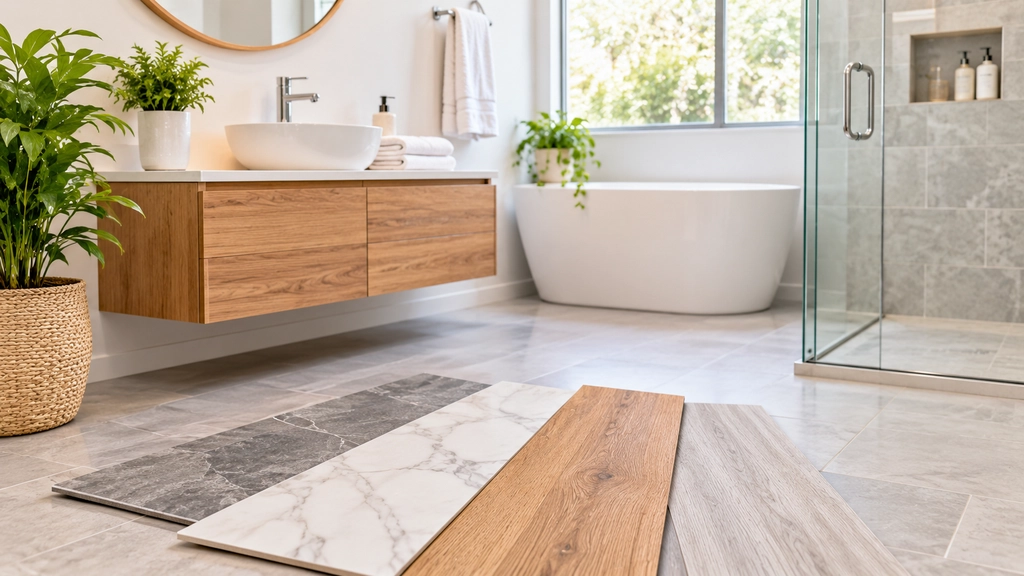
Choosing the right bathroom remodel flooring means finding a balance between appearance, water resistance, slip safety, durability, and maintenance. Understanding the available materials before starting the project can help you make a decision that works for your bathroom and everyday routine.
What Should You Consider Before Choosing Bathroom Flooring?
Before comparing flooring materials, think about how the bathroom is used. A small guest bathroom may have different requirements from a busy family bathroom with a shower, bathtub, and several daily users.
Here are some important factors to consider.
Moisture and Water Resistance
Bathrooms experience more moisture than most other rooms in a home. Water can reach the floor through splashes, spills, wet footwear, and regular cleaning. The flooring should be suitable for the amount of moisture it is likely to encounter. It is also important to consider the seams, joints, edges, and installation details because water can sometimes reach areas beneath the visible surface.
Always check the manufacturer’s recommendations for bathroom use rather than assuming that a product is suitable simply because it is marketed as water-resistant.
Slip Resistance
Safety is another important part of bathroom flooring selection. Water on a smooth floor can increase the risk of slipping, particularly near showers, bathtubs, and sinks. Consider flooring with an appropriate slip-resistant surface for the intended area.
Tile size, surface texture, finish, and grout joints can all influence how a tiled floor feels underfoot. Ask about the product’s slip-resistance information before making a final decision.
Durability
Bathroom flooring should handle everyday use without quickly showing signs of damage.Think about how often the bathroom is used, whether children or older adults use the space, and how frequently the floor will be cleaned.
A durable material can help maintain the room’s appearance, but proper installation and ongoing care are equally important.
Cleaning and Maintenance
Some flooring materials require more maintenance than others. Before choosing a product, consider whether it needs sealing, special cleaning products, regular grout care, or other maintenance.
A flooring option that fits your cleaning routine can make it easier to keep the bathroom looking its best.
Appearance and Design
Your bathroom flooring should also work with the overall design of the room. Consider how the floor will look alongside:
- Wall tiles and paint colors
- Bathroom cabinets and vanities
- Bathtubs and shower enclosures
- Fixtures and hardware
- Lighting and other finishes
You can choose a floor that blends with the rest of the bathroom or use it to introduce contrast and visual interest.
Popular Bathroom Remodel Flooring Options
There are several materials worth considering when planning a bathroom renovation. Each has different characteristics, installation requirements, and maintenance needs.
1. Porcelain Tile
Porcelain tile is a popular choice for bathroom floors because many products offer low water absorption and a durable surface.It is available in a wide range of colors, sizes, textures, and patterns. Some designs replicate natural stone or wood, giving homeowners more flexibility when planning the room.
Potential advantages:
- Low water absorption when properly specified
- Durable surface
- Wide selection of styles and finishes
- Suitable for many bathroom designs
- Easy routine cleaning
Things to consider:
Porcelain tile can feel hard and cool underfoot. The surface finish also matters when choosing a tile for a wet area. Grout joints need appropriate installation and maintenance, and the subfloor must be prepared correctly.
2. Ceramic Tile
Ceramic tile is another widely used bathroom flooring material. It comes in different colors, patterns, shapes, and finishes, making it suitable for many renovation styles.It can be a practical option when the selected product is rated for floor use and appropriate for the bathroom environment.
Potential advantages:
- Variety of colors and designs
- Easy-to-clean surface
- Available in different sizes and shapes
- Works with many bathroom styles
Things to consider:
Not every ceramic tile is intended for flooring. Some products are designed for walls, so check the manufacturer’s specifications. Also consider the tile’s slip resistance, durability rating, and maintenance requirements before purchasing.
3. Luxury Vinyl Plank and Tile
Luxury vinyl flooring is available in plank and tile formats and can create the appearance of wood or stone.Many products are designed to resist everyday moisture, but their suitability for bathrooms depends on the specific product and installation instructions.
Potential advantages:
- Comfortable feel underfoot compared with many hard surfaces
- Wide range of wood-look and stone-look designs
- Easy routine maintenance
- Some products offer strong moisture protection
- Available in different installation formats
Things to consider:
Check whether the product is approved for bathroom installation and whether it is suitable for the specific moisture conditions in the room. The subfloor needs to be clean, stable, and properly prepared. Water entering through edges or beneath the flooring can still create problems.
4. Natural Stone
Natural stone can give a bathroom a distinctive and refined appearance. Options include marble, slate, limestone, and travertine.Each stone has its own natural patterns, colors, and surface characteristics.
Potential advantages:
- Unique natural appearance
- Variety of textures and patterns
- Can complement high-end bathroom designs
- Long-lasting when properly selected and maintained
Things to consider:
Natural stone is not maintenance-free. Some varieties are porous and may require sealing. Certain finishes can become slippery when wet, while some stones are more sensitive to cleaning products and staining.Choose a stone suitable for the bathroom and understand its care requirements before installation.
5. Sheet Vinyl
Sheet vinyl is another option for homeowners looking for a continuous flooring surface.Because it is supplied in large sheets, it can reduce the number of seams across an installation compared with some plank or tile products. However, seams, edges, and installation details still need to be handled correctly.
Potential advantages:
- Available in different patterns and finishes
- Relatively simple routine cleaning
- Fewer seams in some room layouts
- Can provide a practical surface for everyday bathroom use
Things to consider:
The subfloor needs to be properly prepared, and the product must be suitable for the intended bathroom conditions. Installation quality is especially important around edges, fixtures, and transitions.
Which Bathroom Flooring Is Best for Wet Areas?
Not every part of a bathroom experiences the same amount of water.The floor near a shower or bathtub may receive more direct splashes than the area around the vanity. This makes it important to consider the layout and moisture exposure when choosing flooring.
Porcelain and suitable ceramic tiles are common options for bathroom floors, while certain luxury vinyl and sheet vinyl products may also be appropriate when their specifications allow bathroom use.
For shower floors and other areas exposed to frequent direct water, the complete installation system matters. Waterproofing beneath the tile, appropriate drainage, correct slope, and suitable materials are essential.A water-resistant floor covering alone does not replace proper waterproofing.
Why Subfloor Preparation Matters
One part of bathroom remodeling that homeowners may not see is the surface beneath the flooring.Even an attractive, high-quality flooring material can develop problems if it is installed over an unsuitable surface.Before installation, the subfloor should be evaluated for:
- Uneven areas
- Soft or damaged sections
- Moisture problems
- Movement or instability
- Existing flooring residue
- Conditions that may affect adhesion or installation
Depending on the material, preparation may involve leveling, repairing, replacing, or installing an appropriate underlayment. Addressing these issues before the new flooring goes down can help reduce the risk of movement, loose tiles, cracked grout, or other problems later.
Don't Overlook Grout and Installation Details
When choosing tile for a bathroom remodel, the tile itself is only one part of the finished floor.Grout selection, joint spacing, surface preparation, and installation technique all influence the final result.Pay attention to:
- Grout selection: Choose a grout suitable for the tile, joint width, and bathroom conditions.
- Joint spacing: Consistent spacing helps create a neat and balanced appearance.
- Tile alignment: Proper layout helps avoid uneven lines and awkward cuts around walls and fixtures.
- Waterproofing: Wet areas require an appropriate waterproofing system beneath the finished surface.
- Transitions: Plan how the bathroom floor will meet flooring in nearby rooms.
These details can make a noticeable difference in both appearance and performance.
Should You Choose Large or Small Bathroom Floor Tiles?
Tile size can influence the appearance and layout of a bathroom.Large-format tiles can create a more continuous look with fewer grout joints. They may work particularly well in bathrooms with enough open floor space.
Smaller tiles offer more flexibility around corners, drains, and compact areas. They can also provide additional grout joints, which may influence traction depending on the tile and grout design.Neither size is automatically better.
The room dimensions, floor slope, drain location, tile surface, and installation requirements should all be considered before choosing.
What About Heated Bathroom Flooring?
Some homeowners consider adding radiant floor heating during a bathroom remodel.This system warms the floor surface and can make cold mornings more comfortable. Certain tile and stone products are commonly used with compatible radiant heating systems.
If you are considering heated flooring, discuss it before installation begins. The heating system, underlayment, flooring material, electrical or plumbing requirements, and installation instructions need to work together.
Planning it early is generally easier than trying to add it after the new floor has been installed.
Common Bathroom Flooring Mistakes to Avoid
A bathroom renovation involves many small details, and overlooking them can affect the finished floor.Watch out for these common mistakes:
Choosing Flooring Based Only on Appearance
A beautiful floor may not be suitable for a wet environment. Check the product specifications and intended use before purchasing.
Ignoring Slip Resistance
A smooth finish can become hazardous when wet. Consider the surface texture and slip-resistance information.
Skipping Subfloor Preparation
Installing new flooring over damaged or uneven material can lead to problems after the renovation.
Assuming Every Waterproof Product Is the Same
Water-resistant and waterproof claims vary between products. Review the manufacturer’s testing, limitations, installation instructions, and warranty.
Forgetting About Grout Maintenance
Tile floors need appropriate grout selection and care. Ignoring grout joints can affect the appearance and condition of the finished floor.
Rushing the Installation
Incorrect spacing, poor alignment, unsuitable adhesives, or inadequate preparation can affect the floor’s performance.
How to Choose Flooring That Fits Your Bathroom
If you are still comparing materials, start by matching the flooring to the room.
Ask yourself:
- How much water and moisture does the floor regularly encounter?
- Does the bathroom need a slip-resistant surface?
- How much daily foot traffic does it receive?
- What level of cleaning and maintenance is practical?
- Does the flooring complement the bathroom’s design?
- Is the existing subfloor suitable for the material?
- What installation and waterproofing requirements apply?
Answering these questions can help narrow down your options before you purchase materials. It is also useful to compare the complete project cost, including material, removal, preparation, installation, grout, underlayment, and finishing details.
When Professional Flooring Installation Makes a Difference
Bathroom flooring installation requires careful planning because moisture, drainage, and surface preparation all matter.A flooring professional can help evaluate the existing floor, discuss suitable materials, and identify preparation requirements before installation begins. Professional installation may be particularly helpful when:
- The existing floor has cracks or uneven areas
- The bathroom has a complicated layout
- Tile needs to be installed around a drain or shower
- The subfloor requires repair
- Waterproofing work is part of the renovation
- The new flooring needs to meet several different surfaces
If you are planning a bathroom renovation, consider discussing the flooring material and installation requirements before ordering products. This can help prevent avoidable delays and unexpected work.
Give Your Bathroom Remodel a Strong Foundation
The right flooring can help bring together the appearance and everyday function of a remodeled bathroom.Porcelain tile, ceramic tile, luxury vinyl, natural stone, and sheet vinyl each offer different benefits. The best choice depends on the room’s moisture exposure, safety needs, design, maintenance expectations, and installation conditions.
Before making a final decision, review the product specifications and consider the condition of the existing floor. Proper preparation and installation are just as important as the material you choose. If you’re planning a bathroom renovation, explore suitable flooring options and discuss the project requirements with a flooring professional before getting started.
Frequently Asked Questions
What is the best flooring for a bathroom remodel?
Porcelain tile, ceramic tile, luxury vinyl, natural stone, and sheet vinyl can all be options, depending on the product and bathroom conditions. Consider moisture resistance, slip safety, maintenance, and installation requirements before choosing.
Is vinyl flooring suitable for bathrooms?
Some vinyl flooring products are designed for bathroom use and offer moisture-resistant or waterproof features. Always check the manufacturer’s specifications and installation requirements.
Is porcelain tile better than ceramic tile for bathrooms?
Porcelain generally has lower water absorption than standard ceramic tile, but both can be suitable when the selected product is rated for floor use and installed correctly. The surface finish and slip resistance also matter.
What bathroom flooring is easiest to maintain?
Many homeowners find suitable vinyl and glazed tile products relatively easy to clean. However, grout, natural stone, and other materials may require additional care depending on their finish and installation.
Should bathroom flooring be waterproof?
The flooring should be appropriate for the expected moisture exposure. Wet areas also require proper waterproofing beneath the finished floor where specified by the installation system. A waterproof surface product does not replace a correctly installed waterproofing system.
Are large tiles suitable for small bathrooms?
They can be. Large tiles may create a more continuous appearance, but the room layout, drain position, floor slope, and required cuts should be considered before selecting a size.
Can I install new bathroom flooring over the existing floor?
Sometimes, it depends on the existing material, its condition, floor height, moisture concerns, and the new product’s installation requirements. The surface should be inspected before deciding.
How do I prevent bathroom floor tiles from cracking?
Proper subfloor preparation, suitable setting materials, correct installation, and appropriate movement joints can help reduce the risk of cracking. If cracks appear, the underlying cause should be identified before repairing the visible damage.