When Hardwood Floors Need Attention
Hardwood flooring adds warmth, character, and lasting value to a home. It’s one of the few flooring materials that can remain beautiful for decades with the right care. However, even the highest-quality hardwood floors aren’t immune to everyday life. Moving furniture, pets, heavy foot traffic, moisture, and accidental impacts can all leave their mark over time.When scratches become more noticeable, boards begin to separate, or certain areas show signs of wear, many homeowners immediately think it’s time to refinish the entire floor. Others assume damaged boards need to be replaced right away. In reality, neither solution is always the right answer.
Understanding the difference between hardwood floor repair and refinishing in St. Charles can help you make a smarter decision for your home. While both services are designed to restore the appearance and performance of hardwood flooring, they solve very different problems. Choosing the right approach not only helps preserve your floors but can also save unnecessary work and expense.
Before making any decisions, it’s important to understand what each service involves, when it’s recommended, and how a professional flooring inspection can determine the best solution for your specific flooring needs.
Why Hardwood Floors Don't Always Need the Same Solution
One of the biggest misconceptions homeowners have is believing that every hardwood flooring problem requires the same type of repair. In reality, hardwood floors age differently depending on the wood species, the original installation, daily use, maintenance habits, and even seasonal changes inside the home.
Some issues affect only the surface of the wood, while others involve the boards themselves or the structure underneath. That’s why experienced flooring professionals don’t recommend repairs based only on appearance. Instead, they evaluate the entire floor to understand what caused the damage before suggesting the most appropriate solution.
For example, light surface scratches throughout an entire room often respond well to refinishing because the wood itself remains structurally sound. On the other hand, deep gouges, cracked boards, loose planks, or water-damaged sections usually require targeted repairs before refinishing is even considered.
Taking the time to identify the real problem helps homeowners avoid paying for services they don’t actually need while ensuring the floor continues performing well for years to come.
💡 Homeowner Tip
Don’t assume that worn-looking hardwood floors have reached the end of their lifespan. Many floors can be successfully repaired or refinished depending on the type and extent of the damage.
Understanding Hardwood Floor Repair
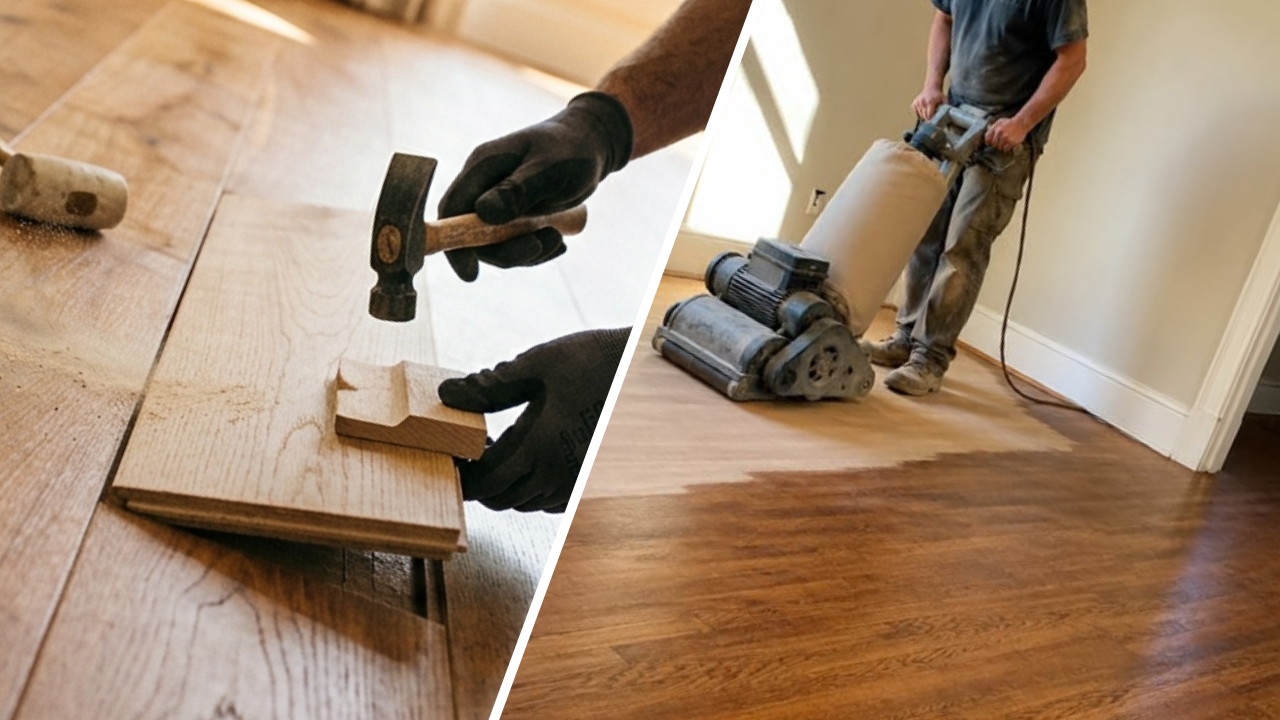
Before comparing repair and refinishing, it’s helpful to understand what hardwood floor repair actually involves. Unlike refinishing, which improves the appearance of the wood’s surface, repairs focus on correcting specific damage that affects individual boards or small sections of flooring.
Professional hardwood floor repair is designed to restore the floor’s stability, safety, and overall condition while preserving as much of the original flooring as possible. Rather than replacing an entire room, repairs target only the areas that truly need attention.
Repairing Individual Damaged Boards
One of the most common hardwood flooring problems is damage that’s limited to just a few boards. Heavy furniture, dropped objects, pet damage, or everyday wear can leave isolated areas looking noticeably different from the rest of the floor.
When the surrounding flooring remains in good condition, replacing or repairing the affected boards is often the most practical solution. This approach restores the damaged area without disturbing flooring that continues to perform well.
Fixing Gaps, Movement, and Loose Boards
Seasonal humidity changes naturally cause hardwood flooring to expand and contract. While small changes are expected, excessive movement, noticeable gaps, or loose boards may indicate that repairs are needed.
Professional flooring specialists identify the underlying cause before completing the repair. Correcting movement early not only improves the floor’s appearance but also helps prevent additional wear in nearby boards.
Addressing Water Damage Before It Spreads
Water is one of hardwood flooring’s biggest challenges. Leaks, spills, or excess moisture can cause boards to warp, cup, stain, or even begin separating from the subfloor.
When the damage is limited to one area, repairing the affected boards is often more practical than replacing the entire floor. Identifying and correcting the moisture source is equally important, helping ensure the repaired section continues to perform well over time.
📌 Good to Know
Water damage doesn’t always require replacing every hardwood board. In many cases, localized repairs combined with moisture correction can successfully restore the affected area.
When Hardwood Floor Refinishing Is the Better Choice
Not every hardwood floor problem involves damaged boards. Sometimes the wood itself remains structurally sound, but years of daily living gradually wear away the finish that protects it. Scratches, dullness, fading, and minor surface imperfections can make the floor look older than it actually is.
This is where refinishing becomes an excellent option. Instead of replacing boards, refinishing focuses on renewing the surface of the existing hardwood by sanding away wear and applying a fresh protective finish. The result is a floor that looks refreshed while preserving the original wood beneath.
However, refinishing isn’t the answer to every problem. If boards are cracked, loose, or affected by moisture, those repairs should usually be completed before refinishing begins. Understanding this difference helps homeowners choose the right service based on the actual condition of their flooring rather than appearance alone.
Can Hardwood Floor Repair and Refinishing Work Together?
Many homeowners think they must choose either repair or refinishing, but in reality, the two services often work best when combined. Every hardwood floor has its own history, and it’s common for one area to have damaged boards while the rest of the floor simply shows years of surface wear.
Rather than viewing repair and refinishing as competing services, think of them as complementary solutions. Repairs address structural or localized damage first, while refinishing restores the appearance of the entire floor. Together, they create a more complete and longer-lasting result.
Repair First, Refinish Second
If your hardwood floor has cracked boards, loose planks, or water-damaged sections, these issues should be repaired before refinishing begins. Sanding and applying a new finish won’t correct structural problems beneath the surface.
By repairing damaged areas first, flooring professionals create a stable foundation for refinishing, helping the finished floor look more consistent and perform better over time.
Achieving a More Uniform Appearance
Even if only a few boards require replacement, those new boards may not perfectly match the surrounding flooring after installation. Refinishing the entire surface helps blend the repaired sections with the existing wood, creating a more uniform appearance throughout the room.
This approach is especially beneficial for older hardwood floors where years of sunlight and everyday use have naturally changed the wood’s color.
📌 Homeowner Tip
If your hardwood floor needs both repairs and cosmetic improvements, ask a flooring professional whether combining repair and refinishing is the most practical long-term solution. In many cases, addressing both services together can produce better results than completing them separately.
Repair or Refinish? How to Know Which Service Your Floors Need
Knowing which service is right for your hardwood flooring starts with understanding the type of damage you’re seeing. While some issues are mostly cosmetic, others affect the structure and stability of the floor.Here are a few general guidelines that homeowners can use before scheduling a professional inspection.
Hardwood Floor Repair May Be the Better Choice If:
- Individual boards are cracked, chipped, or broken.
- Water has damaged a specific section of the floor.
- Boards are loose, squeaking, or shifting.
- Deep gouges or impact damage affect isolated areas.
- Damage is limited to one portion of the room.
Repair focuses on correcting these localized issues while preserving the rest of the flooring whenever possible.
Hardwood Floor Refinishing May Be the Better Choice If:
- The finish looks dull throughout the room.
- Light scratches cover large areas.
- The floor has lost its original shine.
- Minor surface imperfections are widespread.
- The wood itself remains structurally sound.
Refinishing restores the protective finish and improves the floor’s overall appearance without replacing the existing wood.
💡 Good to Know
Every floor is unique. A professional inspection is the most reliable way to determine whether repair, refinishing, or a combination of both will provide the best long-term value.
Simple Ways to Extend the Life of Your Hardwood Floors
Whether your hardwood floors have recently been repaired, refinished, or are still in great condition, a few simple maintenance habits can help protect your investment and reduce the need for future repairs.
Use Furniture Pads
Heavy furniture can leave dents and scratches when moved across hardwood floors. Felt pads beneath chair and table legs help minimize surface damage during everyday use.
Clean Up Spills Quickly
Standing moisture is one of the biggest threats to hardwood flooring. Wiping up spills promptly helps protect both the wood and its protective finish from long-term damage.
Keep Dirt Off the Floor
Small particles of dirt and grit act like sandpaper under shoes, gradually wearing down the finish. Regular sweeping or vacuuming helps prevent unnecessary surface wear.
Maintain Consistent Indoor Humidity
Seasonal changes in humidity cause hardwood flooring to naturally expand and contract. Maintaining stable indoor humidity can help reduce excessive movement, gaps, and warping.
Schedule Repairs Before Problems Spread
Small issues rarely stay small forever. Addressing loose boards, minor water damage, or isolated cracks early can prevent larger repairs later and help preserve the life of your hardwood flooring.
Why Professional Hardwood Flooring Services Matter
Hardwood flooring is a long-term investment, and every repair or refinishing project should be approached with care. While DIY products may temporarily improve the appearance of the floor, they often fail to address the underlying cause of the problem.
Experienced flooring professionals understand how different wood species, finishes, and installation methods affect the repair process. They evaluate the condition of your flooring, recommend the most appropriate solution, and complete the work using techniques designed to deliver lasting results.Choosing professional hardwood floor repair and refinishing in St. Charles helps ensure your flooring not only looks better but also continues performing well for years to come.
Final Thoughts
Hardwood floors naturally experience wear over time, but that doesn’t always mean they need the same type of restoration. Some floors benefit from targeted repairs that address damaged boards, while others simply need refinishing to restore their original beauty. Understanding the difference between these services helps homeowners make informed decisions that protect both their flooring and their investment.
If you’re unsure which option is right for your home, a professional assessment can provide the clarity you need. Choosing the appropriate solution at the right time can improve the appearance of your hardwood floors, extend their lifespan, and help you avoid unnecessary replacement costs.
Restore the Beauty of Your Hardwood Floors
Whether your hardwood floors have deep scratches, damaged boards, water stains, or simply look worn from years of everyday use, S&S Floors is here to help. We provide professional hardwood floor repair and refinishing in St. Charles, helping homeowners restore the beauty, durability, and value of their wood flooring with solutions tailored to their specific needs.Our experienced team carefully evaluates every floor before recommending the best approach, ensuring you receive honest guidance and quality workmanship from start to finish.
Ready to bring your hardwood floors back to life? Contact S&S Floors today to schedule a professional inspection and discover whether hardwood floor repair, refinishing, or a combination of both is the right solution for your home.
Frequently Asked Questions
What's the difference between hardwood floor repair and refinishing?
Hardwood floor repair fixes damaged boards, gaps, water damage, or other localized issues. Refinishing restores the surface by sanding away wear and applying a new protective finish. The right service depends on the condition of your flooring.
Can damaged hardwood floors be repaired instead of replaced?
Yes. If the damage is limited to specific boards or a small section of the floor, professional repairs can often restore the area without replacing the entire floor.
Does every hardwood floor need refinishing?
No. Floors with structural damage typically require repairs first. Refinishing is most beneficial when the wood is still in good condition but the finish has become worn, scratched, or dull.
Can repair and refinishing be completed during the same project?
Yes. In many cases, damaged boards are repaired first, followed by refinishing the entire floor to create a more consistent appearance.
How do I know which service my hardwood floor needs?
The best way is to schedule a professional inspection. A flooring specialist can evaluate the condition of your hardwood flooring and recommend the most appropriate solution based on the type and extent of the damage.