Is Your Carpet Starting to Look Loose or Uneven?
Carpet can gradually lose its smooth appearance even when it has been properly maintained. Daily foot traffic, furniture movement, aging, and installation-related issues can cause carpet to loosen from the tack strips and develop wrinkles or ripples. These changes are more than a cosmetic concern. Loose carpet can create areas that move underfoot and may become more difficult to repair if the problem continues.
Knowing the warning signs can help you determine when Professional Carpet Stretching in Wentzville may be appropriate and when the carpet has a different type of damage that requires patching or repair.
Here are seven signs worth watching for.
1. Wrinkles Are Appearing Across the Carpet
One of the clearest signs that carpet may need restretching is the appearance of visible wrinkles. You may notice:
- Long lines running across the carpet
- Raised sections in the middle of a room
- Loose areas that become more noticeable after walking
- Wrinkles that were not present when the carpet was first installed
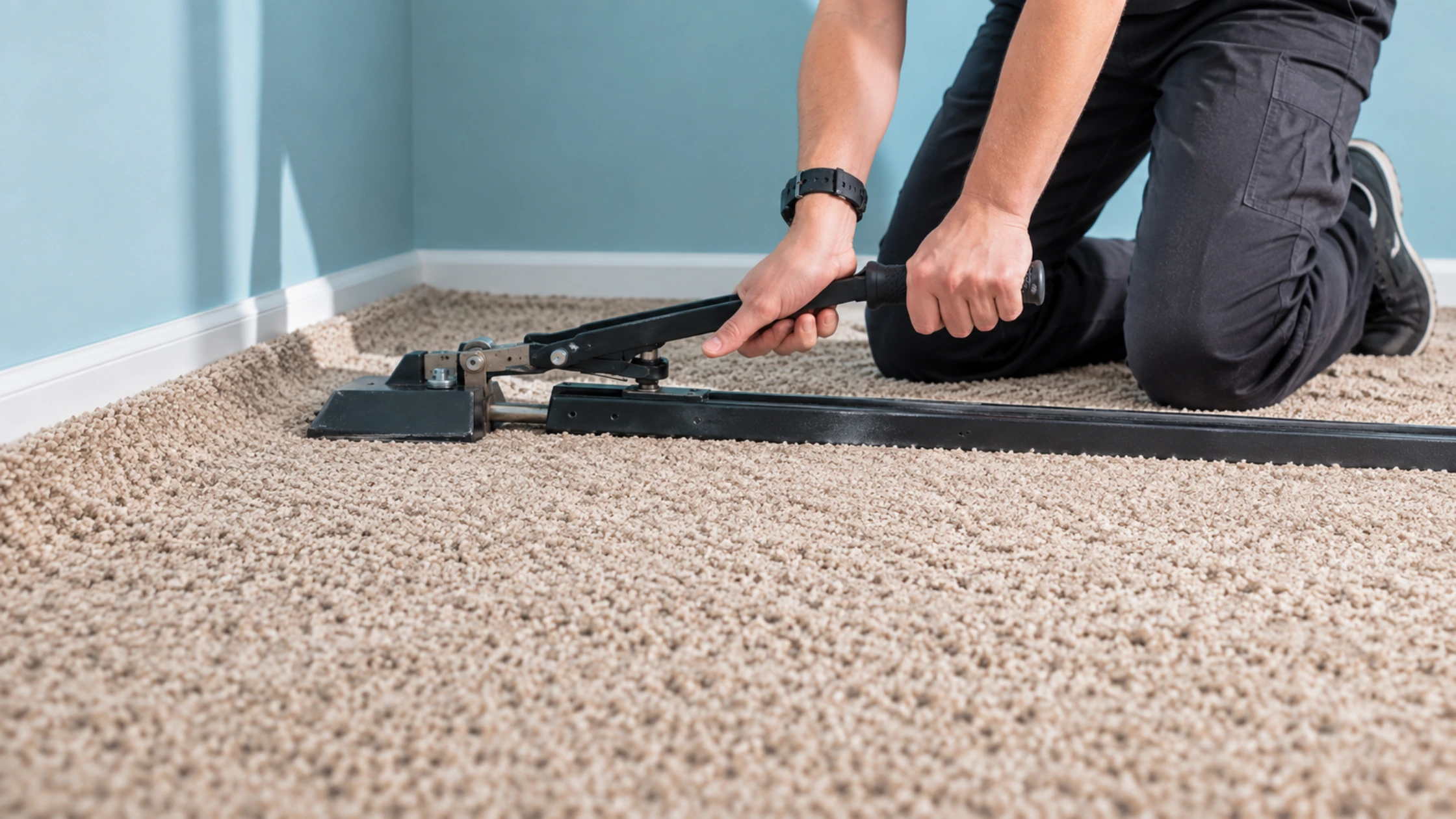
Wrinkles can develop when carpet loses tension and no longer lies tightly against the floor. Professional stretching can restore tension when the carpet and underlying materials are still suitable for the process.
2. Your Carpet Has Noticeable Ripples
Ripples are another common sign of loose carpet. Unlike a small wrinkle, rippling can affect a larger section and may become more obvious when sunlight hits the floor or when you walk across the affected area. Several factors can contribute to ripples, including:
- Normal aging
- Heavy foot traffic
- Poor initial stretching
- Furniture movement
- Carpet becoming loose from the tack strips
- Previous cleaning or moisture exposure
If ripples are becoming more pronounced, having the carpet evaluated can help determine whether carpet stretching can correct the problem.
3. The Carpet Moves Under Your Feet
Your carpet should generally feel stable when you walk across it. If sections shift, bunch, or move beneath your feet, the carpet may have lost some of its tension or attachment.
This can be particularly noticeable in hallways, living rooms, entrances, and other high-traffic areas. Movement does not always mean the carpet needs to be replaced. In some situations, professional restretching can restore a tighter fit and improve the appearance of the floor.
4. Raised Carpet Is Creating a Tripping Concern
Loose carpet can create raised sections that are easy to catch with a foot. This becomes especially noticeable around:
- Doorways
- Hallways
- Room transitions
- Stair entrances
- Frequently used walking paths
A raised or folded section should not simply be pushed flat and ignored. If the carpet continues moving, the problem may return. Professional stretching can address loss of tension when restretching is appropriate for the condition of the carpet.
5. The Carpet Looks Loose Around the Edges
Carpet problems do not always begin in the center of a room. You may notice loose areas near walls, corners, doorways, or transitions. When carpet becomes detached or loses tension around its edges, it may begin pulling away from the surrounding surface.
The condition of the tack strips, carpet backing, seams, and surrounding flooring can help determine the appropriate repair method.
6. Furniture Has Left the Carpet Looking Uneven
Heavy furniture can affect carpet over time.Moving large furniture may reveal areas that have become loose, compressed, or uneven. In some cases, the carpet may also shift when furniture is moved across it. If the carpet itself remains in good condition but has lost its tension, stretching may help restore a smoother surface.
However, if the carpet has tears, holes, or damaged fibers, stretching alone will not correct those problems.
7. Wrinkles Are Appearing Alongside Other Carpet Damage
Sometimes loose carpet and physical damage occur together. For example, you may have a carpet with ripples as well as:
- A small hole
- A torn section
- Burn damage
- Pet-related damage
- Frayed fibers
- A damaged seam
These problems require different approaches. Carpet patch repair may be suitable for localized damage when the surrounding carpet is in good condition and a matching piece is available.
A carpet can sometimes need both stretching and patching, depending on what has happened to the flooring.
Stretching and Carpet Patching Solve Different Problems
It is important to understand the difference between these repair methods.Carpet stretching addresses problems related to looseness, wrinkles, ripples, and loss of tension.A carpet patch addresses localized physical damage by replacing a damaged section with matching carpet material.
For example, a room with widespread rippling but no tears may primarily need stretching. A carpet with one noticeable hole may instead need a patch. If both problems are present, a professional can determine whether the repairs should be completed together.
When Is Carpet Hole Repair Necessary?
A hole in carpet is different from a wrinkle or ripple. Carpet hole repair may be appropriate when the fibers or backing have been physically damaged. Common causes include:
- Pet damage
- Burns
- Furniture-related damage
- Accidental cuts
- Wear in a concentrated area
- Other localized damage
The size, location, and condition of the surrounding carpet all affect whether a patch repair is practical.
Can a Carpet Patch Blend With the Existing Flooring?
A properly selected carpet patch can often blend into the surrounding area, but the result depends on several factors. Matching may be easier when you have leftover carpet from the original installation. Other factors include:
- Carpet color
- Pattern
- Fiber type
- Texture
- Age of the existing carpet
- Location of the repair
Carpet in a less noticeable area may also make a patch less visually obvious.
When Stretching May Not Be Enough
Restretching can improve loose carpet, but it is not a solution for every carpet problem. Replacement or additional repair may need to be considered when the carpet has:
- Extensive wear
- Severe water damage
- Widespread fiber deterioration
- Significant backing damage
- Large areas of permanent staining
- Multiple damaged sections
A professional assessment can help determine whether the existing carpet is a good candidate for stretching or repair.
Why Address Carpet Problems Early?
A small wrinkle may seem harmless, but loose carpet can become more noticeable as the flooring continues to experience foot traffic.Ignoring the problem may also make it harder to maintain a smooth surface. Early attention can help identify whether the carpet needs:
- Restretching
- A localized patch
- Seam repair
- Carpet hole repair
- Other carpet repair
- Replacement
The goal is not always to replace the carpet. When the existing material is still in usable condition, targeted repair may be an option.
What Wentzville Homeowners Should Check
If you live in Wentzville, MO and notice changes in your carpet, start by looking at the affected area closely. Ask yourself:
- When did the wrinkles first appear?
- Are they becoming larger?
- Does the carpet move when walked on?
- Is there visible damage to the fibers?
- Are there holes or tears?
- Does the problem occur near a doorway or transition?
- Has the carpet recently been cleaned or exposed to moisture?
These details can help distinguish a stretching problem from physical carpet damage.
When Should You Consider Professional Carpet Stretching?
If your carpet has developed persistent wrinkles, ripples, or loose sections, professional evaluation can help determine whether restretching is appropriate. Professional Carpet Stretching in Wentzville can be particularly useful when the carpet itself is still in reasonable condition but has lost its original tension.
A professional can inspect the carpet, edges, seams, and affected areas before recommending a repair approach.This is often more useful than simply pushing wrinkles down or trying to reposition the carpet without addressing the underlying issue.
Know What Your Carpet Is Telling You
Wrinkles, ripples, movement, and loose edges are common signs that carpet may have lost its tension. When the carpet is otherwise in good condition, stretching may help restore a smoother and more stable surface. However, not every carpet problem is a stretching problem. Holes, burns, tears, and localized damage may require carpet patch repair or carpet hole repair instead.
Understanding the difference between these problems can help you choose the right type of repair instead of replacing carpet that may still have useful life.If you are noticing loose or rippled carpet in your Wentzville home, a professional inspection can help determine whether stretching, patching, or another repair is the right approach.
Frequently Asked Questions
How do I know if my carpet needs stretching?
Visible wrinkles, ripples, loose areas, movement underfoot, and raised sections are common signs that carpet may need restretching.
Can carpet stretching remove wrinkles?
Professional stretching can often improve wrinkles and ripples when the carpet and underlying materials are still suitable for restretching.
Is carpet stretching the same as carpet repair?
Not exactly. Stretching addresses loose or wrinkled carpet, while other repairs may address holes, tears, burns, damaged seams, or worn sections.
When is carpet patch repair a better option?
A patch may be appropriate when the carpet has localized physical damage, such as a hole, burn, cut, or damaged section.
Can a carpet hole be repaired?
In many cases, localized carpet hole repair can be performed by replacing the damaged section with a suitable piece of matching carpet.
Can carpet need both stretching and patching?
Yes. A carpet may have lost its tension while also having localized damage. In that situation, stretching and patch repair may both be considered.
How long does carpet stretching last?
The longevity of a stretching repair depends on the carpet’s condition, installation, traffic, maintenance, and underlying flooring conditions.
Should I replace carpet with wrinkles?
Not necessarily. If the carpet is otherwise in good condition, professional stretching may be an alternative to replacement.